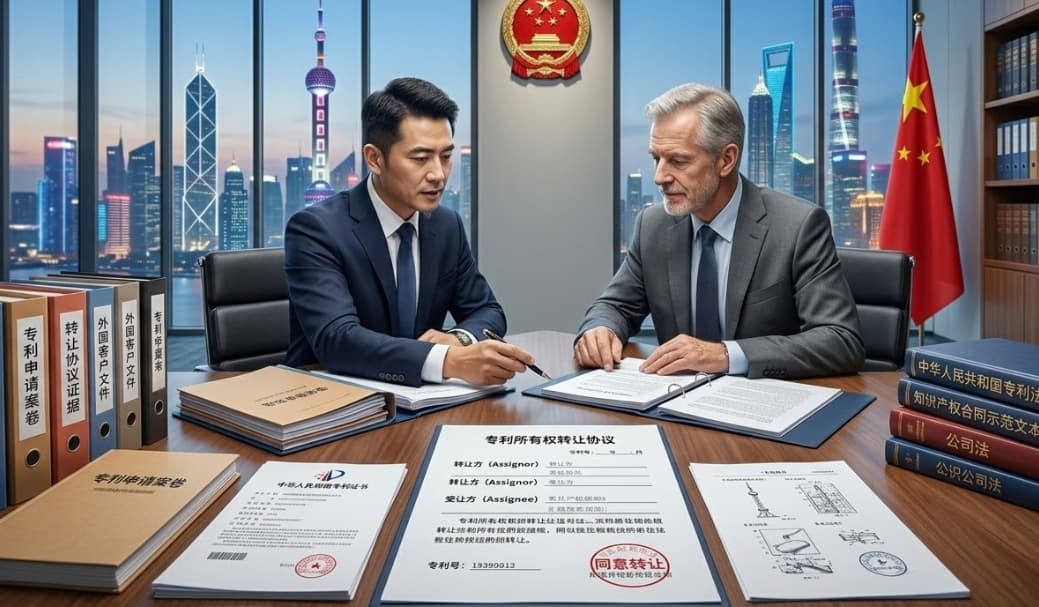
Understanding who owns a patent in China joint venture is critical for foreign companies entering partnerships with Chinese entities.
Patent ownership determines who controls the technology, licensing rights, and future profits.
In China, patent ownership in a joint venture depends on multiple factors, including the joint venture contract, patent registration, and contribution structure.
Without proper legal planning, foreign companies may lose control over their intellectual property.
This guide explains the legal rules, ownership scenarios, and how to protect your patents in a Chinese joint venture.
👉 Related Reading: Step-By-Step Guide to Incorporating Your Business in China
What Is a China Joint Venture?

A China joint venture is a business entity formed by a foreign company and a Chinese company. Both parties contribute assets such as capital, technology, or intellectual property.
Joint ventures in China typically fall into two categories:
- Equity Joint Venture (EJV)
- Cooperative Joint Venture (CJV)
The joint venture becomes a separate legal entity under Chinese law. This means it can own patents, trademarks, and other intellectual property independently.
👉 Related Reading: Types of Companies in China
What China's Patent Law Article 15 Actually Says
Article 15 of China's Patent Law is the central legal provision governing jointly owned patents. Its exact terms are critical for any foreign company in a JV.
The provision states:
"If there are agreements regarding the exercise of rights by the co-owners of the right to apply for the patent or of the patent right, the agreements shall prevail. In the absence of such agreements, the co-owners may separately exploit the patent or may, in an ordinary manner, permit others to exploit the said patent. Where others are permitted to exploit the patent, the royalties received shall be distributed among the co-owners."
In plain terms, this means:
- A written agreement between co-owners overrides the statutory defaults and should always be used
- Without an agreement, each co-owner can independently manufacture, use, or sell products embodying the patent without asking the other co-owner
- Without an agreement, either party can grant ordinary (non-exclusive) licenses to third parties, but royalties collected must be shared equally
- Without an agreement, neither party can assign their ownership share, grant an exclusive license, or pledge the patent as security without mutual consent
The 2021 Supreme People's Court ruling reinforced this framework. The Court held that when a co-owner independently exploits a jointly owned patent and earns profits, the other co-owner has no legal right to demand a share of those profits unless a written agreement specifically requires profit sharing.
This ruling fundamentally underscores why relying on Article 15's defaults is risky for any party that is not actively exploiting the patent itself.
Who Owns Patent in a China Joint Venture?
Patent ownership depends on one of the following legal scenarios.
Scenario 1: Patent Owned by Joint Venture Entity
If the joint venture develops or registers a patent in its own name, it is the legal owner.
This means:
- The foreign parent company does not own the patent
- The Chinese partner does not own the patent individually
- The joint venture controls licensing and commercialization
The joint venture appears as the patent owner in CNIPA records.
Scenario 2: Patent Owned by Foreign Parent Company
If the foreign company registers and retains ownership of the patent outside the joint venture, the foreign company remains the legal owner.
The joint venture may only have:
- License rights
- Usage rights
- Limited commercialization rights
Ownership remains with the foreign company.
Scenario 3: Joint Ownership Between Partners
The foreign and Chinese companies may jointly own the patent.
Under the China Patent Law, joint owners share rights unless otherwise agreed.
However, joint ownership creates risks because each owner may use the patent without the other owner's consent, unless restricted by agreement.
Scenario 4: Patent Contributed as Capital
Foreign companies often contribute patents as part of registered capital.
In this case, ownership may transfer to the joint venture unless explicitly structured as a license.
This is one of the most common ways foreign companies unintentionally lose patent ownership.
Table 1: Patent Ownership Scenarios in China Joint Venture
How China Patent Law Determines Ownership
China Patent Law provides that patent ownership belongs to the registered patent holder.
The controlling authority is the China National Intellectual Property Administration (CNIPA).
Ownership is determined by:
- Patent registration records
- Employment and invention agreements
- Joint venture contract terms
- Technology contribution agreements
Registration is the strongest evidence of ownership.
If the joint venture is listed as the patent owner, it legally owns the patent.
Table 2: License vs Ownership Transfer in China Joint Venture
Can Foreign Companies Register Patents Separately?
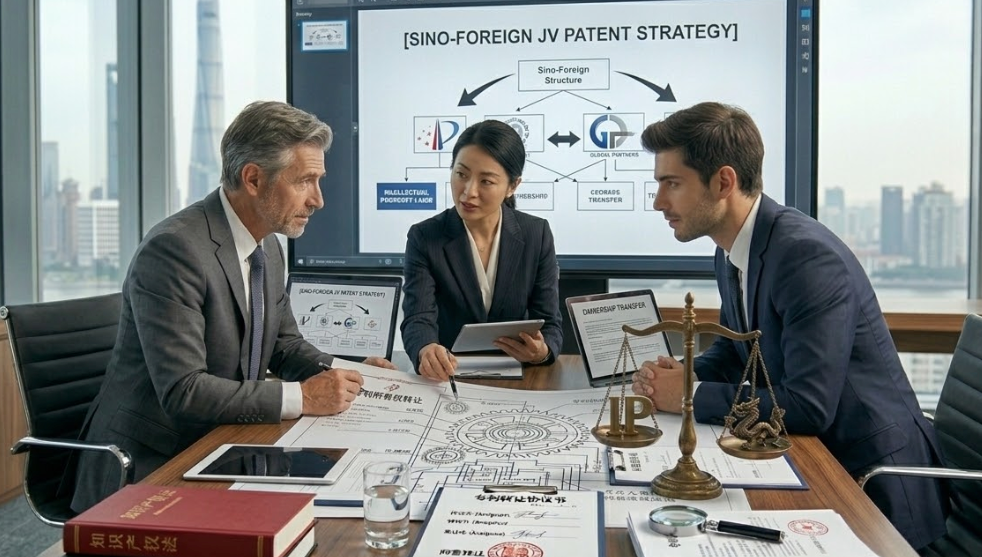
Yes. Foreign companies can register patents in China independently before forming a joint venture.
This is strongly recommended.
This ensures the foreign company retains ownership and grants the joint venture limited license rights.
Common Mistakes Foreign Companies Make in JV IP Planning
Related Reads:
- Workers Rights in China: An Overview of Labor Law
- Intellectual Property Protection in China
- Legal Elements of a Contract in China
- China's Legal Framework for Foreign Business Operations
- China Business Dispute Resolution
FAQs
Who owns the patent in China joint venture by default?
Patent ownership belongs to the entity registered as the patent holder with CNIPA. If the joint venture is listed as the patent owner, the joint venture legally owns the patent. If the foreign company is listed, the foreign company retains ownership. Ownership is not automatically shared unless registered or agreed.
Can a foreign company keep patent ownership in a joint venture?
Yes. A foreign company can retain patent ownership by registering the patent under its own name and licensing it to the joint venture. This is the safest structure to maintain control and prevent ownership transfer.
Does a contributing patent as capital transfer ownership?
Yes. Contributing a patent as registered capital often transfers ownership to the joint venture unless structured as a license. This is one of the most common ways foreign companies lose intellectual property control.
Can joint venture partners both own the patent?
Yes. Joint ownership is possible if both parties are listed as patent owners. However, joint ownership creates risks because each party may use the patent independently unless restricted by agreement.
How can foreign companies protect their patents in a joint venture in China?
Foreign companies should register patents independently, use licensing agreements instead of ownership transfer, and define ownership clearly in joint venture contracts. Legal due diligence is essential to protect intellectual property.
Conclusion
Patent ownership in China joint venture depends on patent registration, contractual agreements, and technology contribution structure. The entity listed as the patent holder legally owns the patent.
Foreign companies can protect ownership by retaining patents under their own name and licensing technology to the joint venture.
Proper legal planning is essential to avoid permanent ownership loss and maintain control over valuable intellectual property.
Subscribe to receive updates
Subscribe to receive the latest blog posts to your inbox every week.