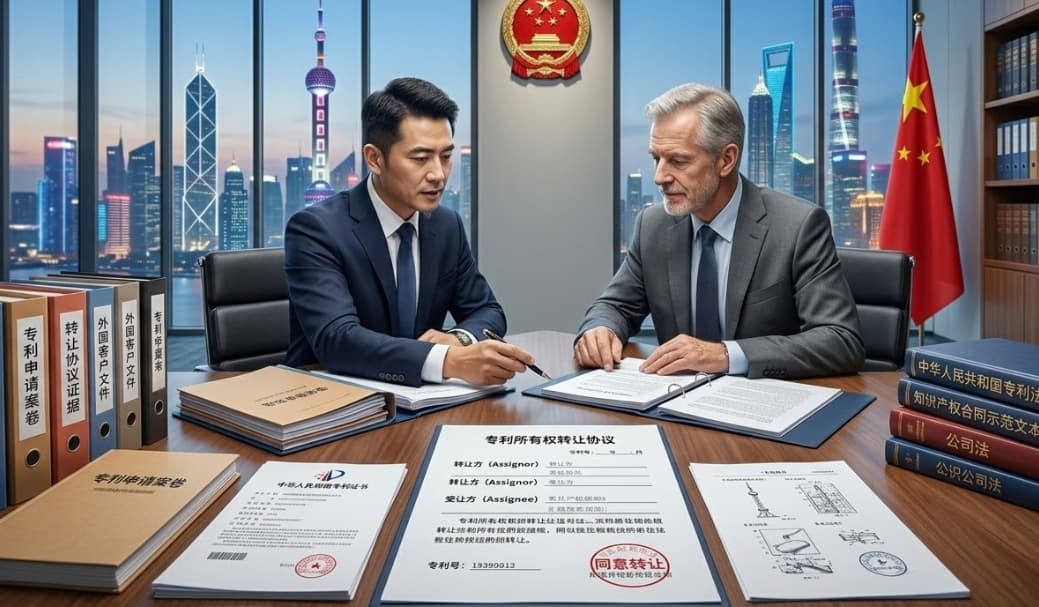
A patent ownership dispute in China can arise in ways that catch even well-prepared foreign companies completely off guard.
Whether it stems from an employee who invented something on the job, a joint venture partner claiming co-ownership, or a supplier who registered your technology before you did, the consequences can be severe, and the legal path to resolution is complex.
This guide explains the most common causes of patent ownership disputes in China, the legal framework that governs them, and the practical steps foreign companies must take to protect and assert their rights.
The Most Common Causes of Patent Ownership Disputes in China
Patent ownership disputes in China arise from several recurring situations. These disputes can be complex, especially for foreign companies operating R&D, manufacturing, or joint ventures in China.
Each category involves specific legal rules under China’s Patent Law and related regulations.
1. Service Invention Disputes (Most Common)
Service invention disputes are the most frequent type of patent ownership conflict in China.
Under Article 6 of China’s Patent Law, an invention is considered a service invention if it is:
- Made during the course of employment, or
- Made primarily using the employer’s materials, technical resources, equipment, or internal data, or
- Made while performing assigned job duties or responsibilities
In these cases, the patent ownership belongs to the employer, not the individual employee.
Disputes typically arise when:
- The scope of the employee’s job duties is unclear
- An employee leaves and continues working in a related technical field
- A former employee files a patent based on knowledge gained from their previous employer
- A new employer files a patent tied closely to the employee’s prior work
These disputes often require detailed evidence such as employment contracts, job descriptions, R&D records, and internal communications.
2. Former Employee Inventions and the One-Year Rule
China’s Patent Law and its Implementing Regulations provide protection for employers when employees leave.
If a former employee creates an invention within one year after leaving their employer, the invention may still be classified as a service invention if:
- It relates directly to the employee’s previous job responsibilities, or
- It is connected to the former employer’s technical field or assigned work
This creates risk for both employers and competitors.
For example:
- A former employee may attempt to file a patent based on prior employer research
- A competitor hiring that employee may unknowingly face ownership challenges
- The former employer may file a claim to recover ownership rights
This rule applies to situations involving:
- Resignation
- Termination
- Retirement
- Role changes
Proper invention assignment agreements and exit procedures are critical to managing this risk.
3. Joint Venture and Collaborative R&D Ownership Conflicts
Patent ownership disputes commonly occur in joint ventures (JVs) or collaborative research projects between foreign and Chinese companies.
Under Chinese law, if an invention is developed jointly:
- Ownership is generally shared by all contributing parties, unless otherwise agreed in writing
Without clear contractual terms, disputes can arise regarding:
- Who owns the patent rights
- Who has the right to license the patent
- Who can assign or transfer ownership
- How profits from the patent are shared
Chinese law allows co-owners to exploit the patent, but transferring ownership or granting exclusive licenses typically requires agreement among co-owners.
A clear IP ownership agreement at the beginning of a JV or R&D partnership is essential.
4. Patent Squatting and First-to-File Conflicts
China operates under a strict first-to-file patent system.
This means:
- The first party to file a patent application generally obtains the patent rights
- Even if another party invented the technology first
Ownership disputes often occur when:
- A Chinese supplier, distributor, or partner files a patent first
- A former employee files independently
- A third party files based on leaked or copied technical information
- A foreign company delays filing in China
This practice is commonly referred to as patent squatting.
Without early filing in China, the original inventor may lose ownership rights entirely or face costly legal proceedings to recover them.
5. Unauthorized Foreign Filing Without Secrecy Review
China requires a secrecy examination before filing patent applications abroad for inventions made in China.
Under Article 19 of China’s Patent Law, this requirement applies when:
- The invention was made in China, regardless of the applicant’s nationality
If a secrecy review is not obtained before filing abroad, the consequences may include:
- Rejection of the Chinese patent application
- Invalidation of the patent in China
- Legal disputes over ownership and filing compliance
This rule applies to:
- Foreign companies with R&D operations in China
- Chinese subsidiaries of foreign companies
- Joint R&D conducted in China
Companies must complete secrecy review procedures before filing patents overseas.
Table 1: Types of Patent Ownership Disputes and Legal Basis
How the Courts Handle Ownership Cases
If negotiations fail, the ownership dispute must be resolved through civil litigation. Unlike patent invalidation cases that go through the administrative channels of the China National Intellectual Property Administration, ownership disputes are handled directly by the civil court system.
Because patent cases involve highly technical facts, China has established specialized courts to hear them. The jurisdiction depends heavily on the type of patent in dispute and the defendant's location.
Table 2: Court Jurisdiction for Patent Disputes
👉 For a comprehensive look at how civil litigation works in the intellectual property sphere, see our overview of China Patent Infringement.
How Patent Ownership Disputes Are Resolved in China
Patent ownership disputes in China can be resolved through several legal and administrative channels.
The appropriate method depends on the nature of the dispute, the parties involved, and whether the issue concerns ownership, validity, or contractual rights.
1. Civil Litigation in Specialized IP Courts (Primary Method)
Civil litigation is the main and most authoritative method for resolving patent ownership disputes in China.
These cases are handled by:
- Specialized IP Courts in major cities such as:
- Beijing
- Shanghai
- Guangzhou
- Hainan
- Intermediate People’s Courts with IP jurisdiction in other major regions
- The Supreme People’s Court (SPC) Intellectual Property Tribunal, which hears appeals in technically complex, high-value, and cross-border patent cases
Civil courts have exclusive authority to determine:
- Who legally owns a patent
- Whether ownership should be reassigned
- Whether an invention qualifies as a service invention
- Contractual disputes involving patent ownership
Unlike patent infringement, which may involve administrative enforcement, ownership disputes must be resolved through civil court proceedings.
2. CNIPA Invalidation Proceedings (Challenging Patent Validity)
The China National Intellectual Property Administration (CNIPA) handles patent invalidation proceedings.
Invalidation is appropriate when a patent was granted improperly, such as:
- Patent squatting (filed by someone other than the true inventor)
- Filing without proper authorization
- Failure to comply with secrecy review requirements
- Lack of novelty, inventiveness, or eligibility
If CNIPA invalidates a patent:
- The patent is treated as if it never legally existed
- The improper patent holder loses all patent rights
- The legitimate inventor may file a new patent application, if still eligible
However, CNIPA does not directly determine ownership transfer. Ownership reassignment must be resolved separately through civil court.
3. Mediation (Faster and Lower-Cost Resolution)
Mediation is an increasingly important tool in China’s IP dispute resolution system.
Mediation may be conducted through:
- People’s Courts
- Local IP Offices
- Court-connected mediation centers
- Industry mediation organizations
Benefits of mediation include:
- Faster resolution than litigation
- Lower legal costs
- Reduced business disruption
- Preservation of commercial relationships
- Flexible settlement options
Chinese courts actively encourage mediation before or during litigation.
Many foreign companies have successfully used mediation to resolve complex IP ownership and infringement disputes more efficiently than full court proceedings.
4. Arbitration (For Contract-Based Ownership Disputes)
Arbitration is available when the dispute arises from a contract that includes a valid arbitration clause.
This commonly applies to disputes involving:
- Joint ventures
- Technology development agreements
- Employment contracts
- Licensing agreements
- Supplier and manufacturing agreements
The most commonly used arbitration institution for international disputes involving China is:
- CIETAC (China International Economic and Trade Arbitration Commission)
Other arbitration bodies may include:
- Beijing Arbitration Commission
- Shanghai International Arbitration Center
Arbitration offers several advantages:
- Confidential proceedings
- Faster resolution compared to court litigation
- Enforceable awards under international treaties
- Neutral forum for cross-border disputes
Arbitration decisions are legally binding and enforceable in China.
Preventing Patent Ownership Disputes Before They Start
Prevention is significantly more cost-effective than litigation.
Foreign companies should implement the following measures before beginning operations, R&D, or supplier relationships in China:
- Use Chinese-law-governed employment agreements with explicit IP ownership clauses covering service inventions, remuneration rates, and post-employment IP restrictions for all R&D and technical staff
- Define IP ownership in JV agreements before any collaborative development begins, specifying who owns background IP, foreground IP developed during the JV, and any improvements to pre-existing technology
- File patents with CNIPA before entering the market, disclosing technology to suppliers, or attending trade shows in China to establish prior filing date rights
- Obtain a secrecy review from CNIPA before filing any China-made invention abroad, to avoid creating a basis for invalidation of your Chinese patent later
- Use NNN agreements (Non-Disclosure, Non-Use, Non-Circumvention) with all manufacturing and R&D partners, drafted under Chinese law with enforceable Chinese jurisdiction clauses
- Monitor CNIPA filings continuously using patent watch services that flag applications by former employees, suppliers, or competitors that may conflict with your registered or pending IP
Conclusion
Patent ownership disputes in China are among the most complex and consequential legal challenges foreign companies can face.
They arise from employment relationships, joint ventures, supplier partnerships, and bad-faith registrations, and each category requires a different legal strategy.
China's IP courts are increasingly equipped and willing to adjudicate these disputes fairly, including for foreign rights holders.
However, the most reliable protection is proactive: file early, draft strong contracts under Chinese law, and structure every R&D and commercial relationship with IP ownership explicitly defined from the start.
When disputes do arise, moving quickly and working with experienced China IP counsel gives foreign companies the best chance of a favorable outcome.
FAQs About Patent Ownership Dispute China
What is a service invention under Chinese law?
A service invention is any technical invention created by an employee while performing their regular job duties or by primarily using the employer's technical resources, unpublished data, or company funds. The employer automatically owns the right to apply for a patent for a service invention.
Does a Chinese factory own the patent if I paid them to design my product?
Yes, unless you have a legally binding written contract stating otherwise. Under the Chinese Patent Law, the commissioned party holds the patent application rights by default, even if you provided one hundred percent of the funding for the research and development.
Can an employee claim a patent after leaving a company?
If the former employee files a patent within one year of leaving the company, and the underlying invention relates to their former job responsibilities, Chinese law classifies it as a service invention. In this scenario, the former employer can legally sue to claim full ownership of the patent.
What is China's stance on intellectual property?
China recognizes intellectual property rights and has established laws to protect patents, trademarks, and copyrights. The government encourages innovation and provides legal protection for inventors and businesses. Patent owners can enforce their rights through courts and administrative agencies. China has also strengthened its IP enforcement to support domestic and international companies.
What is Article 33 of the Chinese Patent Law?
Article 33 of the Chinese Patent Law states that an applicant cannot add new technical content that was not included in the original application. Any amendments must stay within the original scope and description. This rule ensures fairness and prevents expanding patent protection after filing. It helps maintain the accuracy and integrity of patent rights.
Subscribe to receive updates
Subscribe to receive the latest blog posts to your inbox every week.