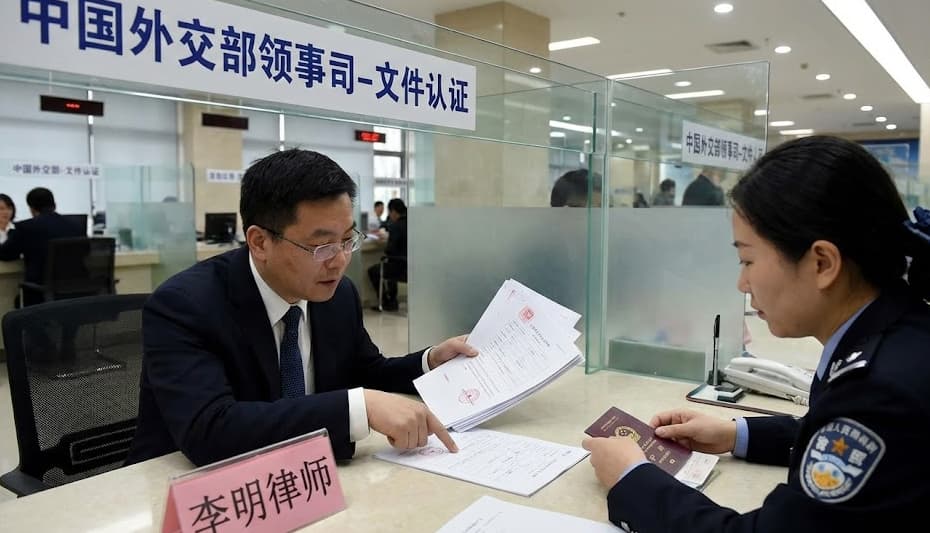
If you are planning to work, study, or do business in China, your paperwork is your passport to entry. But simply bringing your original diploma or marriage certificate isn't enough. It must be "legalized."
Since November 7, 2023, China has been a member of the Hague Apostille Convention. This simplified the process for most of the world, but it created two distinct legal pathways depending on where your document originates. Whether you are from the Philippines, the US, or a non-member country, this guide breaks down exactly how to get your papers approved in 2026.
The Key Takeaways:
Using foreign documents in China has changed significantly since November 2023. Here is the 2026 reality:
- The Split: The process now depends entirely on your country. You are either in the "Apostille Club" or you are not.
- Apostille Countries (Most Nations): You only need a single Apostille Certificate from your local authority (e.g., Secretary of State, DFA). No embassy visit required.
- Non-Apostille Countries: You must follow the traditional 3-step path: Notarization -> State Authentication -> Chinese Embassy Legalization.
- The Purpose: Both methods serve the same goal: verifying the authenticity of signatures and seals so your documents are legally valid in China.
Which Path Are You On?
Before you start paying fees or mailing documents, you must identify your country's status.
- Path A (Apostille Convention): Includes the USA, UK, Australia, Philippines, Japan, South Korea, and most of Europe.
- Path B (Non-Convention): Includes countries like Thailand, Vietnam, Nigeria, UAE, and others not signatory to the Hague Convention.
Path A: For Countries in the Apostille Convention
If your document was issued in a member country, congratulations. The process is streamlined.
What it is
Because China joined the Hague Apostille Convention, it now accepts a standardized certificate called an Apostille. This single sheet of paper replaces the old, expensive multi-step consular legalization.
The Process
- Original Document: specific documents (like FBI checks or FDA certificates) may not need notarization if they are federal originals. Otherwise, get a certified copy.
- Get the Apostille: Submit the document to the "Competent Authority" in the issuing country.
- In the US: Secretary of State (for state docs) or US Dept of State (for federal docs).
- In the Philippines: Department of Foreign Affairs (DFA).
- In the UK: Foreign, Commonwealth & Development Office (FCDO).
The Result
Once the Apostille sticker or page is attached, the document is valid for direct use in mainland China. You do not need to visit the Chinese Embassy. The Apostille replaces the traditional consular stamp.
Path B: For Countries NOT in the Apostille Convention
If your document is from a non-member country, you must use the traditional "Consular Legalization" method. This is a chain of trust involving three specific steps.
Step 1: Notarization
Take your document to a local Notary Public. They will witness the document or certify it as a true copy. This confirms the identity of the person signing the document.
Step 2: State/Provincial Authentication
The notary's signature must be verified by a higher government body.
- Example: In many countries, this is the Ministry of Foreign Affairs or the Secretary of State/Provincial government. They add a seal confirming the notary is legitimate.
Step 3: Chinese Embassy/Consulate Legalization
This is the final and most critical step. You must submit the authenticated document to the Chinese Embassy or Consulate in that country.
- The Embassy officials will review the seal from Step 2.
- They will attach a final sticker or stamp (Legalization/Attestation).
- Note: Without this specific Chinese Embassy stamp, the document is just a piece of paper in China.
Common Documents Requiring Legalization/Apostille in China
Regardless of which path you take, the list of required documents usually remains the same for expats and businesses.
- Birth & Death Certificates: Essential for dependent visas or inheritance matters.
- Marriage Certificates: Required for spousal visas (Q1/S1) or property purchases. For more on this, see our guide on Chinese marriage certificates.
- Diplomas & Academic Records: Mandatory for Work Permit (Z Visa) applications to prove expertise.
- Non-Criminal Record Checks: (Police Clearance) Critical for work visa applications.
- Power of Attorney (POA): Necessary if you need a lawyer in China to act on your behalf in court or for property.
- Business Licenses & Commercial Documents: Required for Chinese incorporation (WFOE setup) or banking due diligence.
Key Points & Critical Advice
The Purpose
Why do we do this? The goal is to verify the authenticity of signatures and seals. Neither the Apostille nor the Embassy Legalization validates the content of your document (e.g., they don't check if your grades were good). They simply confirm that the document was issued by a real authority.
Check First
Procedures change. Fees vary. Always check the official website of the relevant Chinese Embassy or Consulate in your jurisdiction before you start.
- Jurisdiction Matters: In large countries like the US, different Chinese Consulates cover different states. You must go to the one that covers the state where your document was issued.
Translation is Still Required
Remember, legalization makes the document legal, not readable. After you finish the Apostille or Legalization process, you will almost always need to have the document translated into Chinese by a certified translation agency within China.
Conclusion
Document legalization for China is no longer a "one-size-fits-all" process. The introduction of the Apostille Convention has simplified life for millions, but it requires you to know exactly which category your country falls into.
If you are in an Apostille country, enjoy the speed of the single-step certification. If you are in a non-Apostille country, budget extra time for the three-step Embassy run. Getting this right before you travel can save you weeks of delays and hundreds of dollars in re-application fees.
FAQs: Document Legalization China
What if my country joined the Apostille Convention recently?
If your country (like Canada or China itself) recently joined, you switch immediately to the Apostille system. The Chinese Embassy in your country will likely stop accepting legalization applications for documents that qualify for an Apostille.
Can I use a digitized Apostille (e-Apostille)?
China technically accepts e-Apostilles. However, many local bureaus (like the Marriage Registration office or smaller work permit bureaus) still prefer the physical paper certificate with the wet seal. If possible, get the physical version to be safe.
Do I need to translate my documents before legalization?
Generally, no. You legalize the original English (or foreign language) document first. The translation is usually done after you arrive in China, by a government-approved translation company. Translating it beforehand in your home country is often a waste of money because Chinese authorities may not recognize foreign translators.
About the Author: The administrative team at Choi & Huang assists foreign enterprises with corporate compliance, document legalization, and market entry strategies in China.
Subscribe to receive updates
Subscribe to receive the latest blog posts to your inbox every week.