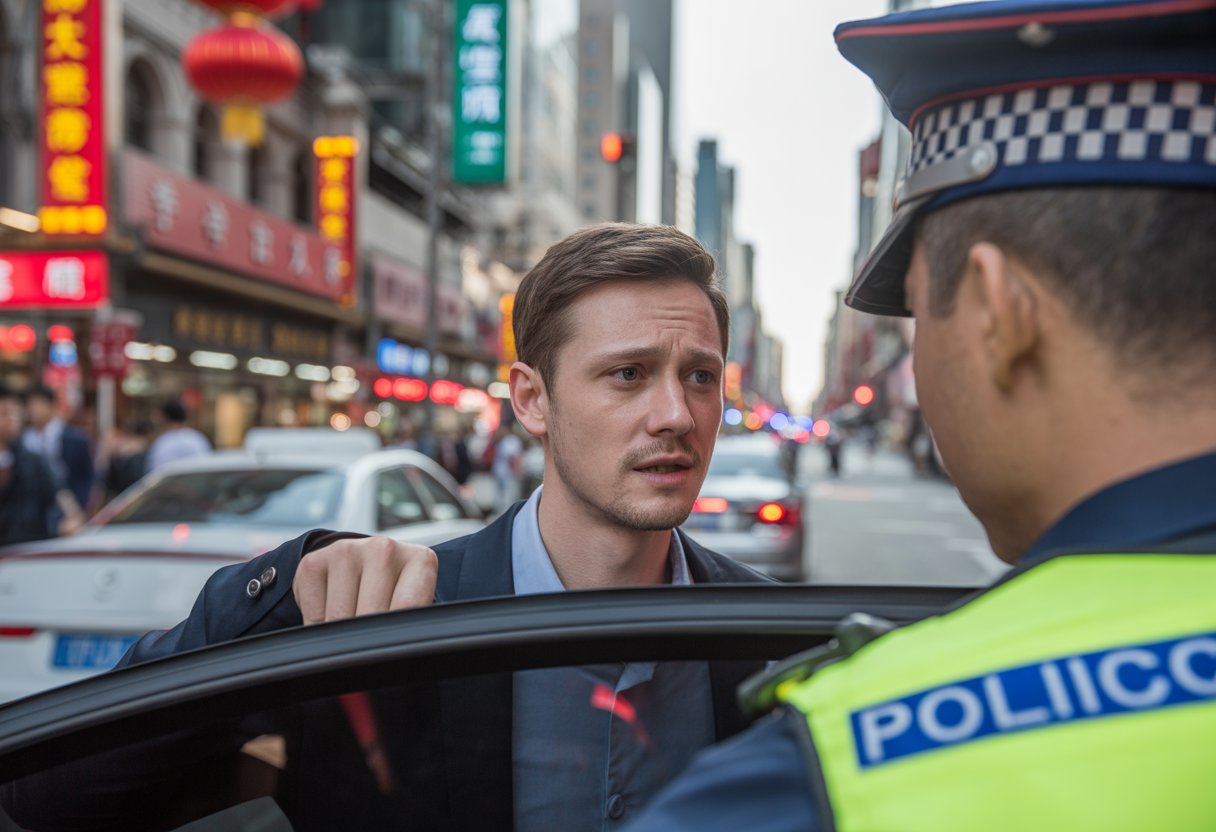
China takes drunk driving very seriously, and the laws apply to everyone on Chinese roads, including foreigners. If you're caught driving under the influence as a foreigner in China, you face the same legal consequences as Chinese citizens, which can include criminal charges, detention, fines, and deportation. The country criminalized drunk driving in 2011, making it a criminal offense even if no accident occurs.
Foreign drivers who violate China's drunk driving laws risk criminal prosecution, heavy fines, license suspension, and potential deportation. Driving without a valid Chinese license also voids insurance coverage. The legal limit in China is strict at 0.02% blood alcohol content (BAC), which is much lower than many Western countries. If your BAC exceeds 0.08%, you face drunk driving charges with harsher penalties.
Insurance companies will deny claims if you're driving without proper licensing, leaving you personally responsible for all damages and medical costs. The combination of criminal charges, financial liability, and immigration consequences makes drunk driving in China particularly risky for foreigners.
Key Takeaways
- China's drunk driving laws criminalize operating a vehicle with a BAC of 0.02% or higher, with stricter penalties at 0.08%
- Foreigners face criminal prosecution, fines, detention, license suspension, and possible deportation for drunk driving violations
- Driving without a valid Chinese license voids insurance coverage, making you personally liable for all accident-related costs
Drunk Driving in China
China enforces strict blood alcohol limits with two categories based on your BAC level. The classification determines whether you face administrative penalties or criminal charges.
Legal Definition of Drunk Driving
China criminalized drunk driving in 2011 through amendments to its Criminal Law. The law makes drunk driving a criminal offense even when no accidents occur and no one gets hurt. You can face criminal charges simply for operating a vehicle with alcohol in your system above the legal threshold.
The law applies equally to Chinese citizens and foreigners. Authorities enforce "equal punishment" regardless of nationality. You cannot claim diplomatic immunity or special treatment based on your foreign status.
Blood Alcohol Content (BAC) Thresholds
China uses two specific BAC measurements to determine drunk driving violations:
- 0.02% (20mg/100ml): The lower threshold for any alcohol-impaired driving
- 0.08% (80mg/100ml): The higher threshold for criminal drunk driving charges
These limits are measured through breath tests or blood tests. If your breath test shows 80mg/100ml or higher, you may face criminal liability under standards updated in December 2023.
The 0.02% limit is significantly lower than many Western countries. A single drink can put you over this threshold.
Classification: Driving After Drinking vs. Driving While Intoxicated
China separates drunk driving into two classifications with different consequences.
Driving After Drinking (DAD) applies when your blood alcohol concentration is over 20mg/100ml (0.02%) but under 80mg/100ml (0.08%). This is the less serious category and typically results in administrative penalties rather than criminal charges.
Driving While Intoxicated (DWI) applies when your BAC reaches 80mg/100ml (0.08%) or above. This classification triggers criminal proceedings. You will receive a criminal record that can affect your visa status, work permits, and ability to remain in China. Foreign nationals convicted under this category may face detention, fines, and deportation.
After understanding the risks of drunk driving in China as a foreigner, it’s equally important to know the licensing rules. By reading our guide, How To Get a Chinese Driving License as an Expat, you’ll learn the legal requirements to drive lawfully and avoid costly mistakes.
Legal Consequences for Foreigners

Foreign nationals face the same strict drunk driving penalties as Chinese citizens. Beyond standard legal punishments, foreigners also risk detention, deportation, and permanent damage to their immigration status in China.
Territorial Jurisdiction and No Leniency
China's drunk driving laws apply equally to all drivers within its borders, regardless of nationality. You cannot claim diplomatic immunity unless you hold official diplomatic credentials, and being unfamiliar with local laws is not a valid defense.
The law sets two critical blood alcohol content (BAC) thresholds. If your BAC measures 20mg/100ml or higher, you're driving under the influence. At 80mg/100ml or above, you're committing drunk driving, which is a criminal offense.
Criminal prosecution begins automatically at the higher threshold. You face criminal liability even if you don't cause an accident or injure anyone. From January to November 2024, prosecutors indicted 303,000 people for dangerous driving charges, with drunk driving cases forming the majority.
Detention and Deportation Risks
If police catch you driving drunk, you face immediate detention. Administrative detention can last up to 15 days for less severe cases. More serious offenses trigger criminal detention while authorities investigate and prepare charges.
Detention types you may face:
- Administrative detention - Up to 15 days for driving under the influence
- Criminal detention - Extended periods during investigation and trial for drunk driving offenses
Deportation becomes likely after you complete any jail sentence. You may receive a deportation order along with a permanent or long-term entry ban.
Hit-and-run situations after drunk driving result in permanent license revocation and extended prison terms, making deportation virtually certain.
Impact on Visas and Immigration Status
Your current visa becomes invalid if authorities deport you. Work permits, residence permits, and business visas all face cancellation following a drunk driving conviction.
Re-entry to China becomes extremely difficult or impossible after deportation. Immigration records remain permanent, and visa applications require disclosure of criminal history. Even minor drunk driving offenses appear in background checks that Chinese consulates review during visa processing.
Visa consequences include:
- Immediate cancellation of existing permits
- Entry bans ranging from several years to permanent
- Rejection of future visa applications
- Employment restrictions if you manage to return
Your employer may terminate your contract immediately upon arrest, as work permits require legal compliance. This creates additional complications for your legal status and ability to remain in China during proceedings.
Legal trouble can quickly escalate into broader business or civil conflicts. Explore our article, Commercial Disputes China: How Businesses Can Resolve Conflicts Effectively, to understand how disputes are handled and what legal remedies are available.
Testing and Enforcement Procedures
Police in China have broad authority to conduct alcohol testing on drivers at any time and location. Officers can request breath tests without needing specific cause, and refusal to cooperate carries serious legal consequences.
Random Breath and Blood Tests
Chinese law allows police officers to conduct random breath tests and set up DUI checkpoints whenever and wherever they choose. You can be stopped and tested even if you haven't committed any traffic violation or shown signs of impaired driving. Officers typically use breathalyzer devices to measure your blood alcohol content at the roadside.
If your breath test shows a BAC of 20mg/100ml or higher, officers will conduct additional testing. Blood tests are required to confirm drunk driving charges when your BAC reaches 80mg/100ml or above. The Ministry of Public Security maintains strict procedures for collecting and processing these samples to ensure accuracy in criminal cases.
Refusal to Submit to Testing
You cannot legally refuse a breath test or blood test when requested by police. Refusing to submit to testing results in immediate penalties that are often as severe as the drunk driving charges themselves. Officers treat refusal as an admission of guilt and can arrest you on the spot.
The law treats non-compliance as a serious offense. Your refusal can lead to license suspension, fines, and potential criminal charges even without confirmed BAC results.
Role of Law Enforcement Agencies
The Ministry of Public Security oversees drunk driving enforcement across China and sets national standards for testing procedures. Local police departments conduct regular checkpoints and patrols to identify impaired drivers. Officers receive specific training on DUI investigation techniques and proper testing protocols.
Police can initiate investigations after observing suspicious driving behavior like weaving between lanes or excessive speeding. They also respond to accidents where alcohol may be a factor. The ministry works with courts and prosecutors to ensure consistent enforcement of drunk driving laws nationwide.
Employment can be jeopardized after a conviction. Learn more by checking out Outsource Employment in China: Key Considerations to understand employer obligations and worker protections under Chinese law.
Penalties and Sanctions
China enforces strict penalties for drunk driving that apply equally to foreign nationals and Chinese citizens. The consequences range from fines and license suspension for lower-level offenses to criminal detention and deportation for serious violations.
License Suspension and Revocation
For driving after drinking (BAC between 20mg/100ml and 80mg/100ml), you face a six-month license suspension. This applies to your Chinese driving permit and prevents you from legally operating any vehicle during that period.
If your BAC exceeds 80mg/100ml, you enter the criminal drunk driving category. This results in a minimum five-year license ban. The revocation is automatic and non-negotiable once authorities confirm your BAC level through testing.
Second offenses carry harsher consequences. Your license will be permanently revoked rather than suspended. You cannot reapply for driving privileges in China after a second drunk driving conviction.
Fines and Penalty Points
The first offense for driving after drinking brings fines between 1,000 and 2,000 RMB. Courts determine the exact amount based on your specific BAC level and circumstances of the stop.
Criminal drunk driving (BAC over 80mg/100ml) involves higher financial penalties. While specific fine amounts vary by jurisdiction, they typically exceed the amounts for lower-level offenses. Penalty points are added to your driving record, though this becomes secondary since license revocation already prevents you from driving.
Administrative and Criminal Detention
Driving after drinking can result in administrative detention, particularly for repeat offenders. Second-time violators face 10 days of detention in addition to fines and license revocation.
Criminal drunk driving automatically triggers criminal liability. You face detention or jail time ranging from one to six months as a standard sentence. This detention period is served in a criminal facility and results in a permanent criminal record in China.
Foreign nationals receive identical detention terms as Chinese citizens. After serving your sentence, immigration authorities will process your deportation and likely ban you from reentering China.
Aggravated Offenses and Sentencing
Certain circumstances trigger heavier punishment beyond standard penalties. Driving a school bus or commercial vehicle while intoxicated qualifies as an aggravated offense regardless of whether an accident occurs.
Causing a traffic accident while drunk and fleeing the scene results in significantly longer sentences. Obstructing police during a traffic stop or attempting to escape also elevates charges.
Repeat offenders who show no reform after previous punishments face enhanced sentencing. Courts interpret multiple violations as evidence of disregard for public safety, which justifies stricter penalties.
Severe intoxication levels (significantly above 80mg/100ml) warrant additional punishment. The guidelines specify scenarios that require heavier sentences, all focused on protecting public safety and deterring dangerous behavior.
If your case affects your visa or residency status, immigration rules become critical. Take a closer look at China Residence Permit: Everything You Need to Know to understand how criminal records may impact your stay.
Judicial and Regulatory Framework
China's drunk driving laws operate through a coordinated system involving multiple government agencies and judicial bodies. The framework sets a blood alcohol content limit of 80mg/100ml for criminal liability and distinguishes between driving under the influence and drunk driving offenses.
Key Laws and Recent Guidelines
Your legal exposure in China comes mainly from two national laws: the Road Traffic Safety Law and the Criminal Law. These laws apply to all drivers in China, including foreigners.
In December 2023, four major Chinese government bodies released updated guidelines to strengthen drunk driving enforcement. The Supreme People's Court, Supreme People's Procuratorate, Ministry of Public Security, and Ministry of Justice jointly issued these standards. The guidelines specify 15 scenarios that warrant heavier punishment for drunk driving offenses.
The updates unified law enforcement and judicial standards across China and adapted regulations to address changing patterns in drunk driving crimes.
Role of Courts and Prosecutors
The Supreme People's Court and Supreme People's Procuratorate set judicial standards for drunk driving cases. Courts handle prosecution and determine sentences based on the severity of the offense.
Prosecutors review evidence from police investigations and decide whether to file criminal charges. They ensure cases meet the legal threshold of 80mg/100ml blood alcohol content for criminal liability.
Entities Involved in Policy and Enforcement
The Ministry of Public Security oversees police operations and investigations for drunk driving cases. Officers conduct roadside testing and gather evidence at the scene.
The Ministry of Justice helps create regulations and ensures proper legal procedures. All four agencies collaborate to maintain consistent enforcement nationwide, providing uniform legal standards across China.
Special Risks and Practical Considerations for Foreigners
Foreign nationals face unique legal and administrative consequences beyond standard criminal penalties when charged with drunk driving in China. These consequences can affect your ability to leave the country, your finances, and your job.
Exit Bans and Travel Restrictions
Chinese authorities can impose exit bans on foreigners involved in drunk driving cases, especially those resulting in accidents or injuries. You may be prohibited from leaving China until your case is fully resolved, which can take months or even years depending on the severity.
During detention and investigation, police will typically confiscate your passport. This prevents international travel or returning home while facing criminal charges. The exit ban remains in effect until you've paid all fines, served any sentence, and satisfied civil compensation claims.
If your drunk driving charge involves property damage or personal injury, the exit ban will not be lifted until victims receive full compensation. This financial requirement can keep you in China if you lack sufficient funds.
Insurance and Personal Liability
Most insurance policies in China exclude drunk driving incidents. Your vehicle insurance will likely refuse to cover damages, injuries, or deaths caused while driving under the influence. This leaves you personally responsible for all costs.
Medical expenses, vehicle repairs, and property damage must be paid by you. In serious cases, these costs can be very high. License suspension adds to your difficulties by preventing you from driving legally even after resolving the criminal case.
Foreign embassies and consulates cannot pay these costs or prevent detention. They can visit you and help you find legal representation.
Impact on Employment and Social Credit
A drunk driving conviction appears on your Chinese criminal record and affects your work authorization. Many employers include morality clauses in contracts that allow immediate termination for criminal offenses. Your work permit may be revoked, forcing you to leave China once travel restrictions lift.
The conviction enters China's social credit system, which tracks legal violations and assigns scores affecting daily life. A low social credit score can prevent you from booking flights or high-speed trains, renting apartments, or accessing certain services. This system shares information across government agencies, making it difficult to hide your record when applying for visa renewals or new work permits.
Professional licenses and certifications may be suspended or revoked based on your criminal record. Teachers, medical professionals, and financial workers face particularly strict scrutiny.
Many foreigners underestimate how regulatory enforcement works in China. Discover the broader legal environment by reviewing China's Legal Framework for Foreign Business Operations to better understand compliance expectations.
Bottomline
Drunk driving in China as a foreigner carries serious legal, financial, and immigration consequences. Even one drink can trigger administrative penalties or criminal charges under China’s strict BAC limits. A conviction may affect your visa, employment, and ability to remain in the country. If you are facing investigation, detention, or charges, early legal guidance is critical.
Consult China Legal Experts for a Confidential Consultation or Preliminary Legal Analysis to protect your rights and minimize long-term impact. You may also explore related guides on driving regulations, work permits, and visa compliance to better understand your legal standing in China.
Frequently Asked Questions
What are the legal consequences for foreigners convicted of drunk driving in China?
You face criminal charges if your blood alcohol concentration reaches 0.08% or higher. At this level, Chinese authorities classify your offense as drunk driving, which carries penalties including criminal detention, fines up to several thousand yuan, and license revocation for five years.
If your BAC registers between 0.02% and 0.08%, you receive a classification of driving after drinking. This results in administrative penalties including fines, points on your license, and temporary license suspension.
Police can arrest you immediately at roadside checkpoints. You may spend time in detention while authorities process your case.
How does the blood alcohol concentration limit in China compare to other countries for foreign drivers?
China's legal limit of 0.02% BAC is lower than most countries. The United States sets its limit at 0.08%, while many European countries have limits between 0.05% and 0.08%.
Your body can reach China's 0.02% limit after consuming just one alcoholic beverage. Even a single beer or glass of wine can put you over the legal threshold.
The criminal threshold of 0.08% in China matches the standard DUI limit in many Western countries. However, China's two-level system means you face penalties at much lower levels than in many other countries.
Are there any specific procedures that foreigners should expect when stopped on suspicion of drunk driving in China?
Police conduct frequent roadside checkpoints where they stop vehicles and administer breath tests. You must comply with these stops and testing procedures.
Officers will ask you to blow into a breathalyzer. If the test shows elevated BAC levels, police will require a blood test for confirmation. Refusing these tests leads to additional penalties.
You may need to provide translation services at your own expense during the legal process. Police will document your case and may require you to remain at the station while they process paperwork and contact relevant authorities.
What is the potential impact on a foreign national's visa status or residency in China after a drunk driving offense?
Your residence permit becomes vulnerable after a drunk driving conviction. Immigration authorities review criminal violations when you apply for visa renewals or residence permit extensions.
You may face denial of your visa or residence permit application based on your criminal record. Chinese law allows authorities to refuse entry or residence to foreigners who violate Chinese laws.
Your employer may terminate your work contract if your conviction affects your legal status. Many companies cannot sponsor work visas for employees with recent criminal convictions in China.
Can foreign nationals face deportation after being charged with or convicted of drunk driving in China?
You can face deportation if your drunk driving offense results in a criminal conviction. Chinese authorities have the right to deport foreigners who commit crimes, especially those involving public safety.
Deportation is more likely if your drunk driving caused an accident, injuries, or property damage. Repeat offenses increase your risk of removal from the country.
If deported, you may receive a ban preventing you from returning to China for several years. The length of this ban depends on the severity of your offense and any resulting consequences.
What legal defenses might be available to a foreigner accused of drunk driving under Chinese law?
You can challenge the accuracy of breathalyzer or blood test results if proper procedures were not followed. Equipment calibration records and testing protocols must meet official standards.
You may argue that you were not actually driving the vehicle at the time of arrest. Chinese law requires proof that you were operating the vehicle while intoxicated.
Medical conditions or prescription medications that affect BAC readings could provide a defense. You need documented medical evidence from qualified healthcare providers to support this claim.
Subscribe to receive updates
Subscribe to receive the latest blog posts to your inbox every week.