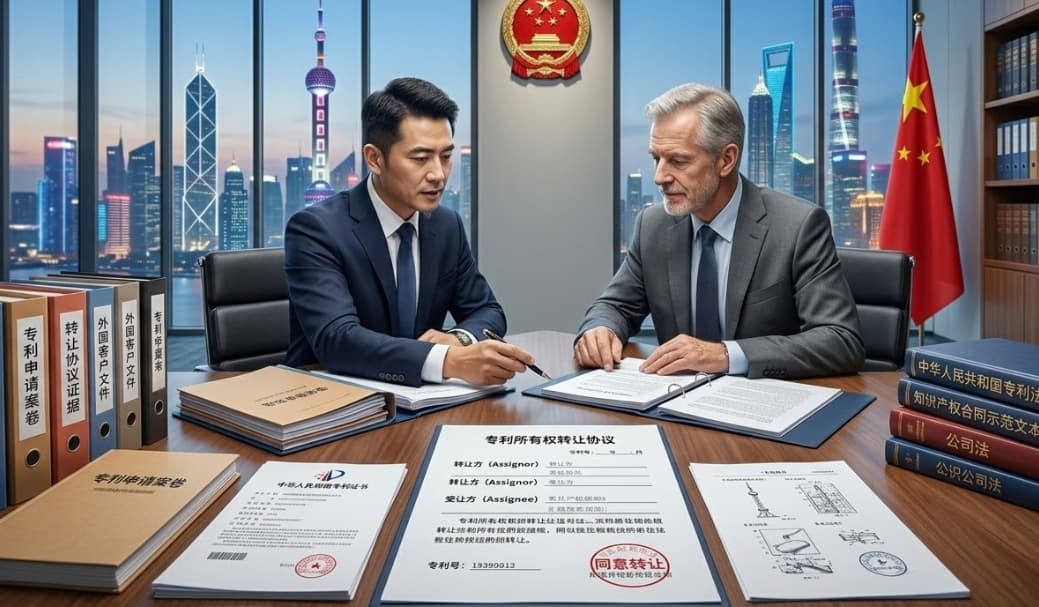
For American investors eyeing China's massive real estate market, the fundamental question remains: can Americans buy land in China? The straightforward answer is no, Americans cannot directly own land in China, as all land belongs to the Chinese state. However, foreigners can obtain land use rights and purchase property under specific conditions, creating viable investment opportunities for those who understand the system.
China's unique property ownership structure, combined with evolving regulations for foreign investors, creates both challenges and opportunities. This comprehensive guide explores the legal frameworks, investment pathways, and practical considerations that American investors need to navigate when entering China's property market.
Understanding China's Land Ownership System
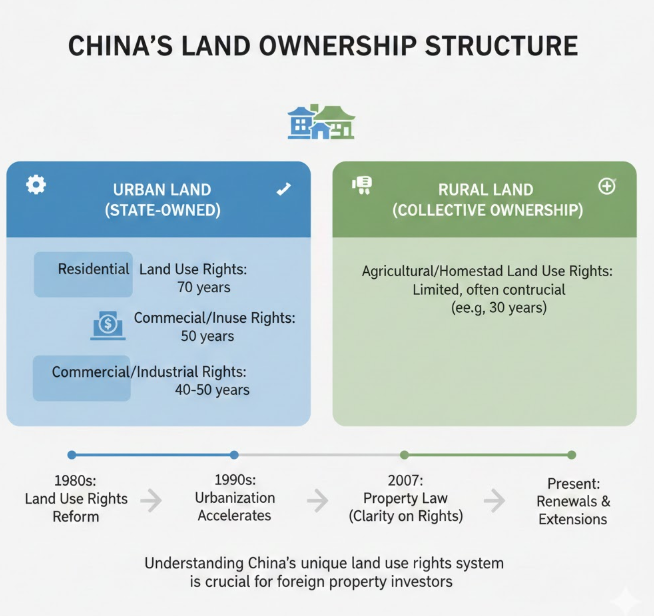
China operates under a fundamentally different property ownership model than the United States. The Chinese Constitution establishes that all land belongs to either the state (in urban areas) or rural collectives (in rural areas). This means that even Chinese citizens don't technically "own" land in the Western sense—they obtain land use rights for specified periods.
For urban residential property, land use rights typically extend for 70 years, while commercial properties receive 40-50 year terms. Industrial land use rights are generally granted for 50 years. These rights can be renewed, though the specific terms and costs of renewal remain somewhat unclear as China's modern property system is relatively young.
Legal Framework for American Property Buyers
The legal foundation for foreign property investment in China stems from several key regulations, including the Property Rights Law and various administrative measures. Americans looking to invest must comply with the china foreign policy law framework that governs foreign investment activities.
Eligibility Requirements for Americans
To purchase property in China as an American citizen, you must meet specific residency and documentation requirements:
Residency Requirement: You must have lived in China for at least 12 consecutive months with a valid residence permit. This requirement applies to work permits, study permits, or other long-term residence documents.
Property Limitations: Qualified foreign individuals can purchase only one residential property for personal use. Investment purchases or multiple property ownership by individuals is generally prohibited.
Documentation: Required documents include your passport, valid residence permit, employment certification, tax payment records, and proof of address registration in China.
Types of Property Investment Available to Americans
Residential Property
Americans meeting residency requirements can purchase apartments, houses, or condominiums for personal use. The property must serve as your primary residence in China, and subletting or using it purely for investment purposes may violate regulations.
Major cities like Beijing, Shanghai, and Shenzhen have additional restrictions, often requiring longer residency periods or higher tax payment thresholds. These tier-one cities also implement purchase quotas and price controls that affect both domestic and foreign buyers.

Commercial Property Investment
Commercial property investment offers more flexibility for Americans, though it requires establishing a business presence in China. Foreign companies can purchase office buildings, retail spaces, warehouses, and industrial facilities for business operations.
The process involves registering a Chinese company, obtaining necessary business licenses, and demonstrating legitimate business purposes for the property acquisition. This pathway often provides better long-term investment potential but requires more complex legal structures.
Things to Know: Key Facts About American Property Investment in China
- No Direct Land Ownership: Americans obtain land use rights, not ownership of the physical land
- 70-Year Maximum: Residential land use rights last up to 70 years and can theoretically be renewed
- One Property Limit: Individual foreign buyers can purchase only one residential property
- 12-Month Residency: Must live in China for at least one year before becoming eligible
- Business Route Available: Companies can purchase commercial property with proper business registration
- Regional Variations: Different cities and provinces may have additional restrictions or requirements
- Currency Restrictions: Large property purchases must comply with China's foreign exchange regulations
- Tax Obligations: Property owners must pay annual property taxes and comply with china privacy law requirements for financial reporting
Step-by-Step Property Acquisition Process
Phase 1: Qualification and Preparation
Before beginning your property search, ensure you meet all eligibility requirements. Gather necessary documentation including your passport, residence permit, employment verification, and tax payment records. Consider consulting with local legal experts who understand both Chinese property law and American tax implications.
Understanding local market conditions is crucial. Property prices, availability, and regulations vary significantly between cities. Beijing and Shanghai have the most restrictive policies, while tier-two and tier-three cities may offer more opportunities for foreign buyers.
Phase 2: Property Search and Due Diligence
Work with licensed Chinese real estate agents who have experience with foreign buyers. Conduct thorough due diligence on any property you're considering, including verification of land use rights, building permits, and any existing liens or legal issues.
Pay particular attention to the remaining term of land use rights, building quality, location infrastructure, and future development plans that might affect property values. Consider hiring independent property inspectors and legal consultants for major purchases.

Phase 3: Contract Negotiation and Legal Review
Chinese property transactions typically involve multiple contracts and agreements. The initial purchase intention agreement outlines basic terms, followed by a formal sales contract that details all conditions, payment terms, and transfer procedures.
Ensure all contracts are professionally translated and reviewed by qualified legal counsel. Pay attention to clauses regarding property maintenance, management fees, and procedures for handling disputes or contract modifications.
Phase 4: Payment and Registration
Property payments in China must comply with foreign exchange regulations. Large transfers may require approval from the State Administration of Foreign Exchange (SAFE). Plan for additional costs including taxes, registration fees, and legal expenses that can add 3-5% to the total purchase price.
Property registration with local authorities officially transfers land use rights to your name. This process typically takes 2-4 weeks and requires personal attendance or authorized representation at the registration office.
Restrictions and Challenges for American Buyers
Geographic Limitations
Certain areas of China are completely off-limits to foreign property investment, including military zones, border regions, and areas designated as culturally or environmentally sensitive. Some cities also restrict foreign ownership in specific districts or neighborhoods.
Popular destinations for foreign property investment include Shanghai, Beijing, Guangzhou, and Shenzhen, though these cities also have the strictest requirements and highest prices. Secondary cities like Hangzhou, Nanjing, and Chengdu may offer better value and fewer restrictions.
Regulatory Compliance Challenges
Ongoing compliance requirements include annual reporting to local authorities, tax payments, and adherence to property use restrictions. Violations can result in fines, forced sales, or loss of land use rights.
Changes in Chinese law can affect foreign property owners retroactively. The regulatory environment continues evolving, particularly regarding foreign investment and national security considerations. Staying informed about legal changes requires ongoing professional consultation.
Alternative Investment Strategies
Real Estate Investment Trusts (REITs)
For Americans seeking exposure to Chinese real estate without direct property ownership, Chinese REITs offer a more accessible investment vehicle. These instruments trade on Chinese stock exchanges and provide exposure to commercial real estate portfolios.
Chinese REITs focus primarily on infrastructure projects, commercial properties, and rental housing developments. While returns may be lower than direct property ownership, REITs offer greater liquidity and lower entry barriers.
Joint Ventures and Corporate Structures
Establishing a Chinese company or entering joint ventures with Chinese partners can provide more flexible property investment opportunities. This approach requires significant legal and financial commitments but may offer better long-term investment potential.
Foreign companies can acquire multiple commercial properties and participate in larger development projects. However, this strategy involves complex regulatory compliance and ongoing operational responsibilities in China.

Tax Implications and Financial Considerations
American property owners in China face tax obligations in both countries. Chinese property taxes include deed tax (typically 1-3% of purchase price), annual property tax, and potential capital gains tax upon sale. Understanding these obligations is crucial for accurate investment calculations.
U.S. tax implications include reporting requirements for foreign assets, potential tax treaty benefits, and coordination of Chinese and American tax obligations. The complexity of dual tax compliance makes professional tax consultation essential for American investors.
Currency exchange risks also affect property investments. Fluctuations in USD-CNY exchange rates can significantly impact investment returns, particularly for Americans who earn income in dollars but hold assets in yuan.
Legal Considerations and Risk Management
Americans should be aware that china visa overstay issues can affect property ownership rights and complicate legal standing in China. Maintaining proper visa status is crucial for property owners.
Property insurance in China operates differently than in the United States. Coverage options, claim procedures, and legal protections may be less comprehensive. Consider purchasing additional coverage through international insurers for major property investments.
Dispute resolution mechanisms in China favor domestic arbitration and Chinese courts. Including international arbitration clauses in property contracts can provide additional legal protections for American investors.
Market Outlook and Timing Considerations
China's property market has experienced significant volatility in recent years, with government policies aimed at controlling speculation and maintaining affordability. Understanding market cycles and policy trends is crucial for investment timing.
Demographic trends, including urbanization and population aging, continue driving long-term demand for housing in major Chinese cities. However, supply constraints and government controls create complex market dynamics that require careful analysis.
Consider seasonal factors when planning property purchases. China's property market typically sees increased activity around china holidays 2024 periods, which can affect pricing and availability.
Conclusion
While Americans cannot buy land in China in the traditional sense, qualified investors can acquire valuable property rights that provide many benefits of ownership. Success in the Chinese property market requires understanding the unique legal framework, meeting residency requirements, and navigating complex regulations with professional guidance.
The opportunities are real for Americans willing to commit to China's residency requirements and investment minimums. Whether pursuing residential property for personal use or commercial real estate through corporate structures, the key lies in thorough preparation, professional legal counsel, and realistic expectations about the Chinese property system.
For Americans considering property investment in China, the most critical step is consulting with experienced legal professionals who understand both Chinese property law and American tax implications. With proper guidance and realistic expectations, American investors can successfully participate in one of the world's largest and most dynamic property markets.
Frequently Asked Questions
Can Americans buy land outright in China?
No, Americans cannot buy land outright in China. All land belongs to the Chinese state or rural collectives. However, Americans can obtain land use rights for residential or commercial property, which function similarly to ownership for practical purposes.
How long do property rights last for American buyers?
Residential property rights last 70 years, commercial rights last 40-50 years. These land use rights can theoretically be renewed upon expiration, though the specific terms and costs of renewal are not yet clearly established in Chinese law.
What is the minimum residency requirement for Americans to buy property?
Americans must live in China for at least 12 consecutive months. This residency must be documented with a valid residence permit, work permit, or student visa, along with proof of address registration with local authorities.
Can Americans buy multiple properties in China?
Individual Americans can only buy one residential property. However, American companies registered in China may purchase multiple commercial properties for legitimate business purposes, subject to additional regulatory requirements.
What happens to American-owned property if the owner dies?
Property can be inherited according to Chinese inheritance law. However, inheritors must meet the same residency requirements as original buyers, or the property may need to be sold within a specified time period.
Are there restrictions on where Americans can buy property in China?
Yes, certain areas are off-limits to foreign buyers. Military zones, border regions, and some culturally sensitive areas prohibit foreign property ownership. Additionally, major cities like Beijing and Shanghai have stricter requirements than smaller cities.
Can Americans get mortgages for Chinese property purchases?
Yes, but options are limited and requirements are strict. Chinese banks may provide mortgages to qualified foreign buyers, typically requiring larger down payments (30-50%) and proof of stable income in China.
What are the ongoing costs of owning property in China as an American?
Expect annual property taxes, management fees, and compliance costs. These typically range from 1-3% of property value annually, plus potential currency exchange costs for Americans earning income in dollars.
Subscribe to receive updates
Subscribe to receive the latest blog posts to your inbox every week.