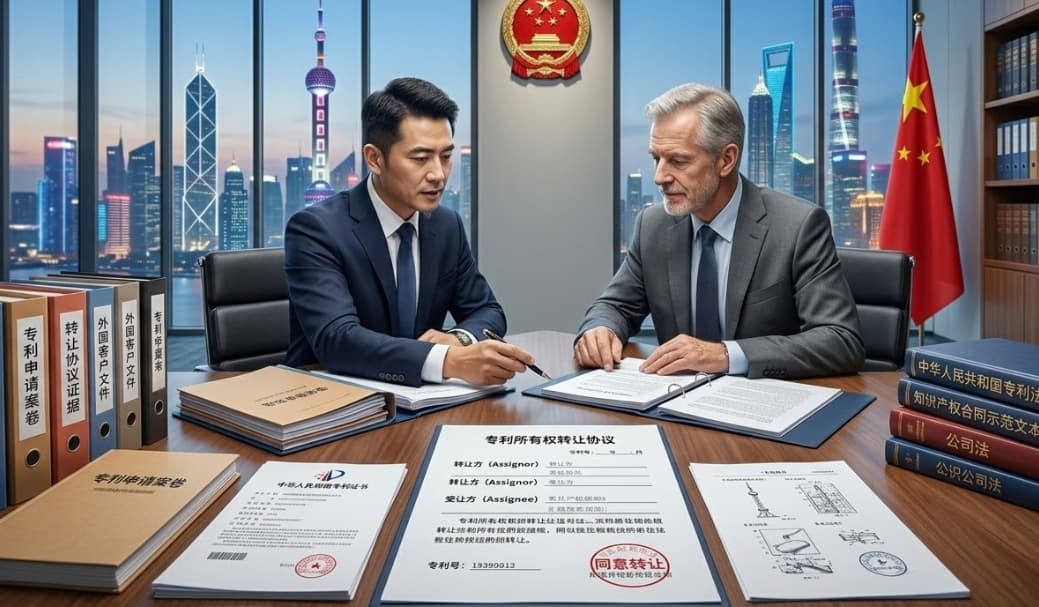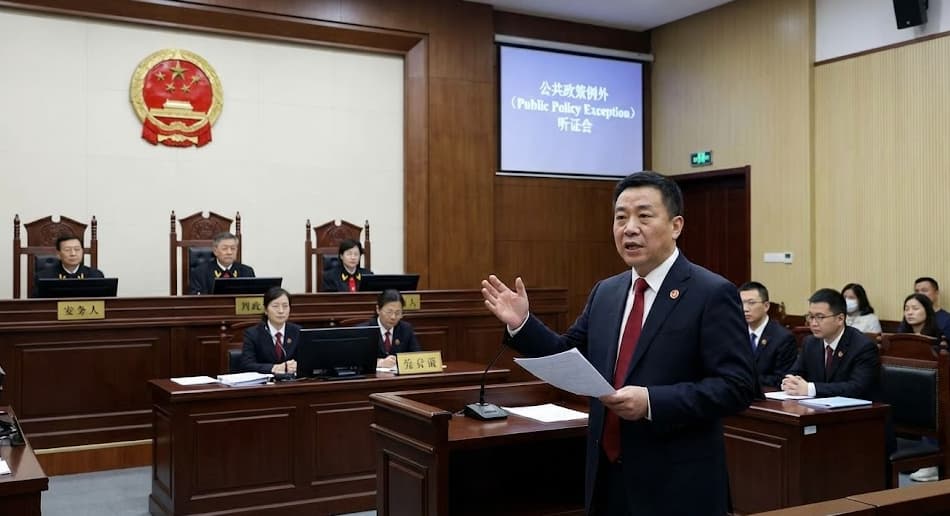
Imagine this scenario. You win a $10 million arbitration case in London against a Chinese supplier. You are relieved. But when you take that award to Beijing to collect the money, the supplier's lawyer smiles. He claims the award violates the "Public Policy Exception in China."
This phrase strikes fear into the hearts of foreign investors. It sounds like a "Get Out of Jail Free" card for Chinese companies, or a vague excuse to ignore foreign rulings. But is it really that simple?
In 2026, the landscape has changed. While China's legal framework for foreign business is strict, it is also increasingly predictable. This guide breaks down exactly what "Public Policy" means in Chinese law, why it matters for your contracts, and why it might not be the threat you think it is.
The Key Takeaways
Worried that a Chinese court will reject your foreign award just because they do not like it? Here is the reality for 2026:
- Chinese courts rarely use the public policy exception. It is reserved for extreme cases that harm China's sovereignty or core social interests.
- A local judge cannot use this exception on their own. They must report it up to the Supreme People's Court (SPC) for approval first. This prevents abuse.
- Violation of Law ≠ Violation of Policy: Just because your contract violated a minor Chinese regulation does not mean it violates "Public Policy." The bar is much higher.
- Today, the main targets are gambling debts, cryptocurrency transactions, and decisions that violate China's judicial sovereignty.
What is the "Public Policy Exception"?
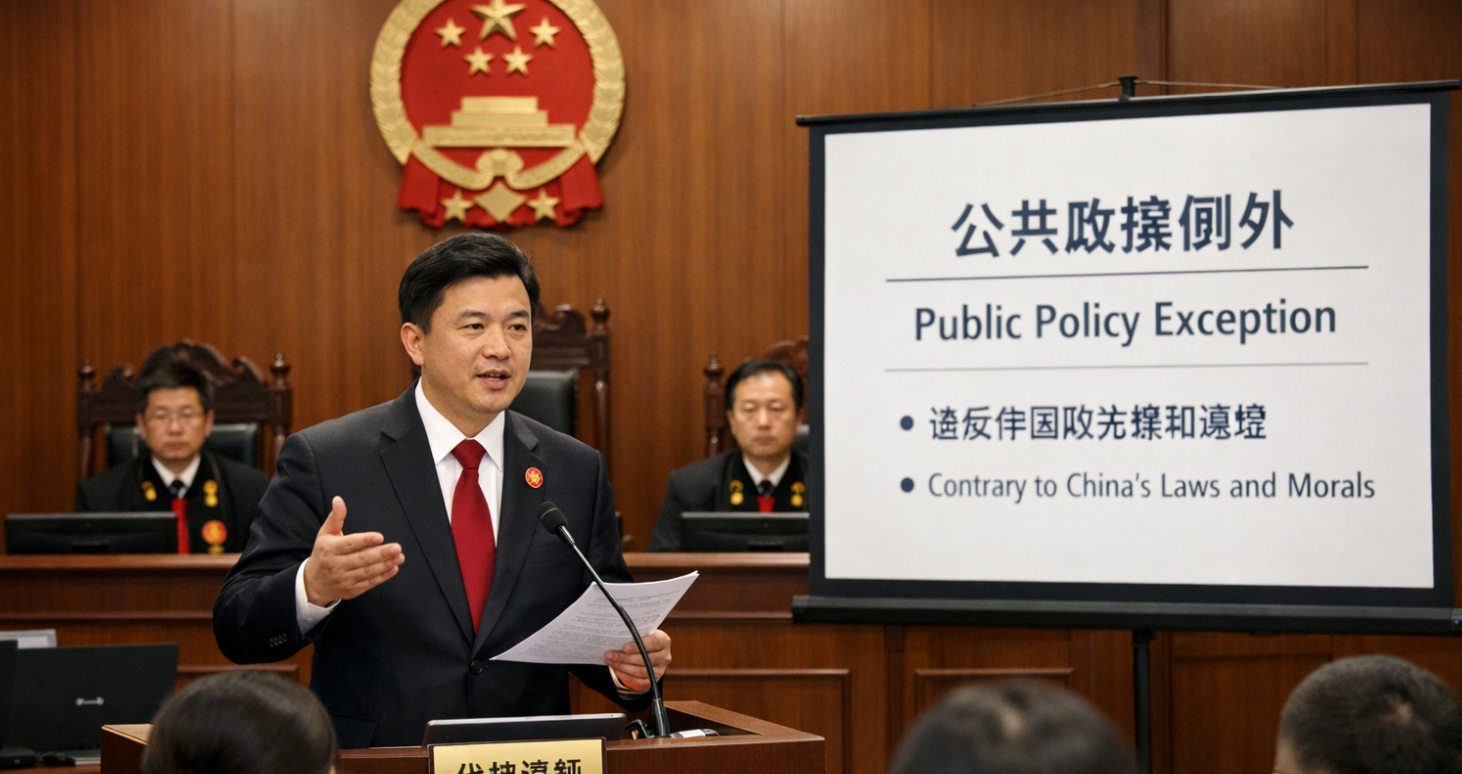
To understand the exception, we first have to look at where it comes from. It is not something China invented to be difficult. It is a standard part of international law, specifically under the New York Convention on the Recognition and Enforcement of Foreign Arbitral Awards (1958).
This treaty, which China signed decades ago, forces countries to enforce each other's legal awards. However, the treaty kept one escape hatch for sovereign nations. It is found in Article V(2)(b).
This article says a country can refuse to enforce an award if doing so would be "contrary to the public policy of that country."
The Chinese Definition: "Social Public Interest"
In China, we do not just say "Public Policy." The Civil Procedure Law uses a specific term: "Social Public Interest" (Shehui Gonggong Liyi).
For years, foreign lawyers worried this was a catch-all term. Could it mean anything the government wants? Could it mean protecting a local factory from going bankrupt? Thankfully, over the last 20 years, the Supreme People's Court (SPC) has issued clarifications that narrow this definition significantly.
In 2026, "Social Public Interest" generally covers four specific areas:
- Violation of Sovereignty: Anything that challenges the political independence or judicial power of the Chinese state.
- Endangering National Security: Decisions that involve military secrets, state intelligence, or critical infrastructure.
- Violation of Fundamental Principles: This refers to the core pillars of Chinese law, not just minor technical rules.
- Violation of Good Customs: This refers to social morality and ethics, such as laws regarding family, gambling, or drugs.
The "Reporting System": Your Safety Valve
This is the most important section of this entire guide. If you only remember one thing, remember the Internal Reporting System.
In the 1990s, there was a legitimate fear of "local protectionism." A foreign company might sue a powerful local factory in a small city. The local judge, who might be friends with the factory owner, would reject the foreign award claiming it violated "public policy." It was an easy excuse.
To stop this, China implemented a centralized review system in 1995, and it has been strengthened ever since. It completely removes the power from the local judge.
How the Hierarchy Works
Here is the step-by-step process a court must follow to reject your award:
- Step 1 (The Local Court): The Intermediate People's Court hears your case. If they want to refuse enforcement based on Public Policy, they cannot issue a ruling. They must write a report explaining why.
- Step 2 (The High Court): They send this report up to the High People's Court of the province. The High Court reviews it. If the High Court thinks the award should be enforced, they send it back and order the local judge to enforce it. If the High Court agrees with the refusal, they must send it higher.
- Step 3 (The Supreme Court): The report goes all the way to the Supreme People's Court (SPC) in Beijing. The SPC is the highest court in the land. They review the case. Only if the SPC says "Yes" can the local court refuse enforcement.
Why this matters: This system means that refusing a foreign award is a major political decision. It is not done lightly. The SPC is very pro-arbitration because they want to encourage foreign investment. They reject most requests from local courts to use the public policy exception. This centralization creates a huge safety net for China cross-border enforcement.
Public Policy Exception in China Real-World Examples: When is it Used?
So, if the SPC is so strict, what actually triggers this "Nuclear Option"? It usually involves activities that are strictly illegal or socially taboo in China.
Case Study 1: The Gambling Debt
Gambling is illegal in Mainland China. It is considered a vice that destroys families and social stability. Now, imagine a wealthy Chinese businessman goes to Las Vegas. He borrows $1 million from a casino and loses it all. He returns to Shanghai and refuses to pay.
The casino gets a court judgment in Nevada and tries to enforce it in Shanghai. The Shanghai court will refuse. Why? Because enforcing a gambling debt would violate the "good customs" of Chinese society. It would essentially validate an activity (gambling) that Chinese criminal law explicitly bans. This is a classic use of the public policy exception.
Case Study 2: Cryptocurrency and Finance
China has implemented strict bans on cryptocurrency trading and Initial Coin Offerings (ICOs) to protect its financial system. If two companies have a dispute over a contract that required payment in Bitcoin, or involved the issuance of illegal tokens, an arbitrator might rule that one party owes the other 100 Bitcoin.
If you try to enforce that award in China, the court might reject it. They would argue that validating a crypto-transaction harms China's financial security and violates the public policy regarding currency controls.
Case Study 3: Judicial Sovereignty (The Anti-Suit Injunction)
This is a technical but critical point. In some Western legal systems, a court can issue an "Anti-Suit Injunction." This is an order that says, "You must stop suing in China."
China views this as an attack on its sovereignty. They believe no foreign judge has the right to tell a Chinese citizen they cannot access their own courts. If an arbitration award includes an order blocking a Chinese lawsuit, the Chinese court will likely refuse to enforce that specific part of the award.
Public Policy in Family and Social Law
The exception isn't just for big corporations fighting over factories. It affects individuals too, especially in family law.
Inheritance and Protection of the Vulnerable
Consider China inheritance law. One fundamental principle in China is that you cannot disinherit dependents who cannot support themselves (like minor children or disabled relatives). This is a mandatory social safety net.
If a foreigner living in China writes a will leaving 100% of their assets to a friend, completely ignoring their destitute minor children, a foreign court might validate that will.
But a Chinese court might refuse to enforce it. They would argue that leaving children to starve violates the "Social Public Interest" of protecting the vulnerable.
Changing Social Norms
Public policy is not frozen in time. It changes as society changes. For example, look at the policies regarding how many kids can you have in China. Thirty years ago, having three children was a violation of strict family planning policy. Enforcing a contract that encouraged large families might have been problematic then.
Today, the government encourages three children. The public policy has flipped 180 degrees. This shows that you must understand the current political and social climate, not just the text of the law from 1995.
Violation of Law vs. Violation of Public Policy
This is the most common mistake made by foreign lawyers. They assume that if a contract violates a Chinese regulation, it automatically violates public policy. This is false.
The SPC draws a clear line between "Departmental Interests" (Administrative rules) and "Social Public Interests" (Core values).
The Construction Permit Example
Let's say a German company signs a contract to build a factory in Suzhou. They start building before they get the final "Construction Permit" from the local bureau. This is technically illegal under the Construction Law. They finish the building, but the Chinese client refuses to pay, arguing the contract is void because it broke the law.
An arbitrator rules that the Chinese client must pay for the work done. The client tries to block enforcement in China, claiming "Public Policy Exception" because the law was broken.
The Court's Likely Ruling: The court will enforce the payment. Why? Because missing a permit is an administrative error. It harms the management of the construction bureau, but it does not harm the entire society. Violating a regulation results in a fine, not a "Public Policy" refusal. The bar for public policy is much higher than just breaking a rule.
Strategic Advice: How to Protect Yourself
If you are doing business in China, you cannot completely eliminate risk. But you can "bulletproof" your contracts against this specific threat.
1. Avoid Sensitive Sectors
Be extra careful if your business touches on highly regulated industries. Media, education, mapping, and defense are sensitive. If your contract involves mapping sensitive Chinese data and sending it abroad, that could trigger a "National Security" public policy refusal.
2. Respect the Hierarchy
Never ask a foreign arbitrator to rule on the validity of a Chinese patent or an administrative act (like a tax penalty). Arbitrators handle commercial disputes. Only Chinese courts and bureaus can decide if a patent is valid or if a tax is fair. If your award tries to invalidate a government act, it will be blocked.
3. Check the Social Credit System
Understanding the China point system (Corporate Social Credit System) gives you a clue about what the government prioritizes. If your partner is blacklisted for environmental pollution or safety violations, it is a sign that they are already on the wrong side of public interest.
Enforcing against them might be harder, not because of the exception itself, but because they are "toxic" assets.
4. Choose the Right Seat
Arbitrating in Hong Kong is often safer than in London or New York for China-related disputes. Hong Kong courts share a legal culture with the mainland but operate under the Common Law.
Mainland courts are very comfortable enforcing Hong Kong awards, and the definition of public policy is well-aligned between the two jurisdictions.
Conclusion
The Public policy exception in China is a shield, not a sword. It is designed to protect the fundamental order of the state, not to help dishonest companies dodge their commercial debts.
The fear of this exception is largely a hangover from the 1990s. Thanks to the Supreme People's Court's centralized Reporting System, the risk of "local protectionism" using this excuse has dropped dramatically. In 2026, if you have a legitimate commercial award that does not involve gambling, drugs, contraband, or political subversion, the chances of it being blocked by "Public Policy" are statistically very low.
Final Thought: Do not let the ghost of "Public Policy" stop you from doing business in China. But do respect the local red lines. In China, knowing where the fence is allows you to play safely in the yard.
FAQs: Public Policy Exception China
Has China ever refused an award based on public policy?
Yes, but it is rare. One famous historical case was the Hemofarm case in 2008. In that case, a court refused enforcement because the arbitration tribunal ruled on a dispute that a Chinese court had already seized jurisdiction over. This was seen as a violation of China's judicial sovereignty. However, such refusals constitute less than 1% of all enforcement applications.
Does "Public Policy" include protecting Chinese State-Owned Enterprises (SOEs)?
Officially, no. There is a common myth that courts will use public policy to save a State-Owned Enterprise (SOE) from losing money. The Supreme People's Court has clarified that the commercial loss of an SOE is just a commercial loss. It does not threaten the nation's economic stability. Therefore, protecting an SOE's wallet is not a valid public policy reason.
Is the "Public Policy" definition the same in Hong Kong?
No. Hong Kong uses a Common Law definition, which is also very narrow but relies on different case law precedents. Hong Kong courts are famous for their "pro-enforcement" bias. However, both Mainland China and Hong Kong courts generally agree on the big picture: Public Policy should only be used in extreme cases where enforcement would "shock the conscience" of the court.
Can I appeal if a court uses the Public Policy exception?
Because of the Reporting System, the decision to refuse enforcement effectively comes from the Supreme People's Court. Since the SPC is the highest court in China, there is usually no higher court to appeal to. This is why the initial review process is so rigorous—they want to get it right the first time because it is final.
Does bribery violate public policy?
Yes. If an arbitration award was obtained through bribery (e.g., bribing the arbitrators) or if the underlying contract was a bribe (e.g., a "consulting agreement" that was actually a payoff to a government official), the Chinese court will refuse to enforce it. Corruption is considered a severe violation of social public interest.
About the Author: The cross-border litigation team at Choi & Huang assists foreign entities in navigating the complexities of Chinese enforcement law and the New York Convention. We have handled enforcement proceedings in over 15 provinces across China.
Subscribe to receive updates
Subscribe to receive the latest blog posts to your inbox every week.