

In 2026, State-Owned Enterprises SOE acquisitions in China remain one of the most complex yet lucrative entry strategies for foreign investors.
The government's "Mixed Ownership Reform" policy actively encourages private capital to revitalize State-Owned Enterprises (SOEs) in competitive sectors like machinery, chemicals, and infrastructure.
However, buying state assets is not a standard commercial deal. It involves a rigorous, multi-layered approval process overseen by the State-owned Assets Supervision and Administration Commission (SASAC) and potential National Security Reviews.
Success requires navigating a unique maze of asset appraisal rules and political due diligence.
The Architecture of an SOE Acquisition in 2026
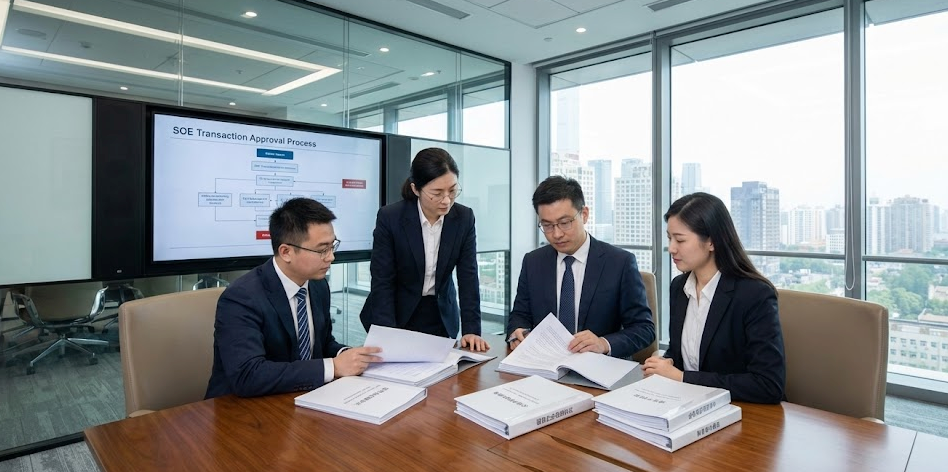
1. The Mandatory Public Bidding Process
In China, you cannot simply buy an SOE through a private handshake deal. Under the "Interim Measures for the Management of State-Owned Assets," state-owned equity must be "listed" on an authorized property rights exchange (such as those in Beijing or Shanghai).
- The Listing Phase: The SOE publicly announces the intent to sell.
- The Bidding Phase: Interested foreign investors submit their qualifications and bids.
- The Evaluation: While price is a factor, SASAC also evaluates the "Strategic Value" the buyer brings, such as patents, global networks, or environmental certifications.
2. The Asset Valuation "Red Line"
One of the biggest hurdles in SOE acquisitions in China is the valuation. A state-certified appraisal firm must value the company.
If a foreign investor tries to negotiate a price more than 10% below this appraised value, the transaction requires a second, higher-level government approval, which is rarely granted.
This prevents the "drainage of state assets.”
3. National Security Review (NSR) and "Actual Control"
If the acquisition results in the foreign investor gaining "actual control" of a domestic enterprise in a sensitive sector, it triggers a formal NSR.
- Sensitive Sectors: Defense, core agriculture, energy, major equipment manufacturing, and any sector involving "important data."
- Review Tiers: The review moves through a preliminary 15-day check to a potential 60-day "Special Review" if the deal impacts national economic stability.
👉 For more on choosing the right legal vehicle for these deals, see our guide on the Types of Companies in China.
Post-Acquisition: Aligning with the 2024 Company Law
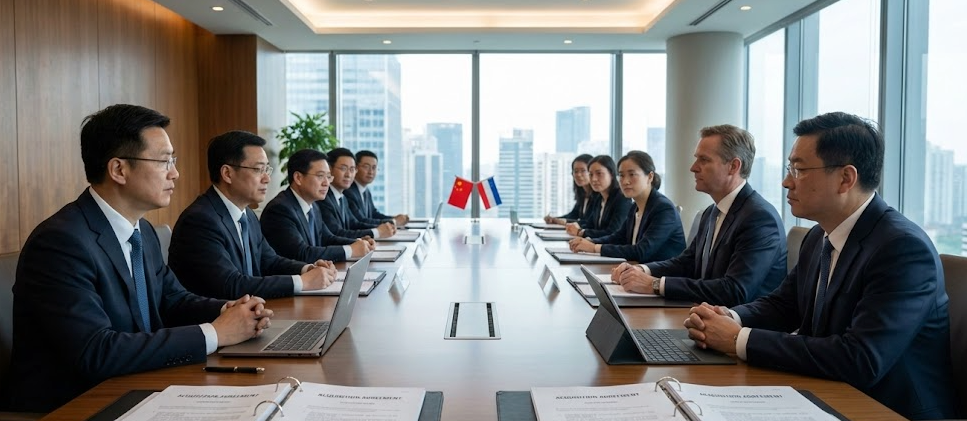
Once the deal closes, the new entity (often a Joint Venture or a converted FIE) must comply with the 2024 Company Law governance updates:
- Employee Representatives: Companies with over 300 employees must generally have an employee representative on the board.
- Statutory Reserves: The 10% after-tax profit allocation to the statutory common reserve remains mandatory until it reaches 50% of registered capital.
Conclusion
SOE acquisitions in China offer a unique path to scale but come with heavy "state strings" attached.
The 2026 regulatory environment is transparent but rigid.
Success depends less on aggressive negotiation and more on compliance precision—ensuring your valuation meets SASAC floors, your security profile clears the NSR, and your employee plan satisfies the Party Committee.
FAQs SOE Acquisitions in China
Can a foreign company own 100% of a Chinese SOE?
It depends on the industry. In "Encouraged" or "Permitted" sectors, 100% ownership is possible. However, in "Restricted" sectors (like basic telecommunications or nuclear power), the Chinese state must maintain a controlling or majority interest.
What is the role of the "Party Committee" in a post-acquisition SOE?
Under the 2024 Company Law and the Constitution of the Communist Party, SOEs are required to maintain a Party organization. In mixed-ownership companies, the Party Committee usually focuses on ensuring the company follows national policies and labor laws, but they do not typically interfere in day-to-day commercial operations.
How is the "listing price" determined for an SOE?
The listing price is based on a formal asset appraisal report approved by SASAC. This report looks at the company’s net assets, earning potential, and intangible assets like brand value. The final transaction price is usually the result of the competitive bidding process, starting from this floor price.
What happens if the National Security Review (NSR) is rejected?
If the NSR panel determines a deal threatens national security, they can prohibit the transaction or demand "mitigation measures"—such as divesting certain divisions, limiting foreign voting rights, or ensuring data remains within China.
Are local SOEs easier to acquire than central SOEs?
Generally, yes. Local SOEs (owned by provincial or municipal governments) are often more open to foreign capital to drive local employment and tax revenue. Central SOEs (the "Yangqi") are larger, more strategic, and subject to much stricter scrutiny from the central SASAC in Beijing.
Subscribe to receive updates
Subscribe to receive the latest blog posts to your inbox every week.




.png)