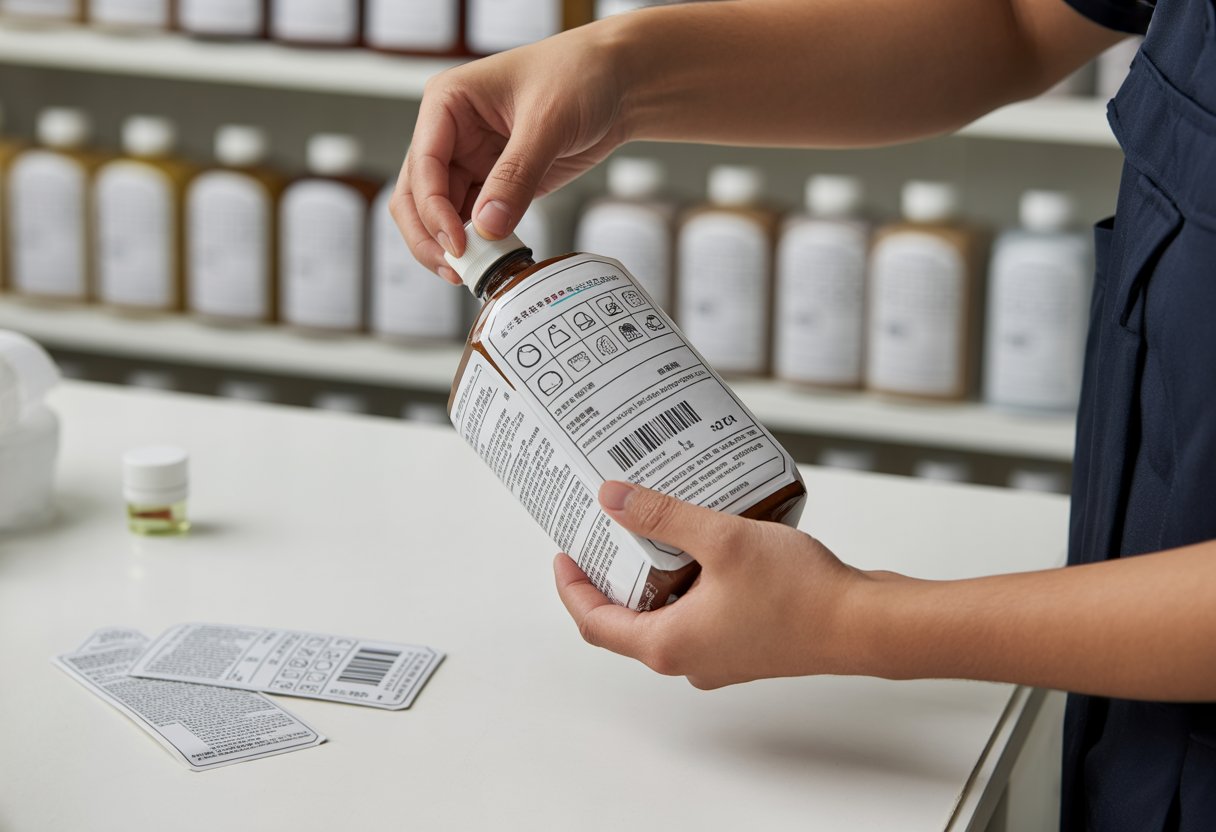
Selling products in China requires strict labeling to protect buyers and support safety checks. Labels provide key details, help customs clear goods, guide safe use, and prove legal compliance. Mistakes can delay shipments or block sales.
Products sold in China must carry Chinese-language labels showing required details like product name, specs, manufacturer or importer information, country of origin, safety warnings, and mandatory marks such as the CCC mark when needed. These rules change by product category, and authorities enforce them at import and in the market. Knowing the requirements for your product saves time and cost.
China updates standards and adds new safety marks regularly. Staying current helps you avoid risk and keep products on shelves.
Key Takeaways
- China requires clear Chinese-language labels with specific product details.
- Some products need mandatory safety marks and testing before sale.
- Rules vary by product type and continue to evolve.
Fundamental Product Labeling Requirements in China
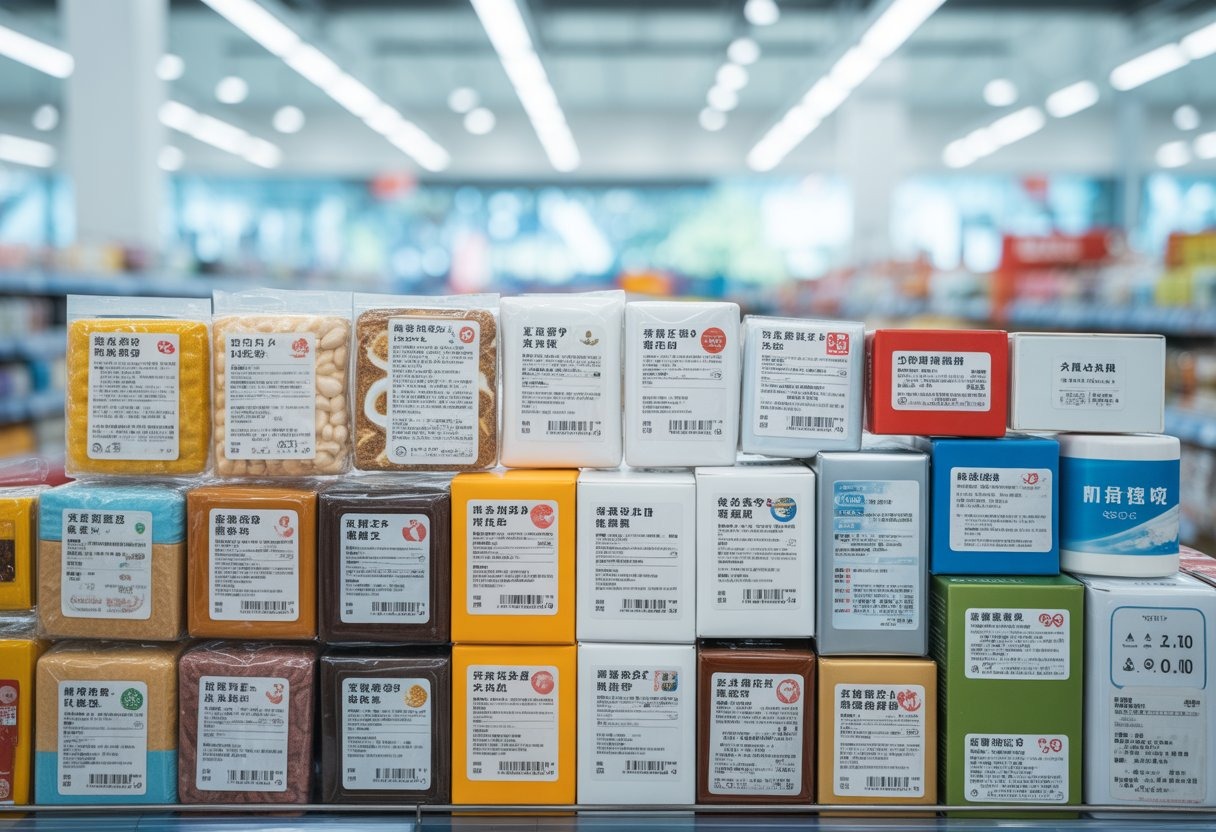
Chinese product labels must show clear facts to help buyers identify, use, and trace products. Regulators focus on accuracy, readability, origin details, and label durability.
Mandatory Label Information
You must include specific details on labels in China to meet legal rules. The Product Quality Law and rules enforced by the State Administration for Market Regulation (SAMR) set the baseline.
Most products require:
- Product name and model
- Manufacturer name and address
- Contact details, such as a phone number
- Quality grade, if applicable
- Production date and shelf life, when relevant
- Safety warnings and usage instructions
Certain goods need more details. Food, cosmetics, and electronics often require batch numbers and compliance marks. Errors or missing data can trigger inspections. SAMR, which absorbed the former AQSIQ, treats false or unclear labels as a common violation.
Language and Legibility Standards
Required information must appear in Simplified Chinese. You may add other languages, but Chinese text must come first and remain clear.
Labels must use readable fonts and strong contrast. Tiny text, blurred printing, or hidden content can lead to rejection at customs or during market checks.
Key rules include:
- Text must stay easy to read without tools
- Units of measure must follow Chinese legal standards
- Numbers and dates must use standard formats
If images or symbols appear, they must not mislead buyers. Inspectors often flag labels that look clear but fail basic readability tests.
Country of Origin and Traceability
You must state the country of origin clearly on Chinese product labels. This rule applies to both imported and domestically made goods.
For imports, labels must also show:
- The name of the Chinese importer or distributor
- A China-based address
- A way to contact the responsible party
Traceability matters for recalls and safety checks. Batch numbers, production dates, and factory codes support this goal. If origin claims conflict with customs records, authorities may block sales or order relabeling before distribution.
Label Durability and Placement
You must attach labels so they remain readable through normal handling, storage, and use. Loose inserts or removable stickers often fail inspections.
Placement rules focus on visibility:
- Put labels on the main product body or retail package
- Avoid hidden areas like inner folds or sealed seams
Materials must resist smudging, fading, and moisture when expected. For example, outdoor products need tougher label materials. If a label falls off or becomes unreadable, regulators treat the product as unlabeled.
Marketing compliance extends beyond physical labels to advertising content and claims. Explore our comprehensive article, Advertisement Law Compliance in China: Key Points for Businesses, covering prohibited statements and approval processes.
Regulatory Bodies and Governing Laws
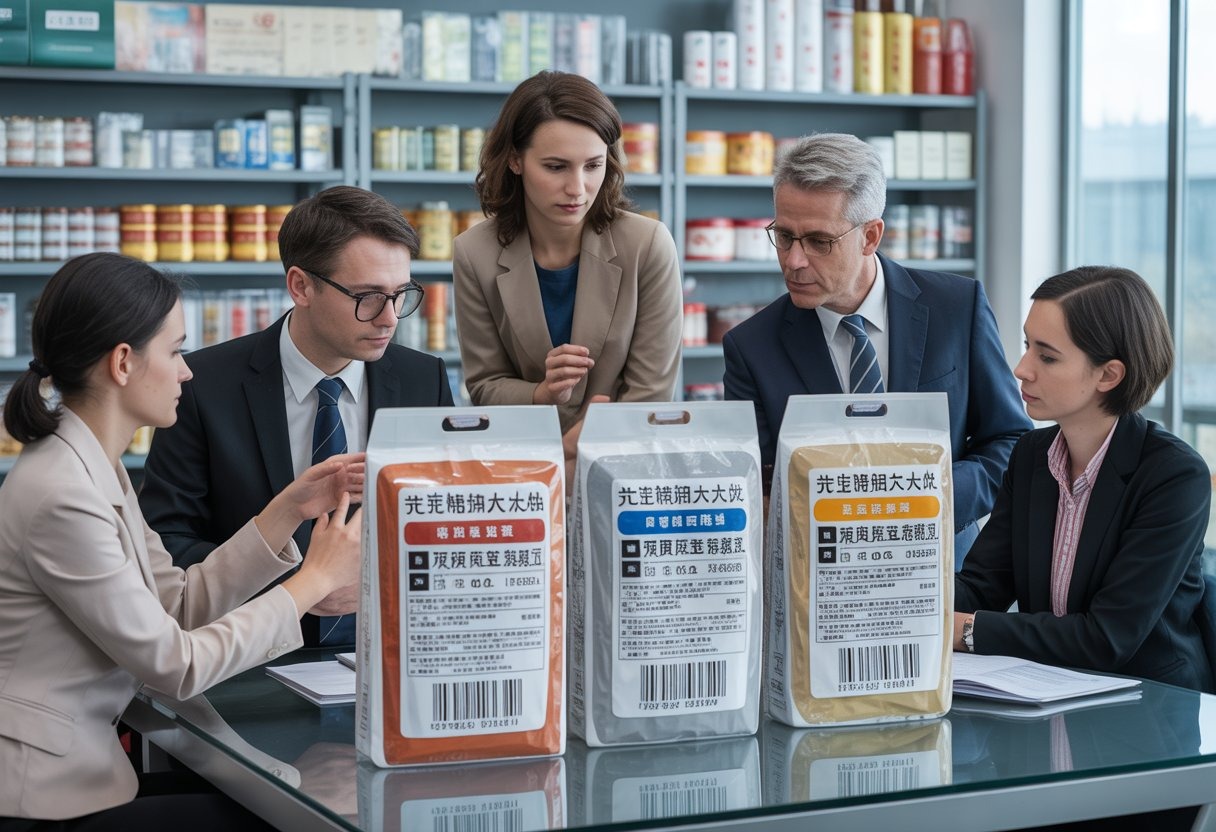
China sets product labeling rules through national agencies and binding laws. You must follow the directions of market regulators, apply national and industry standards, and check if your product needs mandatory certification before sale.
Role of SAMR and AQSIQ
The State Administration for Market Regulation (SAMR) leads product labeling enforcement in China. You deal with SAMR for label compliance, market inspections, recalls, and penalties. Local SAMR offices review labels during customs clearance and market checks.
AQSIQ once handled quality and inspection work, but China dissolved it in 2018. SAMR absorbed most AQSIQ duties. Some border inspection roles moved to other agencies, but SAMR now controls labeling oversight for consumer products.
You must ensure your labels meet SAMR rules on:
- Truthful product information
- Clear Chinese language text
- Traceable manufacturer or importer details
SAMR enforces penalties if labels mislead consumers or miss required content.
Key National and Industry Standards
China relies on national standards (GB) and industry standards to define label content. Mandatory GB standards apply first. Voluntary GB standards still shape enforcement when no mandatory rule exists.
Common laws and standards you must follow include:
- Product Quality Law
- Standardization Law
- Consumer Rights Protection Law
- Mandatory GB labeling standards
Some products, such as food, cosmetics, and medical items, face stricter GB rules. These standards control font size, language use, warnings, and safety symbols. You must use simplified Chinese. Direct translation from foreign labels often fails compliance checks.
China Compulsory Certification System
The China Compulsory Certification (CCC) system applies to selected product categories tied to safety and quality risks. SAMR oversees the system through its certification bodies.
If your product needs CCC, your label must show:
- The CCC mark
- A valid factory or product code
- Matching certification records
Common CCC products include electrical goods, toys, and automotive parts. You cannot sell or import covered products without approval. Labels that show an invalid or missing CCC mark can trigger customs rejection or fines.
You should confirm CCC scope early, since certification affects both labeling and packaging design.
Import procedures require coordinated compliance across multiple regulatory areas beyond labeling. Check out our resource: 10 Laws in China That Impact International Business for essential legal frameworks affecting product entry.
China Compulsory Certification and Safety Marks
China requires safety certification for many regulated products before you can import or sell them. The China Compulsory Certification system sets testing, factory checks, and labeling rules that you must follow to avoid customs delays.
CCC Mark Overview
The CCC mark shows that your product meets China’s required safety and quality standards. You must obtain it before you import, sell, or use covered products in China.
China Compulsory Certification applies to both imported and locally made goods. You complete product testing at approved Chinese labs. Authorities also audit your factory and run follow-up checks.
The mark links to official certification records. Using a fake or incorrect mark can lead to fines, product seizures, or sales bans.
You must place the CCC mark on the product itself, not just on packaging, unless rules allow an exception. The mark must stay clear, readable, and permanent.
Product Categories Requiring CCC
China limits CCC to specific product groups that raise safety concerns. You should confirm coverage early in product planning.
Common categories include:
- Electrical and electronic products
- Household appliances
- Lighting equipment
- Automotive parts
- Toys and child products
- Information technology equipment
Some examples include power adapters, air conditioners, cables, and certain vehicle components. Not all products in a category require CCC, so you must check the official CCC product catalog.
China updates the catalog from time to time. You should review it before shipping, even if your product qualified in the past.
Labeling Procedures for CCC Products
You must apply the CCC mark only after certification approval. You cannot label products during testing or review.
Key labeling rules include:
- Place the mark on the product body when possible
- Use approved mark formats and sizes
- Keep the mark visible after normal use
- Match the mark to the certified model
You must also keep records that link the mark to your certificate. Customs and market inspectors may request them during checks.
Quality disputes often arise from labeling errors or supplier misrepresentation of compliance status. Read our actionable guide, China Factory Quality Issues: Prevention and Resolution Strategies for vendor management and defect resolution methods.
National Standards for Product Labeling
China uses mandatory national standards to control what you must show on product labels. These rules differ by product type, but they focus on safety, clear facts, and Chinese-language disclosure.
GB 7718 and Prepackaged Food Requirements
GB 7718 sets the core rules for labeling prepackaged foods sold in China. It applies to both domestic and imported products. You must present all required content in simplified Chinese.
Key label items include:
- Product name and food category
- Ingredient list, in descending weight order
- Net content and draining weight, if relevant
- Manufacturer and importer details
- Production date and shelf life
- Storage conditions and usage instructions
China finalized GB 7718-2025 in 2025. It replaces GB7718-2011 after a transition period and takes effect in March 2027. The update tightens rules on allergen disclosure, nutrition claims, and font size.
GB29924-2013 and Food Additive Labeling
GB29924-2013 governs how you label food additives when sold as products or used in food manufacturing. You must identify additives by their standard Chinese name. You cannot rely only on INS or E-number codes.
Your label must clearly state:
- Functional class, such as preservative or colorant
- Scope of use, based on approved food categories
- Usage level or method, when required
- Warning statements, if limits apply
You may not claim health benefits for additives. Misleading terms like “natural” or “non-toxic” can trigger enforcement. This standard works alongside GB 7718, so your food label and additive disclosures must match.
GB13432-2013 for Special Dietary Foods
GB13432-2013 applies to foods for special groups, such as infants, pregnant women, or people with medical needs. These products face tighter labeling control because consumers rely on them for health reasons.
You must include:
- Target population, stated clearly
- Nutrient composition and content
- Consumption method and daily intake
- Mandatory warning statements
You cannot imply disease treatment or prevention. Claims must match approved functions only. Labels must also align with product registration or filing records. Regulators often review these products first during inspections, as noted in the FAS FAIRS Country Report.
GB 4943.1-2022 for Electronic Products
GB 4943.1-2022 covers safety labeling for audio, video, and IT equipment. It aligns closely with IEC 62368-1 but remains mandatory in China.
Your product or packaging must show:
- Rated voltage, current, and frequency
- Manufacturer or responsible party in China
- Safety warning symbols and text
- Model number and production batch
Labels must stay visible and durable for the product’s life cycle. Missing or incorrect safety labels can block customs clearance or trigger recalls. This standard often works with China Compulsory Certification when applicable.
Trademark protection becomes critical when brands face counterfeit labels or unauthorized mark usage. See our article, China Trademark Infringement: Prevention and Legal Remedies, explaining enforcement options and brand protection strategies.
Labeling Requirements for Specific Product Categories
China applies strict rules by product type. You must match label content, language, and format to the exact category. Errors often cause delays, fines, or product removal.
Food Products and Supplementary Decrees
Food labels must follow the Measures for Supervision and Administration of Food Labeling. You must place labels in simplified Chinese and print them clearly and permanently.
Your label must list the product name, ingredients, net content, shelf life, and storage rules. You must also show the manufacturer name, address, and contact details. Imported food needs the importer or distributor information in China.
Nutrition tables follow national standards. You must format values, units, and daily reference percentages exactly. Claims like “low sugar” or “high protein” require proof and approved wording.
Avoid direct translation from foreign labels. China bans certain terms and images. Errors often lead to relabeling at the port or product rejection.
Cosmetics and Special-Purpose Labeling
Cosmetics labels must meet the Management Rules on Cosmetic Labels. You must use simplified Chinese for all required content, even on small packages.
Labels must show the product name, full ingredient list, and net content. You must list the registrant or filing entity and their address. Imported products also need a responsible party in China.
Special-purpose cosmetics, such as hair dye or sunscreen, require approval numbers. You must print these numbers on the label. Claims must match the approved scope. Unapproved claims count as violations.
You must avoid medical language and misleading effects. Font size must remain readable. Missing or unclear labels often trigger recalls or sales bans.
Electronic and Radio Equipment Labels
Electronics must meet safety and radio rules. Products with wireless functions often need radio transmitting equipment type approval.
You must label approved devices with the SRRC certification code. Some products also require a CMIIT ID, which links the device to the approval record. You must place these marks on the product or its nameplate.
Labels must include the manufacturer name, model, and power ratings. For imported goods, you must add the China-based responsible entity.
You must keep labels consistent with test reports. Any change to hardware or radio specs may require reapproval and updated labeling.
Legal frameworks for foreign operations include product liability and consumer protection duties tied to labeling. Discover our essential overview on China's Legal Framework for Foreign Business Operations covering regulatory compliance across business functions.
Warnings, Hazard Disclosure, and Supplementary Statements
China requires clear warning language and hazard details on many product labels. You must match the wording, symbols, and placement rules set by national standards. These rules focus on consumer safety, chemical risk, and environmental handling.
Chinese Warning Statements
You must include Chinese warning statements when a product can cause harm during normal use or misuse. The label must use simplified Chinese and clear terms. English alone does not meet local rules.
Common signal words include “警告” (Warning) and “危险” (Danger). Use stronger terms only when the risk level justifies it. The warning must describe the hazard and basic steps to avoid harm.
Place key warnings where users can see them at first glance. For consumer goods, this usually means the main display panel. For chemicals, China follows standards aligned with GHS, including pictograms, signal words, and hazard statements.
You must avoid vague language. Regulators expect direct statements that match the product’s real risks.
Hazardous Substance and Recycling Declarations
You must disclose hazardous substances when products contain regulated chemicals. This rule applies often to electronics, batteries, toys, and cosmetics. China RoHS requires you to list restricted substances and show an Environmental Protection Use Period (EPUP) symbol.
Use a table when needed to show substances and parts clearly. This format helps inspections and speeds approval.
Recycling marks also matter. Many products must display the China recycling symbol and material codes. Batteries often need separate disposal warnings.
These declarations must appear in Chinese and stay consistent with technical files. Missing or incorrect symbols can block customs clearance or trigger recalls.
Emerging Standards and Digital Labeling Trends
China continues to update food labeling rules to improve safety and access to information. New national standards and regulated digital tools now shape how you design and manage labels for the Chinese market.
GB7718-2025 and Upcoming Changes
GB 7718-2025 replaces GB7718-2011 and updates the core rules for prepackaged food labels. You must follow clearer and more detailed requirements for content, format, and placement. China set a transition period, and enforcement starts on March 16, 2027.
Key changes you need to track include:
- Mandatory allergen labeling using standard names
- Clearer rules for ingredient order and compound ingredients
- Stricter controls on claims, including health and nutrition claims
- More precise date marking and storage instructions
The State Administration for Market Regulation (SAMR) oversees enforcement. You should review all labels early to avoid rework near the deadline.
Digital Labels and QR Code Integration
China now allows digital labels, but use remains voluntary. If you adopt them, you must meet national food standards and related notices. Digital labels usually rely on QR codes printed on the package.
You must still show key items on the physical label, such as the product name and shelf life. Digital content can support added details, like extended ingredients or usage tips.
Important compliance points include:
- Digital content must match the physical label
- Updates must stay accurate and traceable
- Access must work without special apps
If you use electronic display devices, related safety rules like GB 4943.1-2022 may apply. SAMR can review both physical and digital labeling during inspections.
Conclusion
Complying with China's product labeling requirements demands precise attention to mandatory elements, language standards, safety marks, and category-specific rules. Labels must meet national GB standards, display accurate Chinese text, include proper certifications, and remain durable throughout distribution.
Non-compliance results in customs delays, fines, recalls, or market bans. As regulations evolve—including GB 7718-2025 implementation and digital labeling integration—staying current becomes increasingly critical for market access success.
Consult China Legal Experts for comprehensive labeling compliance support. Our team provides detailed label reviews, regulatory updates, certification guidance, and tailored solutions to ensure your products meet all current Chinese requirements.
Frequently Asked Questions
What are the mandatory labeling elements for consumer products sold in China?
You must include the product name, manufacturer name, and manufacturer address. The label must also list product specifications, model number, and safety warnings when required.
You must show the country of origin. Some products also require certification marks, such as the China Compulsory Certification (CCC) mark.
How has China's GB standard for labeling been updated in recent years?
China updates its GB standards to align with safety, environmental, and consumer protection goals. Recent updates expanded rules on hazardous substances, labeling symbols, and traceability.
You must review current GB standards that apply to your product category. Older labels may no longer meet current requirements.
What are the language requirements for product labels in China?
You must use Simplified Chinese on all mandatory label content. Foreign languages may appear, but they cannot replace or contradict the Chinese text.
Chinese text must be clear and easy to read. Authorities may reject labels with small fonts or unclear wording.
How do labeling requirements differ for imported goods compared to domestically produced goods in China?
Imported goods must show the name and address of the overseas manufacturer. You must also list the China-based importer or distributor.
Customs authorities often check imported labels more closely. Incorrect labels can delay clearance or trigger relabeling at the port.
What penalties apply for non-compliance with Chinese product labeling regulations?
Authorities may issue fines, order product recalls, or suspend sales. Serious violations can lead to license revocation.
You may also face customs holds or forced label corrections. These actions increase costs and delay market entry.
Can you outline the process for acquiring a Chinese label approval for a new product?
You start by identifying all applicable laws, GB standards, and certification rules. Next, design a label that meets content and language requirements.
Some products require filing or certification before sale, such as CCC or cosmetic filing. Keep records and update labels when rules change.
Subscribe to receive updates
Subscribe to receive the latest blog posts to your inbox every week.