China has some of the strictest drug laws in the world, and marijuana is completely illegal for everyone, including foreigners. If you're planning to visit or live in China, understanding these laws is essential to avoid serious legal trouble.
Marijuana is illegal in China for both recreational and medical use, and foreigners caught with cannabis face immediate detention, prison sentences, and deportation. China applies its drug laws equally to all people within its borders, regardless of nationality. The penalties are severe and can include detention for 10 to 15 days, fines up to 2,000 yuan, and potentially much harsher consequences depending on the amount and circumstances.
Many travelers don't realize how strictly China enforces its anti-drug policies. Even small amounts of marijuana can lead to arrest, and you will likely be blacklisted from returning to the country.
Key Takeaways
- Marijuana is completely illegal in China for all purposes, and foreigners face the same strict penalties as Chinese citizens
- Possession of cannabis leads to detention, fines, prison time, mandatory deportation, and permanent entry bans
- China prohibits CBD products in cosmetics and maintains zero tolerance for all cannabis-related activities except industrial hemp cultivation
If you're planning to work in China, understanding visa requirements is essential. Read our expert resource China Residence Permit: Everything You Need to Know to learn about the documentation and legal processes for extended stays.
Overview of Marijuana Laws in China
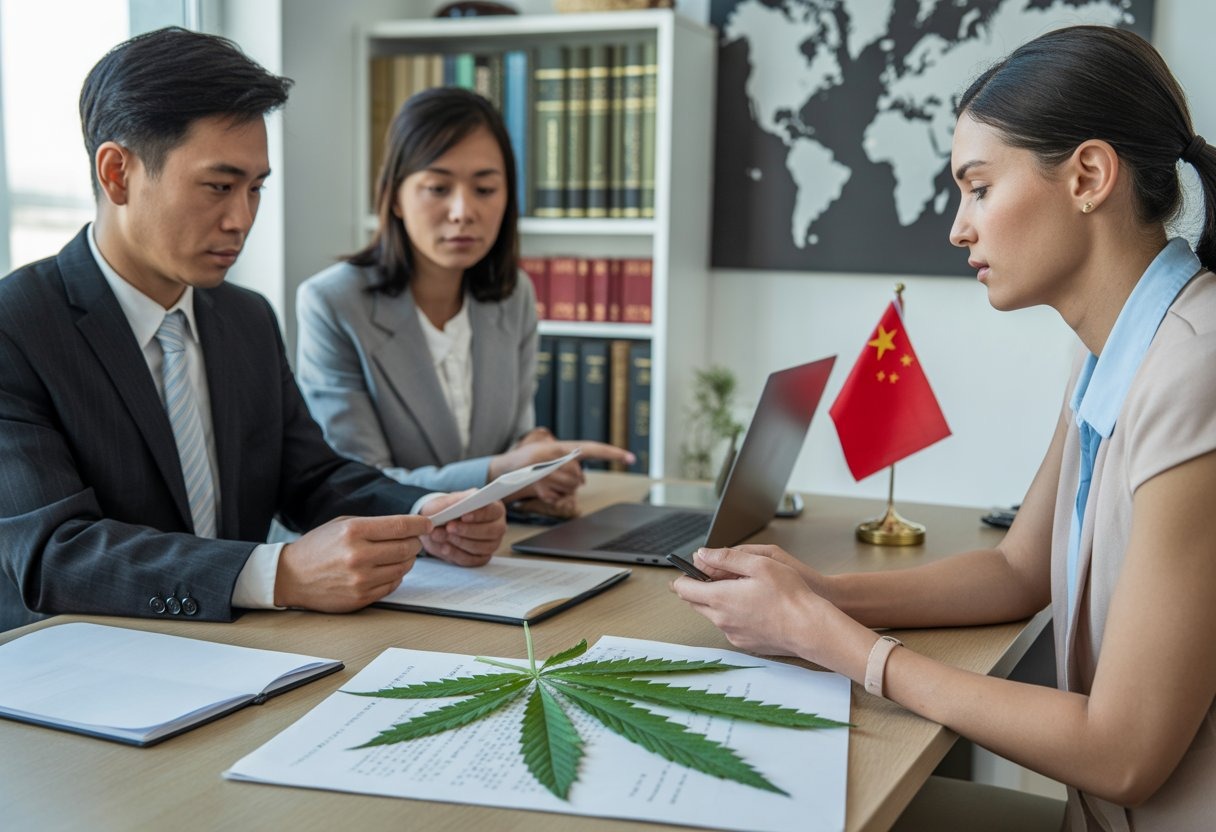
China maintains one of the world's strictest positions on cannabis, classifying all forms of marijuana as illegal narcotics under the PRC Drugs Prohibition Law. The country's zero-tolerance approach applies to both Chinese citizens and foreigners, with no distinction between recreational and medical use.
Zero Tolerance Policy and Drug Classification
China's legal framework treats cannabis as a dangerous narcotic with no accepted uses. The PRC Drugs Prohibition Law specifically classifies marijuana—products from the Cannabis sativa plant containing tetrahydrocannabinol (THC)—as prohibited drugs in any form.
You face severe legal consequences for any cannabis-related activity in China. The law makes no exceptions for medical purposes, meaning you cannot legally possess, use, purchase, or transport marijuana even with a prescription from another country.
Both CBD and THC products are illegal in China. Since 2021, CBD and cannabis-derived ingredients have been banned in cosmetics and other consumer products. This means you cannot bring CBD oils, edibles, or any cannabis-containing items into the country.
The cultivation of cannabis plants is equally prohibited under PRC law. Growing even a single plant can result in criminal charges under the PRC Criminal Law.
Historical and Cultural Context of Cannabis
China has a complex relationship with cannabis that spans thousands of years. The plant originated in Central Asia and has been cultivated in China for fiber and seed production since ancient times.
Despite this agricultural history, modern China views cannabis strictly through the lens of drug control. The government's current stance reflects broader concerns about drug abuse and social stability that emerged in the 20th century.
Your use of cannabis in China contradicts deeply held cultural values about drug use and public order. Chinese authorities view drug consumption as a threat to social harmony and individual responsibility.
Comparison With Global Cannabis Laws
China's marijuana laws stand in stark contrast to the liberalization trends you see in many Western countries. While nations like Canada, Uruguay, and several U.S. states have legalized recreational cannabis, China maintains absolute prohibition.
You will find that China's penalties for cannabis offenses are significantly harsher than those in countries with similar prohibition policies. Unlike some nations that have decriminalized small amounts of marijuana for personal use, China imposes serious consequences for any quantity.
The gap between cannabis laws in China and your home country may be substantial. Countries that permit medical marijuana or CBD products operate under completely different legal frameworks than what exists in China.
Disputes can arise unexpectedly when operating in China. Learn how to protect your interests by reading our guide How to Handle Business Disputes in China: Contracts, Arbitration, and Law for practical strategies on conflict resolution.
Criminal Penalties and Enforcement

China enforces drug laws uniformly across all individuals within its borders, with no exceptions for foreigners. The penalties range from detention and fines for minor possession to life imprisonment or death for serious trafficking offenses.
Penalties for Possession and Use
If you are caught with marijuana in China, you face immediate detention regardless of the amount. Even small quantities for personal use lead to criminal charges.
The penalties include:
- Administrative detention for 10-15 days for first-time minor possession
- Criminal imprisonment from 3 years up to 7 years for larger amounts
- Mandatory fines that accompany jail sentences
- Deportation following completion of your sentence
- Permanent entry ban preventing future visits to China
There are no warnings or reduced sentences for tourists who claim ignorance of the law. Your embassy can provide limited consular assistance, but cannot interfere with Chinese legal proceedings.
Trafficking, Distribution, and Cultivation Offenses
Cannabis laws in China treat trafficking and cultivation as severe criminal acts. You face 15 years to life imprisonment for trafficking substantial amounts of marijuana. The death penalty remains an option for the most serious cases, with confiscation of all your property.
Growing cannabis plants is illegal under Chinese law, even for personal use. Selling or distributing marijuana to others automatically qualifies as trafficking. The penalties increase based on the quantity involved and whether you distributed to multiple people.
Manufacturing cannabis products or importing marijuana into China carries the same severe penalties as trafficking. Chinese courts show no leniency for these offenses.
Drug Testing and Surveillance Methods
Chinese authorities conduct drug testing at borders, airports, and during routine checks. You may be required to provide urine or hair samples if officials suspect drug use. Hair follicle tests can detect marijuana use from weeks or months prior to your entry into China.
Border officials have the authority to search your luggage, phone, and electronic devices. They look for physical drugs, drug paraphernalia, and digital evidence of drug use or purchase. Testing positive for drugs, even if consumed legally in another country before entering China, results in detention and prosecution.
Wondering about other regulations that affect foreigners in China? Dive into our detailed article 10 Laws in China That Impact International Business to discover the key legal requirements every international visitor should know before arriving.
Legal Risks and Consequences for Foreigners
Foreign nationals caught with marijuana in China face serious penalties that extend beyond criminal charges. The government enforces strict consequences including mandatory deportation, permanent travel bans, and public exposure of cases to deter drug use among the international community.
Deportation and Visa Blacklisting
If authorities catch you with marijuana in China, deportation is nearly guaranteed after you serve any criminal sentence. Chinese law enforcement conducts regular urine tests on foreigners, particularly in major cities like Beijing and Shanghai. Testing positive for THC can result in immediate detention, even if you consumed marijuana weeks earlier or in another country where it was legal.
You will typically spend 5 to 15 days in administrative detention for possession or use. After detention, immigration authorities deport you at your own expense and cancel your current visa. China maintains a national blacklist that prevents deported individuals from re-entering the country, often permanently.
Your passport will be flagged in the system, making future visa applications to China extremely difficult or impossible. This blacklist can also affect your ability to travel to other countries that share immigration data with China.
Consular Access and International Implications
You have the right to contact your embassy or consulate after arrest, but this access may be delayed for several days. Your consular officials cannot get you released or reduce your sentence, though they can visit you, provide a list of local attorneys, and notify your family.
Chinese authorities do not recognize foreign prescriptions for cannabis or medical marijuana cards from other countries. Your home country's laws do not protect you from prosecution under Chinese drug laws.
A drug conviction in China appears on international criminal databases and can affect your employment, professional licenses, and travel to other countries with strict drug policies.
Publicized Cases Involving Foreign Nationals
Chinese authorities often publicize drug arrests of foreigners through state media and social media platforms. Your name, nationality, and photo may be shared publicly as part of anti-drug campaigns. In recent years, several foreign teachers, students, and business professionals have been publicly named after testing positive for marijuana.
These publicized cases serve as warnings to both Chinese citizens and international visitors. The exposure can damage your reputation and career prospects globally, as the information remains accessible online indefinitely. Some cases have resulted in employers in other countries terminating contracts after learning about drug-related incidents in China.
Before traveling to China for work purposes, clarify your visa requirements. Check out our informative article Do I Need a Work Permit for a Business Trip to China? to understand when work authorization is necessary.
Status of CBD, Hemp, and Medical Cannabis
China maintains strict prohibitions on CBD and recreational cannabis while allowing limited industrial hemp production. The country distinguishes between these cannabis-related products through specific regulations that affect what foreigners can legally possess or use.
Is CBD Legal in China?
CBD is illegal for general use in China. You cannot legally buy, possess, or use CBD products for personal consumption, whether for wellness or medical purposes. Chinese law treats CBD similarly to other cannabis-derived substances, with few exceptions.
The prohibition applies to all forms of CBD products, including oils, edibles, topicals, and supplements. Even if you legally use CBD in your home country, bringing it into China or purchasing it there violates Chinese law. Customs officials actively screen for CBD products at borders and airports.
You face potential legal consequences if caught with CBD, ranging from fines to detention. The severity depends on the quantity and circumstances, but authorities do not make exceptions for foreigners unfamiliar with local laws.
Industrial Hemp Cultivation and Use
China operates one of the world's largest industrial hemp markets despite its strict stance on recreational cannabis. The country permits hemp cultivation specifically for industrial purposes like textiles, paper, and building materials.
Hemp production requires government licenses and strict oversight. Farmers must grow approved hemp varieties with minimal THC content. The cultivation focuses on fiber and seed production rather than cannabinoid extraction.
This hemp industry serves commercial and manufacturing needs only. You cannot access hemp-derived consumer products or CBD items through these channels as a foreigner in China.
Medical Use of Cannabis-Derived Products
China does not operate a medical marijuana program. You cannot obtain prescriptions for cannabis or legally use medical marijuana products, even with a valid prescription from another country.
Traditional Chinese medicine recognizes certain cannabis plant parts, particularly hemp seeds (huo ma ren), for specific medicinal applications. Licensed practitioners may use these approved traditional preparations within strict regulatory boundaries.
These traditional medicine uses differ significantly from modern medical cannabis programs. The applications involve processed seeds rather than flowers or extracts containing THC or CBD. You cannot access broader cannabis-based medical treatments available in countries with established medical marijuana programs.
China's regulations extend beyond drug laws to comprehensive business compliance. Discover what foreign companies must know by reviewing our guide China's New Rules for Foreign Companies: What to Know for the latest regulatory updates.
Practical Guidance for Travelers and Expats
China enforces some of the world's strictest drug laws, and foreign visitors face the same severe penalties as Chinese citizens. Understanding how authorities monitor entry points and enforce marijuana laws helps you avoid serious legal consequences during your stay.
Customs Inspections and Entry Checks
Chinese customs officers conduct thorough inspections at all international entry points, including airports, seaports, and land borders. Officers use drug-sniffing dogs, X-ray scanners, and random baggage searches to detect illegal substances.
You cannot bring any marijuana products into China, even if you have a medical prescription from your home country. This includes cannabis oils, edibles, CBD products, and any items containing THC. Customs officers will confiscate these items and may arrest you on the spot.
Your checked luggage and carry-on bags go through multiple screening stages. Officers pay special attention to travelers arriving from countries where marijuana is legal. They also screen packages and mail entering China for cannabis products.
If customs finds marijuana in your possession, you face immediate detention. The amount doesn't matter—even trace amounts can lead to arrest, criminal charges, and potential imprisonment or deportation.
Typical Enforcement Practices in Urban and Rural Areas
Police in major cities like Beijing and Shanghai conduct regular inspections at entertainment venues, bars, and clubs. Officers may request urine or blood tests if they suspect drug use. Foreign nationals receive no special treatment during these checks.
Authorities monitor both urban and rural areas, though enforcement is more visible in cities. Police use security cameras, informants, and tip lines to identify drug users and dealers. Rural areas have fewer officers but still enforce the same strict penalties.
You risk arrest if you associate with people who use marijuana. Chinese law allows police to detain anyone present where drugs are found, even if you didn't use them yourself.
Recommendations for Compliance and Safety
Do not use, possess, or transport marijuana in China under any circumstances. The legal risks are severe. Even if you used marijuana legally before arriving in China, traces can remain in your system for weeks and show up in drug tests.
Follow these safety practices:
- Avoid all cannabis products before traveling to China
- Don't discuss marijuana use, even in private conversations or on social media
- Stay away from situations where others might use drugs
- Refuse if anyone offers you marijuana or other substances
- Keep your distance from unfamiliar people in nightlife settings
Medical marijuana patients should stop using cannabis products at least 30 days before traveling to China. You cannot legally use marijuana in China for any medical condition, regardless of your home country's laws.
If authorities detain you for drug-related charges, contact your embassy or consulate immediately. Legal representation is critical, as drug convictions in China carry sentences ranging from detention to life imprisonment, depending on the circumstances.
Financial safety is crucial when doing business internationally. Learn secure methods by reading our practical guide Best Way to Send Money to China Safely and Fast to avoid complications with cross-border transactions.
Social Perception and Future Outlook
Chinese society maintains a conservative stance on cannabis, viewing it through a lens of strict prohibition. The government actively promotes narratives linking drug use to social decline, while enforcement remains rigid with limited signs of policy reform.
Public Opinion on Cannabis
Public opinion in China reflects the government's conservative position on cannabis. Most Chinese citizens view marijuana negatively, associating it with moral decay and social problems. This perspective stems from decades of government messaging that emphasizes the dangers of drug use.
The cultural attitude toward cannabis differs sharply from trends in Western countries. You won't find the same debate about legalization or medical benefits that exists elsewhere. Instead, the prevailing view treats all cannabis use as harmful and unacceptable.
Chinese media and educational systems reinforce these negative perceptions. The government frames drug use as a threat to social stability and individual health. This messaging has shaped public attitudes, leaving little room for discussion about potential benefits or policy changes.
Recent Trends in Policy and Enforcement
Cannabis laws in China remain among the strictest globally as of 2026. The country continues to classify marijuana as a prohibited drug under the Drugs Prohibition Law, with no signs of softening its position on recreational or medical use.
China leads the world in industrial hemp production, focusing on plants with THC levels below 0.3%. However, this economic activity doesn't signal any shift in personal use policies. The distinction between hemp and marijuana remains clear in Chinese law.
Enforcement stays rigorous, with severe penalties for possession and consumption. You face potential imprisonment for cannabis-related offenses, regardless of your nationality. The government shows no indication of following global trends toward decriminalization or medical legalization.
Understanding your rights as a foreign worker is essential. Explore our comprehensive resource Your Guide to Workplace Safety Rights in China to learn about labor protections and employee rights under Chinese law.
Bottomline
Understanding China's zero-tolerance marijuana laws is critical for any foreigner planning to visit or live in the country. The penalties are severe and immediate, with no exceptions for tourists or medical users. Authorities enforce these laws uniformly, and even trace amounts can result in detention, imprisonment, deportation, and permanent blacklisting. Your best protection is complete avoidance of all cannabis products before and during your stay in China.
For more insights on navigating China's complex legal landscape, explore guides on China's Legal Framework for Foreign Business Operations and Commercial Disputes China: How Businesses Can Resolve Conflicts Effectively.
Contact China Legal Experts for a confidential consultation or request a preliminary legal analysis to safeguard your rights and future opportunities in China.
Frequently Asked Questions
What are the consequences for a foreigner found possessing marijuana in China?
If you are caught possessing marijuana in China, you will face immediate detention by authorities. Chinese law treats all drug offenses seriously, regardless of your nationality.
You can expect to receive a prison sentence that typically ranges from several months to multiple years, depending on the amount found in your possession. Alongside imprisonment, you will likely face substantial fines. After serving your sentence, authorities will deport you and place you on a blacklist that prevents future entry into China.
The legal process does not favor foreigners. You will not receive lighter treatment simply because you are a visitor or unaware of Chinese laws.
How does Chinese law distinguish between personal use and trafficking of marijuana for foreigners?
Chinese law makes distinctions based primarily on the quantity of marijuana involved. Possession of small amounts may be treated as personal use, while larger quantities trigger trafficking charges.
The threshold between personal use and trafficking is relatively low in China. Even amounts that might be considered personal use in other countries can lead to trafficking charges under Chinese law. Trafficking convictions carry significantly harsher penalties, including lengthy prison sentences of 15 years to life imprisonment, or even the death penalty in extreme cases.
Your intent matters less than the amount you possess. Chinese courts focus on the physical evidence rather than your explanation of personal use versus distribution plans.
Are there any exceptions or medical allowances for foreigners using marijuana in China?
China does not recognize medical marijuana prescriptions from other countries. You cannot legally bring or use marijuana for medical purposes, even with valid documentation from your home country.
No exemptions exist for foreigners who use marijuana as medical treatment. Chinese law prohibits all forms of cannabis that contain substantial amounts of THC, regardless of intended medical use. Your medical needs or prescriptions from abroad hold no legal weight in China.
If you require medication that contains cannabis or CBD, you must find alternative treatments before traveling to China.
What are the legal penalties for a foreigner convicted of growing or cultivating marijuana in China?
Growing or cultivating marijuana in China constitutes a serious criminal offense. You face severe penalties under the PRC Criminal Law, which specifically prohibits the cultivation of drug-producing plants including cannabis.
The penalties for cultivation are harsh and often match or exceed those for trafficking. You can receive prison sentences ranging from several years to life imprisonment, depending on the scale of cultivation. Large-scale growing operations can result in the death penalty.
Even growing a single plant for personal use is illegal. Chinese authorities make no distinction between small personal grows and commercial operations when applying criminal charges.
Can foreigners face deportation if caught with marijuana in China?
Yes, deportation is a standard consequence for foreigners convicted of marijuana offenses in China. After you complete your prison sentence and pay any fines, authorities will deport you from the country.
The deportation is mandatory, not optional. You will be escorted to the border or airport and removed from China immediately upon completing your sentence. Following deportation, you will be placed on an entry blacklist that typically results in a permanent ban from returning to China.
This blacklist affects all future visa applications and travel plans to China. You will find it extremely difficult or impossible to obtain permission to enter the country again.
How do the narcotics regulations in China apply to foreign tourists regarding marijuana possession?
China applies its drug laws equally to all individuals within its borders, including tourists. You do not receive special consideration because you are visiting temporarily.
As a tourist, you are subject to the same strict narcotics regulations as Chinese citizens and foreign residents. The PRC Drugs Prohibition Law classifies marijuana as an illegal drug and bans its possession, use, distribution, and cultivation in any form. Ignorance of the law is not accepted as a defense.
Chinese authorities enforce these regulations at airports, hotels, and tourist areas. You may face drug screenings or searches during your visit. If you test positive for marijuana use, even if you consumed it before entering China, you can face detention and penalties.
Subscribe to receive updates
Subscribe to receive the latest blog posts to your inbox every week.