Finding a way to move money out of China feels like navigating a minefield. You have strict capital controls. You have piles of paperwork. And you have a sea of scammers offering "quick fixes" on WeChat who promise to bypass all the rules.
Many foreigners assume that because FX brokers exist in places like London or New York, they must exist in Shanghai too.
They don't. China's financial system is dominated by the state. Using the wrong partner does not just mean losing a few percent in fees. It means risking a frozen bank account, a police investigation, or losing your entire principal.
This guide profiles the legitimate currency exchange partners in China for 2026. We will help you separate the boring-but-safe banks from the exciting-but-dangerous black market.
The Quick Takeaways:
Navigating China's "Great Firewall of Money" requires legitimate partners. Here is who you can trust in 2026:
- The Only Real "Brokers": In China, only Banks (like Bank of China) and specific Licensed Payment Institutions (like Alipay/WeChat Pay) are legally allowed to convert RMB to foreign currency for individuals.
- Private Brokers are Illegal: There is no such thing as a "licensed private forex broker" for RMB conversion. If a company is not a bank or a major payment processor, it is likely an underground bank.
- The Fintech Route: Services like Wise or Airwallex are legitimate only because they partner with local licensed Chinese banks. They do not hold the RMB themselves.
- Verification: A legitimate partner will always ask for your ID and tax documents (KYC). If they offer "no paperwork," run away.
Who is Actually Legal?
To understand who is legitimate, you first need to understand the rules of the game. You should look at China's legal framework for foreign business.
The State Administration of Foreign Exchange (SAFE) acts as the gatekeeper. They maintain a strict monopoly on currency conversion.
In 2026, there are only three categories of legal entities you can partner with. If someone does not fit into one of these three boxes, they are likely operating illegally.
- Commercial Banks: This includes the giants like Bank of China, ICBC, and China Construction Bank. They are the primary channel for almost all foreign exchange.
- Licensed Payment Institutions: This includes tech giants like Alipay and WeChat Pay, as well as UnionPay. They have special licenses to handle smaller transactions for individuals.
- Cross-Border E-Commerce Pilots: These are specific licenses given to companies like PingPong or Airwallex to handle trade settlement for businesses.
✨ The Golden Rule: If a company claims to be a "private exchange house" or "investment broker" that can swap RMB for USD without going through a bank, they are lying. They are operating an "underground bank."
The Big Four Banks: The Gold Standard
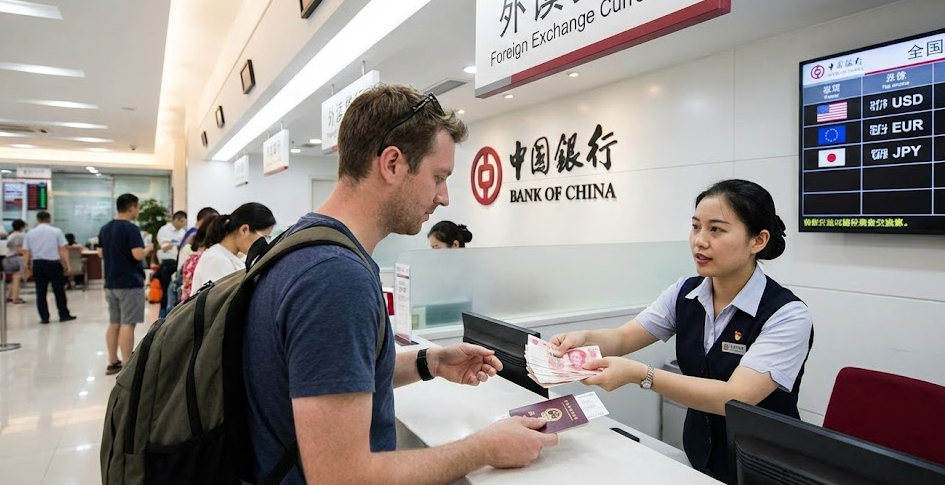
If safety is your top priority, state-owned banks are the only choice. They interface directly with the government regulators. If they approve your transfer, you know it is 100% clean.
Bank of China (BOC)
BOC is widely regarded as the leading foreign exchange provider in China. Because they handle the majority of China's international trade settlement, their staff is usually the most knowledgeable about regulations.
The Experience:
- Pros: They are 100% legal. They offer the highest transfer limits. If you have a complex situation (like selling a house), they are the ones who know how to process it.
- Cons: It is old school. You usually have to visit the branch in person. You might have to wait in line for an hour. The paperwork is heavy.
What to Bring: When you go to a BOC branch, do not just bring your debit card. You need your physical passport. You need your employment contract. You need your tax slips. They will scan everything.
ICBC, ABC, and CCB
The other major banks (Industrial and Commercial Bank of China, Agricultural Bank of China, and China Construction Bank) are also perfectly safe. However, their local branches can sometimes be hit-or-miss.
In a big city like Shanghai, they are great. In a smaller city, the teller might not know the exact procedure for a foreigner sending money home, which can lead to delays.
Prerequisite: You must have an account. Read our guide on can I open a bank account in China as a foreigner to get started. Also Read: List of Major Banks in China
The Fintech Revolution: Speed with Compliance
For smaller amounts (usually under $50,000 per year), fintech apps are the most convenient legitimate currency exchange partners in China. They have digitized the paperwork process.
Alipay (SkyRemit)
Alipay has a built-in feature often called "Global Remittance" or "SkyRemit" (a mini-program partner). This has changed the game for many expats.
How it works:
- You open the Alipay app.
- You upload photos of your tax records and your contract.
- The system verifies them (usually taking about 24 hours).
- Once verified, you can send money directly from your phone balance to your overseas bank account.
Why it is legal: Alipay is not acting as a bank itself here. It is partnering with a licensed Chinese bank (often Bank of Shanghai or similar) on the backend. The bank does the actual conversion. Alipay just provides the user interface.
Wise (formerly TransferWise)
Wise is famous globally for cheap transfers. In China, they operate legally by using a partner model.
Wise allows you to send money to China easily (to Alipay or WeChat accounts). Sending money out of China via Wise is possible, but it is currently limited to salary transfers for non-mainland Chinese citizens. You cannot just transfer savings; it must be proven salary income.
This is a safe option for the best way to send money to China legally because they strictly follow the "Know Your Customer" (KYC) laws.
For more on how these apps operate under the law, check out our analysis of fintech regulation in China.
Corporate Partners: For Business Trade
If you are a company, your needs are different. You aren't limited by the $50,000 personal cap. However, you have a different hurdle: proving "Trade Background."
Third-Party Payment Providers
Companies like PingPong, LianLian Pay, and Airwallex hold special licenses from the People's Bank of China (PBOC). These are designed for cross-border e-commerce.
Use Case: The Amazon Seller
Imagine you are a Chinese company selling goods on Amazon USA. You receive USD from Amazon. You need to convert that USD back to RMB to pay your factory in Dongguan.
You can legally use Airwallex or PingPong to do this. These platforms integrate with your Amazon store data. They pull the sales records to prove to the Chinese regulators that the money is real trade income. This makes the conversion instant and compliant.
Warning: These platforms are only for trade (goods and services). You cannot use them to move investment capital or personal savings. If you try to fake a trade invoice to move money, you are committing fraud.
The Vital Role of Tax Compliance
You cannot talk about currency exchange in China without talking about tax. They are glued together.
Before any legitimate partner (Bank or Alipay) will move your money, they will ask for your Tax Record (Wan Shui Zheng Ming). This proves you earned the money legally and paid your dues to the Chinese government.
The Personal Income Tax App: The Chinese government has a very useful app called "Personal Income Tax" (Ge Ren Suo De Shui). You can download your tax records directly from this app.
- If you use Alipay to send money, you will upload a screenshot from this tax app.
- If you go to the bank, you will print out the PDF from this tax app.
If you have been working "under the table" or getting paid in cash to avoid tax, you will find it impossible to use a legitimate exchange partner. You will be stuck with your RMB.
How to Spot a "Fake" Partner
Scammers are smart. They dress up as legitimate partners to trick you. They use official-sounding terms. Here is how to spot them.
The Hong Kong License Trick
A broker might show you a license and say, "Look, we are a regulated Money Service Operator (MSO)."
Check the license carefully. Is it from Hong Kong? An MSO license in Hong Kong allows a company to operate in Hong Kong. It does not allow them to operate in Mainland China. If they are collecting RMB in Mainland China, they are likely operating as an illegal underground bank, regardless of their Hong Kong paperwork.
The "Private Swap" Red Flag
If a partner suggests this method: "You transfer RMB to my private account in China, and I transfer USD from my private account in Singapore to you."
Run away. This is a matchmaking service, often called "matchmaking" or "underground banking." It violates key laws in China regarding financial stability. If the person on the other side of the trade is a criminal laundering money, your account will be frozen by association.
The "Crypto" Red Flag
Any partner suggesting using USDT (Tether) to move funds is operating illegally. China banned crypto exchanges in 2021. Legitimate partners will never touch crypto.
Special Scenarios: Selling Property
Sometimes you need to move a large amount of money that is not salary. The most common scenario is selling a house.
When you sell a property in China, you will have millions of RMB. You cannot use Alipay for this. You must use a bank.
The Process:
- Sell the house and register the sale with the government.
- Go to the Tax Bureau and pay the taxes on the sale.
- Take the Tax Certificate and the Sale Contract to the bank (usually a specific branch designated for this).
- The bank will apply to SAFE for a special one-time approval.
- Once approved, you can wire the entire amount out in one go. It does not count towards your $50,000 annual limit.
This process is perfectly legal, but it takes time. It requires patience. Do not try to use underground banks for this; the risk is too high given the large sums involved.
Economic Context: Why Regulations Change
The rules for exchange partners are not static. They move up and down based on China's monetary policy.
When China wants to keep money in (to stop capital flight), SAFE tells the banks to check paperwork very slowly. You might find that the bank asks for extra documents that they didn't ask for last month.
When the economy needs investment, like during a China stimulus phase, rules might relax slightly for money coming in. However, rules for money going out (for individuals) tend to remain strict. Understanding this context helps you manage your expectations. If the economy is slowing down, expect the banks to be stricter.
Conclusion
Finding legitimate currency exchange partners in China is not about hunting for the best exchange rate. The rate is set by the government. It is about finding the entity with the right license that will keep you out of jail.
The "boring" option is usually the only safe option. Walking into a Bank of China branch might feel old-fashioned. It might take all afternoon. But when you walk out with that wire transfer receipt, you know your money is safe. You know the police aren't going to freeze your account next week.
While fintechs like Alipay and Airwallex offer a modern user experience, remember that they are just digital skins sitting on top of the traditional banking system. They follow the same rules. If you try to bypass that system entirely by using a "private broker," you aren't finding a loophole. You are stepping into a trap.
Final Thought: In China's financial system, legitimacy leaves a paper trail. If there is no paperwork, there is no protection.
FAQs: Legitimate Currency Exchange Partners China
Are there any licensed private money changers in China?
No. Unlike in Thailand or Hong Kong, you will not find "Currency Exchange Shops" on the streets of Shanghai for locals to convert large sums. Small booths exist at airports for tourists, but they have low limits and poor rates. For substantial transfers, you must use a bank.
Is PayPal a legitimate partner in China?
PayPal operates in China (through a local entity called GoPay), but it is heavily restricted compared to the US version. You generally cannot use a Chinese PayPal account to hold foreign currency balances or transfer money out to a foreign bank account as freely as in the West. It is mostly used for cross-border e-commerce payments for small goods.
Can I use Western Union in China?
Yes. Western Union is a legitimate channel. They partner with Chinese banks (like Postal Savings Bank of China and China Everbright Bank). However, you are still subject to the $50,000 annual limit. You cannot use Western Union to bypass the limit. Also, you usually have to visit the bank branch physically to collect or send the funds; it is rarely fully digital in China.
How do I verify if a payment company is licensed?
You can check the "Payment Business License" (支付业务许可证) issued by the People's Bank of China. Major players like Alipay (Ant Group) and TenPay (Tencent) display this prominently on their websites. If a company cannot show you this license, or if they show you a license from a different country (like Hong Kong or the UK), they are not a legitimate partner for RMB processing inside Mainland China.
What if I am leaving China forever?
If you are leaving China permanently, there is a special process called "deregistration." You can visit the bank and show them proof that you are cancelling your work permit and leaving. This allows you to transfer all your remaining savings out at once, even if it exceeds the annual limit. But you must do this before you close your bank account and leave the country.
About the Author: The banking and compliance team at Choi & Huang advises foreign individuals and companies on safe capital repatriation and SAFE regulatory compliance.
Subscribe to receive updates
Subscribe to receive the latest blog posts to your inbox every week.