China enforces some of the strictest drug laws in the world. Understanding these rules is critical if you plan to visit or live there. The country maintains a zero-tolerance approach to drug possession, with penalties that far exceed those in most Western nations. Even small amounts of drugs for personal use can result in serious criminal charges.
Drug possession in China carries sentences ranging from administrative detention and fines for minor offenses to imprisonment of three years or more for larger quantities, with trafficking and manufacturing potentially resulting in life imprisonment or even the death penalty. The severity of your sentence depends on the type of drug, the amount in your possession, and whether authorities believe you intended to distribute it. China does not distinguish between citizens and foreigners when enforcing these laws, and being a foreign national offers no protection from prosecution.
The Chinese government views drug crimes as a major threat to society and shows little leniency toward offenders. If you're arrested on drug charges in China, you will face a legal system that prioritizes harsh punishment over rehabilitation. This applies whether you're caught with marijuana, methamphetamine, heroin, or other controlled substances.
Key Takeaways
- China enforces severe penalties for drug possession, including lengthy prison sentences and potential death sentences for serious offenses
- The type of drug, quantity, and purity level all significantly impact the severity of sentencing under Chinese law
- Foreign nationals receive no special treatment and face the same strict prosecution as Chinese citizens for drug crimes
Employment matters in China involve complex regulations that foreign businesses must navigate carefully. Explore our article on China Employment Disputes: Laws and Best Practices to protect your organization.
Overview of Drug Possession Laws in China

China maintains one of the world's strictest drug control regimes, criminalizing production, trafficking, possession, and use of illegal substances. The Criminal Law of the People's Republic of China defines drug-related offenses comprehensively and sets severe penalties for violations.
Legal Definition of Drug Possession
Drug possession in China occurs when you knowingly have illegal drugs under your control or custody. This includes having drugs on your person, in your home, vehicle, or any space you control. The law does not require proof that you intended to sell or distribute the drugs.
Chinese authorities can charge you with possession even if the drugs belong to someone else, as long as they are found in an area under your control. The amount of drugs found determines whether you face criminal prosecution or administrative detention. Intent does not matter in most cases under China's drug policy.
Classification of Controlled Substances
China classifies controlled substances into several categories based on their potential for abuse and medical use. The main categories include:
- Narcotics: Opium, heroin, morphine, cocaine, and synthetic opioids
- Psychotropic substances: Methamphetamine, MDMA (ecstasy), ketamine, and similar drugs
- Precursor chemicals: Substances used to manufacture illegal drugs
- Cannabis products: Marijuana and related compounds
The government regularly updates its list of controlled substances to include new synthetic drugs and designer substances. Each category carries different penalty ranges, though all are treated seriously under Chinese law.
Distinction Between Possession, Use, and Trafficking
Chinese law treats possession, use, and trafficking as separate offenses with different penalties. Simple possession typically results in administrative detention of 10 to 15 days, while drug use can lead to compulsory isolation treatment in rehabilitation centers.
Trafficking charges apply when you possess large quantities of drugs or show evidence of intent to distribute. The weight thresholds that separate possession from trafficking vary by substance but are generally quite low. For example, possessing more than 50 grams of methamphetamine can trigger trafficking charges.
Courts consider factors like packaging, communication records, and financial transactions when determining whether possession crosses into trafficking territory.
Foreign nationals working in China face numerous legal requirements beyond understanding criminal law. Discover the essentials in our guide Do I Need a Work Permit for a Business Trip to China?
Sentencing Guidelines and Penalties for Drug Possession
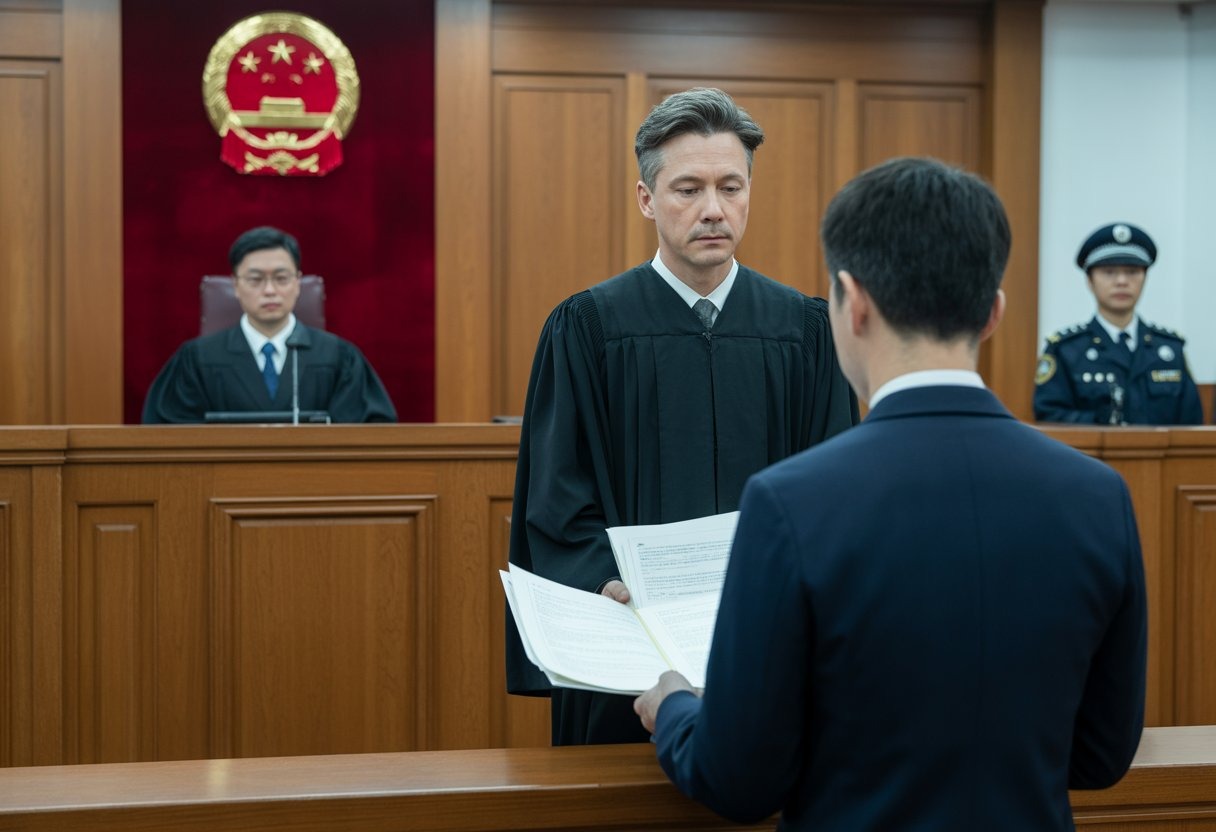
China maintains strict sentencing guidelines for drug possession that vary based on the type and amount of drugs involved. Courts follow standardized frameworks that establish clear minimum and maximum penalties, though individual circumstances can affect final sentences.
Standardized Sentencing Practices
Chinese courts use the Sentencing Guidelines on Common Crimes to ensure consistent punishments across drug possession cases. These guidelines create a structured framework that judges must follow when determining sentences for drug-related offenses.
The system focuses heavily on the quantity of drugs in your possession. Courts measure drugs in grams and apply specific sentence ranges based on these amounts. This approach reduces inconsistencies between different courts and regions.
Prosecutors emphasize the weight and purity of any drugs found in your possession during court proceedings.
Minimum and Maximum Sentences
Drug possession penalties in China range from short-term detention to life imprisonment or death penalty for the most serious cases. The severity depends primarily on the amount and type of drug involved.
For cannabis trafficking, the guidelines specify:
- Under 2,000 grams: up to 16 months imprisonment
- 2,000 to 3,000 grams: 16 to 24 months imprisonment
- 3,000 to 6,000 grams: 24 to 36 months imprisonment
- 6,000 to 9,000 grams: 36 to 48 months imprisonment
Possession of harder drugs like heroin or methamphetamine carries much harsher penalties. The death penalty remains an option for large-scale possession cases, though courts have reduced its application in recent years.
Influence of Drug Type and Quantity
Chinese criminal law defines narcotic drugs as opium, heroin, methamphetamine, morphine, marijuana, cocaine, and other controlled substances. Each drug type carries different penalty thresholds based on its perceived harm to society.
The quantity you possess directly determines your sentence range within the guidelines. Courts weigh the drugs precisely and use these measurements as the primary factor in sentencing. Even small differences in weight can push you into a higher penalty bracket.
Drug purity also plays a role in capital cases. Higher purity levels can lead to more severe sentences because courts view purer drugs as more dangerous. This factor becomes especially important in cases where the death penalty is being considered.
Role of Aggravating and Mitigating Circumstances
Courts consider specific circumstances that can increase or decrease your sentence within the standard guidelines. Aggravating factors include prior drug convictions, involvement in organized drug networks, or possession near schools.
Mitigating circumstances might include cooperation with authorities, first-time offenses, or addiction issues. However, these factors provide limited relief in drug crime sentencing compared to other countries. Chinese courts prioritize public safety over individual circumstances in most drug cases.
Your criminal history significantly impacts sentencing decisions. Repeat offenders face mandatory sentence enhancements. The court will also examine whether you played a leadership role or were simply a user, though both possession and use remain criminal acts under Chinese law.
Living in China requires understanding various legal obligations and rights. Learn the complete process by reading our article China Residence Permit: Everything You Need to Know.
Severe Sentences and the Death Penalty for Drug Offenses
China maintains some of the harshest drug penalties in the world, with punishments ranging from lengthy prison terms to execution. The death penalty applies to various drug crimes when quantities exceed specific legal thresholds.
Thresholds Leading to Capital Punishment
You can face capital punishment in China when drug offenses involve substantial quantities of controlled substances. For heroin and methamphetamine, possessing or trafficking over 50 grams technically qualifies for the death penalty under Chinese law.
However, the practical application differs from the legal minimum. Courts typically reserve death sentences for cases involving 1 kilogram or more of heroin or methamphetamine. This higher threshold reflects judicial practice rather than strict statutory requirements.
The law applies capital punishment to multiple drug-related activities. Manufacturing, smuggling, trafficking, and transporting drugs all fall under these severe penalties when quantities exceed the specified amounts.
Cases Involving Large Quantities
Drug cases with large quantities receive the most severe treatment in China's criminal justice system. About 20% of drug-related crimes result in "heavy penalties," which means five years imprisonment or worse, including possible execution.
Your sentence severity increases dramatically with the amount of drugs involved. The courts consider drug purity as a factor in sentencing decisions, particularly in capital cases. Higher purity levels often lead to harsher punishments.
Executions in China occur through lethal injection or shooting. The country processes thousands of drug cases annually, and the high volume of cases contributes to the continued use of severe punishments. Multiple individuals have received death sentences for attempting to smuggle drugs into or through China.
Death Penalty with Suspension
China uses a unique sentencing option called "suspended death sentence" or death penalty with reprieve. This alternative allows courts to impose a death sentence but suspend the execution for two years.
If you receive a suspended death sentence and don't commit additional crimes during the two-year period, your sentence converts to life imprisonment. The Supreme People's Court has encouraged lower courts to use this option more frequently instead of immediate execution.
This mechanism provides judges with flexibility in death penalty cases. It applies to both drug transportation crimes and other capital offenses. The suspended death sentence serves as a reform tool to reduce immediate executions while maintaining harsh penalties.
International Criticism and Comparison
International law experts argue that drug offenses don't meet the threshold for "most serious crimes" warranting capital punishment. By the end of 2023, 34 countries still retained the death penalty for drug offenses.
China faces ongoing criticism for its use of capital punishment in drug cases. Human rights organizations have released reports highlighting the country's frequent application of death sentences for drug-related crimes. The international community generally opposes execution for non-violent crimes.
Your risk of receiving the death penalty for drug offenses in China remains significantly higher than in most Western nations. Many countries have abolished capital punishment entirely or restrict it to crimes involving loss of life.
International business involves understanding treaty protections and tax implications. Get informed by exploring our guide on China-America Tax Treaty: Everything You Need to Know.
Types of Drugs, Purity, and Their Impact on Sentencing
Chinese courts consider both the type of drug and its purity when determining sentences for drug possession cases. The weight of the substance and regional factors also play significant roles in how severely the law treats your case.
Cannabis, Heroin, Cocaine, and Synthetic Drugs
China categorizes drugs based on their perceived danger to society. Heroin and methamphetamine carry the harshest penalties because authorities view them as highly addictive and harmful. If you possess 50 grams or more of heroin, you face at least 15 years in prison, and amounts over 50 grams can result in life imprisonment or death.
Synthetic drugs like methamphetamine have become increasingly common in China. The courts treat these substances with the same severity as heroin. You receive similar mandatory minimum sentences based on weight.
Cannabis possession typically results in lighter sentences compared to heroin or synthetic drugs. However, China still treats cannabis as an illegal substance with serious consequences. You can receive prison time for possessing even small amounts.
Cocaine cases are less common in China but still prosecuted aggressively. The sentencing guidelines mirror those for heroin based on weight thresholds.
Importance of Drug Purity and Weight
Drug purity directly affects your sentence length in Chinese courts. Authorities calculate the "pure drug content" by testing the actual concentration of the controlled substance. If you possess 100 grams of a mixture that contains 30% pure heroin, courts base your sentence on 30 grams of pure heroin rather than the total weight.
This calculation method can significantly impact your case outcome. Higher purity levels result in longer sentences even if the total weight remains the same. Research on Chinese drug sentencing shows that purity measurements create more consistent judgments across different cases.
Weight thresholds determine mandatory minimum sentences. The law establishes specific amounts that trigger different penalty ranges. Courts must follow these guidelines when deciding your punishment.
Regional Variations in Substance Availability
Your location in China affects which drugs you're more likely to encounter. Southern provinces near the Golden Triangle region see higher rates of heroin trafficking and possession cases. This area borders Myanmar, Laos, and Thailand, where opium production remains significant.
Coastal cities and developed urban areas experience more synthetic drug cases. Methamphetamine production and use have grown in these regions. Law enforcement focuses heavily on stopping synthetic drug operations.
Drug crime patterns vary across provinces, but sentencing standards remain largely consistent nationwide. China's recent sentencing reforms have created more uniform punishments regardless of where your case is prosecuted. You receive similar treatment whether arrested in Beijing or Guangzhou for the same offense and drug amount.
Legal disputes in China follow different procedures than Western countries. Protect your interests by reading our article on How to Handle Business Disputes in China: Contracts, Arbitration, and Law.
Recent Trends and Statistical Insights on Drug Sentences
China has reformed its drug sentencing practices in recent years, with courts processing over 1,500 documented drug possession cases that show new patterns in how judges apply penalties. The data reveals changes in conviction rates, sentencing severity, and how different groups face drug charges.
National Sentencing Data and Case Examples
A study of 1,595 written judgments for illegal drug possession shows that China's sentencing reform has produced clear results. The courts now use standardized amount-based sentencing guidelines more consistently than in previous years. Judges calculate your sentence mainly by the quantity and type of drugs you possessed.
Drug purity also plays a role in sentencing decisions. Higher purity levels can lead to harsher penalties, including the death sentence in severe cases. China has imposed capital punishment for drug crimes, with 182 documented capital cases linked to drug offenses.
Court penalties vary by drug type. Methamphetamine and heroin cases typically receive stricter sentences than marijuana possession. First-time offenders with small amounts may receive lighter sentences or alternative punishments like mandatory rehabilitation.
Decline or Changes in Drug-Related Convictions
Drug-related convictions in China have shifted as enforcement priorities change. The standardized sentencing approach has made penalties more predictable across different regions.
Courts now follow clearer guidelines that tie specific drug quantities to set sentencing ranges. This reduces judicial discretion but increases fairness in the system.
Global trends show that some countries are moving away from harsh drug penalties, but China maintains strict enforcement. The country continues to view drug crimes as serious threats that require strong legal responses.
Youth and Foreign Nationals in Drug Cases
Young people caught with drugs in China face additional considerations during sentencing. Courts may consider age as a factor, though penalties remain severe for trafficking offenses regardless of age.
Foreign nationals make up a portion of drug convictions in China. You face the same legal standards as Chinese citizens if arrested for drug possession. Some death sentences have been imposed on foreign nationals for serious drug offenses. Iraq, for comparison, sentenced two foreign nationals to death for drug crimes in 2023, showing that capital punishment for foreigners exists across multiple jurisdictions.
Language barriers and unfamiliarity with Chinese law can complicate cases involving foreign defendants. Embassies provide consular support, but they cannot change the legal process or outcomes.
Safety considerations extend beyond legal compliance when operating in China. Assess your risks by exploring our guide Is it Safe to Do Business in China? Key Considerations for Investors.
The Golden Triangle and International Influences
The Golden Triangle region significantly affects drug possession cases in China through its position as a major source of illegal narcotics. This border area shapes both the types of drugs entering China and the severity of enforcement responses.
Role of the Golden Triangle in Drug Supply
The Golden Triangle sits where Thailand, Myanmar, and Laos meet. This region has transformed from an opium production zone into one of the world's largest synthetic drug manufacturing centers.
Methamphetamine seizures in East and Southeast Asia reached 236 tons in 2024, marking a 24% increase from the previous year. The actual production volume is much higher since these figures only represent what authorities intercepted.
The region now produces several types of drugs that flow into China:
- Methamphetamine (crystal meth and pills)
- Heroin (though production has declined)
- Synthetic opioids
- Ketamine
Drug crime in China often involves substances that originated in this tri-border area. The relatively lawless nature of the Golden Triangle allows drug producers to operate with limited government interference.
Cross-Border Trafficking and Smuggling
The China-Myanmar border serves as the primary entry point for drugs from the Golden Triangle. This border stretches for thousands of miles and includes remote, mountainous terrain that makes complete surveillance impossible.
Traffickers use multiple methods to move drugs into China. Some carry small amounts on foot through jungle paths. Others use vehicles with hidden compartments or bribe border officials. The porous nature of the border between Laos and Myanmar creates additional challenges for drug interdiction.
Your exposure to drug possession charges in China may connect to these international trafficking networks even if you're not directly involved in smuggling. Chinese authorities view drug possession seriously partly because they recognize the connection to organized cross-border crime.
Influence on Domestic Drug Possession Cases
China frames drugs from the Golden Triangle as a national security threat rather than just a criminal justice issue. This perspective directly impacts how courts handle drug possession cases.
If you face drug possession charges in China, prosecutors may consider the drug's origin when determining your sentence. Possession of methamphetamine or heroin linked to Golden Triangle networks often results in harsher penalties than possession of domestically produced substances.
Chinese law enforcement has increased cooperation with neighboring countries to combat Golden Triangle drug flows. This cooperation includes intelligence sharing and joint operations. When you're arrested for drug possession, investigators may question you about potential connections to international trafficking organizations.
The government's zero-tolerance approach to drugs stems partly from historical concerns about opium's impact on Chinese society during the colonial period. Modern drug flows from the Golden Triangle reinforce these concerns and maintain strict sentencing policies for drug crimes.
Understanding China's broader regulatory environment helps contextualize its strict legal approach. Gain perspective by reading our article on 10 Laws in China That Impact International Business.
Bottomline
China's drug possession laws represent some of the world's strictest legal frameworks, with penalties that escalate rapidly based on drug type and quantity. Whether you're a resident, visitor, or foreign national, understanding these consequences is essential for avoiding life-altering legal troubles.
The zero-tolerance approach means even minor possession can result in serious criminal charges. If you're researching legal topics like this, you need reliable resources.
For more insights on navigating China's complex legal landscape, explore our guides on compliance, business operations, and regulatory requirements.
Contact China Legal Experts for a confidential consultation or request a preliminary legal analysis to safeguard your rights and future opportunities in China.
Frequently Asked Questions
What are the legal consequences for possessing narcotics in China?
Drug possession in China is a criminal offense regardless of the quantity you have. The Chinese government treats drug crimes as one of the most serious felonies under its legal system.
You face multiple forms of punishment depending on your specific circumstances. These include criminal prosecution, administrative detention, and compulsory isolation treatment. The authorities do not distinguish between personal use and other forms of possession when applying criminal charges.
How does Chinese law classify different types of drugs for possession offenses?
Chinese law groups drugs into categories that determine the severity of your punishment. The legal system pays particular attention to substances like heroin and crystal methamphetamine.
You receive harsher penalties for possessing drugs that Chinese authorities consider more dangerous. The classification system connects directly to the sentencing guidelines that courts must follow.
What is the range of penalties for drug possession in Chinese courts?
Your sentence for drug possession can range from short-term detention to life imprisonment or death. Administrative penalties serve as the minimum consequence for minor possession cases.
Prison sentences of more than five years are considered strong punishment under Chinese Criminal Law. Recent statistics show that nearly 20 percent of people convicted of drug-related crimes received sentences exceeding five years. The most severe cases result in capital punishment.
Are there mandatory minimum sentences for drug possession in China?
Chinese drug laws create strict sentencing frameworks that courts must follow. The amount and type of drug you possess determines the baseline penalty you face.
You cannot avoid criminal consequences for drug possession in China. The legal system requires authorities to pursue charges when they discover drugs in your possession.
How does the presence of a large quantity of drugs affect the severity of the sentence in China?
The amount of drugs you possess directly impacts your sentence. Possessing 50 grams or more of heroin or crystal methamphetamine can result in the death penalty.
Larger quantities signal trafficking intent to Chinese authorities. This presumption leads to significantly harsher penalties than simple possession charges.
Can foreign nationals be subjected to the death penalty for drug possession in China?
Foreign nationals receive the same treatment as Chinese citizens under drug laws. You do not gain exemption from capital punishment because of your nationality.
China has executed foreign citizens for drug trafficking offenses. Citizenship does not protect you from the death penalty if you possess large amounts of drugs like heroin or crystal methamphetamine.
Subscribe to receive updates
Subscribe to receive the latest blog posts to your inbox every week.