Contested divorce China foreign national cases involve complex legal procedures when spouses cannot agree on divorce terms, including asset division, child custody, or alimony. Chinese courts handle these disputes through mandatory mediation followed by trial proceedings if settlement fails.
Foreign nationals face additional challenges navigating Chinese family law, including jurisdiction questions, document authentication requirements, and differences from their home country's legal systems. Understanding which Chinese court has authority over your case and how Chinese law treats international marriages is crucial for protecting your rights.
This guide explains how to resolve contested divorce issues as a foreign national in China, covering legal grounds, court procedures, and asset division rules. Whether married to a Chinese citizen or another foreigner, knowing the process helps you prepare for litigation and work toward favorable outcomes.
Need a step-by-step overview of divorce procedures? Our comprehensive article on the Divorce Process in China walks you through each stage from filing to finalization.
Understanding Contested Divorce for Foreign Nationals in China
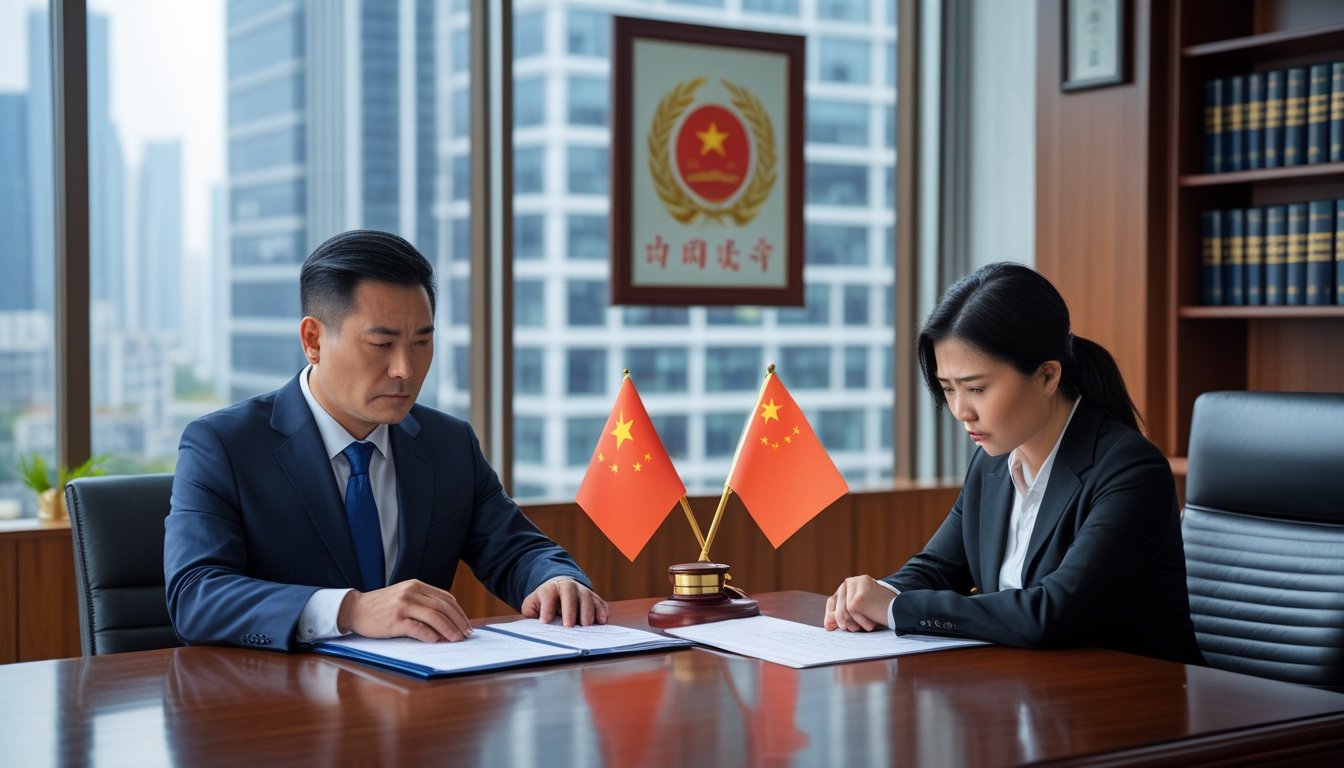
Chinese courts recognize specific legal grounds for divorce, and foreign nationals have to navigate jurisdiction rules that might be totally different from what they're used to. The legal framework in China sets out its own standards for dividing property, deciding custody, and procedural timelines—which can catch you off guard if you don't know the civil code here.
Legal Grounds for Contested Divorce in Chinese Courts
China's Civil Code lays out clear grounds for contested divorce. You can file if there's adultery, domestic violence, substance abuse, abandonment, or two years of continuous separation. The court needs to see that your marriage has "irreparably broken down" before it grants a divorce.
If you can't prove that breakdown the first time, the court might reject your petition. Then you have to wait six months before you try again. This is pretty different from no-fault divorce systems elsewhere.
Common accepted grounds include:
- Physical or emotional abuse
- Extramarital affairs
- Gambling or drug addiction
- Imprisonment for criminal activity
- Serious mental illness
- Irreconcilable differences after separation
Chinese courts tend to take a conservative approach. Judges often push for reconciliation, especially if there are kids or if the marriage is short and there's no clear fault.
Jurisdiction and Which Court Handles Your Case
The People's Court in the defendant's habitual residence usually handles divorce cases in China. If you're the foreign spouse and your partner is Chinese, you'll most likely file in the court where your spouse lives.
Basic people's courts handle most divorces, but intermediate courts get involved with bigger foreign-related cases under Articles 18 and 19 of the Civil Procedure Law. Your case is foreign-related if you're married to a Chinese citizen or if both of you are foreigners living in China.
If neither of you has a clear habitual residence in China, the plaintiff's local court might take the case. If one spouse lives abroad, Chinese courts can still get involved if the other spouse files in China.
Key Differences Between Chinese and Foreign Divorce Laws
China doesn't recognize legal separation as a status before divorce. You're either married or divorced—no in-between. The cooling-off period for consensual divorce doesn't apply to contested cases in court.
Property division works differently here. Courts mainly look at assets inside China and sometimes consider fault when dividing things up.
Child custody decisions focus on the child's best interests, but courts usually want to keep kids in China. If your child lives abroad, foreign custody laws might come into play. Chinese courts rarely enforce foreign prenuptial agreements unless they fit Chinese legal standards and public policy.
Contested Divorce Process and Procedures

Foreign nationals dealing with a contested divorce in China have to follow specific court procedures, which aren't the same as for consensual divorces. The 30-day cooling-off period doesn't apply here, and you'll need the right paperwork, mediation attempts, and possibly a long court process.
Filing Requirements and Documentation for Foreign Nationals
If you're filing for divorce in China as a foreign national, you have to submit your case to the right court. All foreign-related marriages go through the court, not the administrative process locals use.
You’ll need to provide these documents:
- Valid passport and visa or residence permit
- Original marriage certificate (plus Chinese translation if issued abroad)
- Proof of residence in China or a connection to the jurisdiction
- Evidence supporting your divorce grounds
- Property documentation if you want asset division
The court decides jurisdiction based on where your spouse (the defendant) lives. If your spouse is a Chinese citizen living in China, you'll probably file in their district court. Big international elements might bump your case to an intermediate court.
Gather evidence showing the marriage has broken down—proof of separation, domestic violence, cheating, whatever applies. Chinese courts want solid evidence before granting a divorce.
Court Mediation and Trial Procedures in China
Courts in China require mediation before heading to trial in divorce cases. The judge tries to get both sides to reconcile. If mediation fails, the case moves to trial.
The first hearing looks at whether the marriage has broken down for good. Chinese law needs proof of serious problems. If the court thinks you might reconcile, they'll deny your first divorce petition.
If that happens, you can refile after six months. The second try usually has a better chance, since ongoing separation shows the marriage can't be saved. Trials include witness testimony, document checks, and arguments from both sides.
Timeline and Expected Duration of Contested Divorces
Contested divorces in China take a lot longer than mutual ones. A straightforward case might take 6 to 12 months from start to finish. If there are property disputes or child custody fights, it can stretch over a year.
The court has six months to issue a judgment for basic cases. Intermediate courts get more time. The clock starts when the court accepts your case, not when you first file.
If your first petition gets rejected, you have to wait six months before trying again. That adds another half a year or more to the process. Extra delays pop up for translation, document authentication, or questions about which court should handle your case.
Appeals tack on another three to six months. If your spouse contests the divorce or fights over property, be ready for things to take even longer.
Understanding recent regulatory changes is crucial for your case. Learn how updated regulations affect foreign nationals in our guide: New Divorce Law in China.
Asset Division, Child Custody and Legal Support
International divorces between Chinese and foreign nationals need careful handling of property, custody, and legal help. Courts apply Chinese law but also have to consider international agreements and the rules from each spouse's home country.
Marital Property Division Rules for International Couples
Chinese law treats marital property differently from many Western systems. The court looks at what you and your spouse got during the marriage. Anything owned before marriage usually stays with whoever owned it. Gifts or inheritances given to one spouse are typically separate property.
China doesn't use community property rules. The court tries for a fair split, looking at both financial and non-financial contributions—raising kids or managing the home matter, too.
Foreign assets complicate things. Chinese courts divide property in China, but anything abroad might need a separate legal process where that property is located. Sometimes, you'll need lawyers in more than one country.
Key factors courts consider:
- Length of the marriage
- Each spouse's income and assets
- Contributions to household and childcare
- Economic circumstances after divorce
- Whether children will live with one parent
Exchange rates and moving money across borders can slow things down and add fees. Chinese banking rules also limit how much money can leave the country each year.
Child Custody Determination for Foreign National Parents
Chinese courts focus on the child's welfare when making custody decisions. Your nationality doesn't automatically help or hurt you. The court checks which parent can meet the child's needs best.
Kids under two usually stay with their mother unless she can't provide proper care. For older kids, courts look at where the child lives now, emotional bonds, and stability. A steady home life counts more than nationality.
Courts evaluate these factors:
- Each parent's ability to provide care
- The child's current residence and school
- Existing parent-child relationships
- Each parent's work schedule and availability
- The child's preference if they're old enough
Your visa status can affect custody. If you can't stay in China long-term, the court might favor the other parent. If you want to return to your home country without the other parent's agreement, that's another strike against you.
If one parent tries to take the child out of China without permission, international child abduction laws come into play. China isn't part of the Hague Convention, so protections are limited. You need court approval to move kids abroad.
Expert Legal Services for Contested Divorce Cases
Hiring a lawyer who knows both Chinese family law and international issues really protects you. Your attorney should have experience with foreign national cases. Language barriers make having a good lawyer even more important.
A qualified lawyer helps you gather and present evidence the right way. Chinese courts want documents in a specific format. Your lawyer translates paperwork and walks you through unfamiliar procedures. They also talk to the court for you.
Essential legal services include:
- Evaluating your property and custody claims
- Preparing court filings and evidence
- Negotiating settlements with your spouse
- Representing you at hearings
- Coordinating with lawyers in other countries
Legal fees vary depending on how complicated your case is and where you are. Big cities like Beijing and Shanghai tend to have higher prices. More experienced lawyers usually charge more. Some situations need expert witnesses or property appraisers, which adds to the cost.
Mediation can be a good alternative to a drawn-out court battle. A mediator helps both sides reach an agreement. Mediation usually costs less and wraps up faster than a full court fight. Your lawyer can still represent you during mediation to make sure your rights are protected.
Conclusion: Contested Divorce China Foreign National
Resolving contested divorce China foreign national cases requires understanding Chinese family law procedures and preparing thorough documentation. Working with experienced legal counsel helps you navigate court mediation, protect your assets, and secure favorable custody arrangements. Quick action and proper legal representation can significantly impact the outcome of your case.
Foreign nationals must meet jurisdiction requirements and provide authenticated documents throughout the divorce process. Whether you're divorcing a Chinese citizen or another foreign national, knowing your rights under Chinese law ensures fair treatment in property division and custody decisions.
Stay informed about recent changes affecting divorce procedures in China. Read our comprehensive guide on Family Lawyers in China to understand how legal experts can help you navigate international divorce cases and protect your interests.
Frequently Asked Questions: Contested Divorce China Foreign National
Foreign nationals going through divorce in China often have a lot of questions about their rights and what they need to do. The process has some unique requirements for non-Chinese citizens, mandatory waiting periods, and specific rules about who can file.
Can foreigners get divorced in China?
Yes, foreigners can get divorced in China if you or your spouse live in China, regardless of where your marriage was registered. Foreign nationals married to Chinese citizens or other foreigners can use the Chinese legal system if residency requirements are met. You'll need to provide your marriage certificate, passport, proof of residency, and official Chinese translations of foreign documents.
How long does divorce take in China?
Mutual divorces with full agreement take about 60 days due to the mandatory 30-day cooling-off period that took effect in 2021. Contested divorces involving disputes over property or custody typically take several months to over a year depending on case complexity and court schedules. Either spouse can cancel during the cooling-off period, requiring the process to restart if divorce is still desired.
Who initiates 90% of divorces?
The claim that women initiate 90% of divorces varies by country and region, with no official Chinese statistics tracking this at that level. Studies show women file more frequently than men in many countries, but exact percentages shift based on culture, economics, and legal systems. In China, both men and women have equal legal rights to initiate divorce proceedings.
What are the 7 rules for divorce in China?
China's divorce law doesn't specify seven strict rules but divides divorce into consensual and litigation types with specific requirements for each. Consensual divorces require a 30-day cooling-off period and in-person appearance at the civil affairs office by both spouses. Contested divorces require court litigation with grounds like abuse, abandonment, or irreconcilable differences, plus resolution of property division, child custody, and support obligations.
Subscribe to receive updates
Subscribe to receive the latest blog posts to your inbox every week.