
.jpg)
China airline captain labor contracts are complex legal agreements that define every aspect of a pilot’s employment, from salary and flight hours to termination rights and dispute resolution. For foreign pilots working in China, understanding these contracts is essential to avoid misunderstandings and protect professional and financial interests.
Chinese labor law, aviation regulations, and employer practices often differ significantly from international standards. A small oversight in contract terms can lead to serious legal or tax complications.
Working with experienced China-based legal experts ensures your labor contract is compliant, enforceable, and aligned with both Chinese law and your career goals.
Need to enter China quickly for a pilot interview or contract signing? Learn how short-term entry works in our guide on the China Port Visa.
Understanding China Airline Captain Labor Contracts

Airline captains working in China must navigate complex employment structures governed by the People's Republic of China's Labor Contract Law.
Foreign pilots face unique legal requirements that differ significantly from international aviation employment standards.
Why Foreign Pilots Need Legally Compliant Contracts In China
Foreign airline captains must obtain proper work permits and visas before entering into any employment relationship in China.
The Chinese Labor Contract Law requires all employment contracts to be written in Chinese and comply with local regulations.
Work Authorization Requirements:
- Valid work permit (Z visa)
- Foreign expert certificate
- Medical clearance from Chinese authorities
- Aviation license recognition by CAAC
Airlines cannot legally employ foreign pilots without these documents.
The employer bears responsibility for ensuring compliance with immigration and labor laws.
Chinese labor law mandates specific contract clauses that protect both the employer and employee.
These include social insurance contributions, working hour limitations, and termination procedures.
Non-compliant contracts expose both parties to legal risks.
Penalties can include fines, contract nullification, or deportation for foreign workers.
Common Employment Structures For Airline Captains
Airlines in China typically use three main employment structures for captains.
Each structure affects contract terms, benefits, and legal obligations differently.
Direct Employment:
The airline directly employs the captain under a standard labor contract.
This provides full social insurance benefits and job security protections under Chinese labor law.
Consulting Agreements:
Some airlines hire foreign captains as consultants rather than employees.
This structure offers more flexibility but provides fewer legal protections and benefits.
Third-Party Arrangements:
Airlines may contract through specialized aviation recruitment companies.
The recruitment company becomes the legal employer while the captain works for the airline.
Fixed-term contracts are most common for airline captains.
These typically range from one to three years with specific start and end dates.
Types of employment contracts vary based on the pilot's nationality, experience level, and the airline's operational needs.
Already in China on a tourist visa and planning to work? Find out the legal process in our article on Can I Switch from Tourist to Work Visa in China.
Key Legal Differences Between Chinese And International Aviation Contracts
Chinese aviation contracts must comply with both aviation regulations and general labor contract law.
This creates unique requirements not found in international agreements.
Mandatory Social Insurance:
Chinese law requires employers to contribute to five types of social insurance.
International contracts rarely include these specific requirements.
Working Hour Regulations:
The Labor Contract Law limits working hours to 40 per week with overtime compensation.
Aviation operations must balance flight duty time limits with these general labor protections.
Termination Procedures:
Chinese contracts require 30-day notice periods and severance pay calculations based on years of service.
International contracts often have different termination standards.
Dispute Resolution:
Employment disputes must follow Chinese arbitration procedures before court litigation.
This differs from international arbitration systems commonly used in aviation.
Chinese contracts also include specific clauses about confidentiality, non-compete agreements, and intellectual property that may not appear in international aviation employment agreements.
Essential Clauses In A China Airline Captain Labor Contract
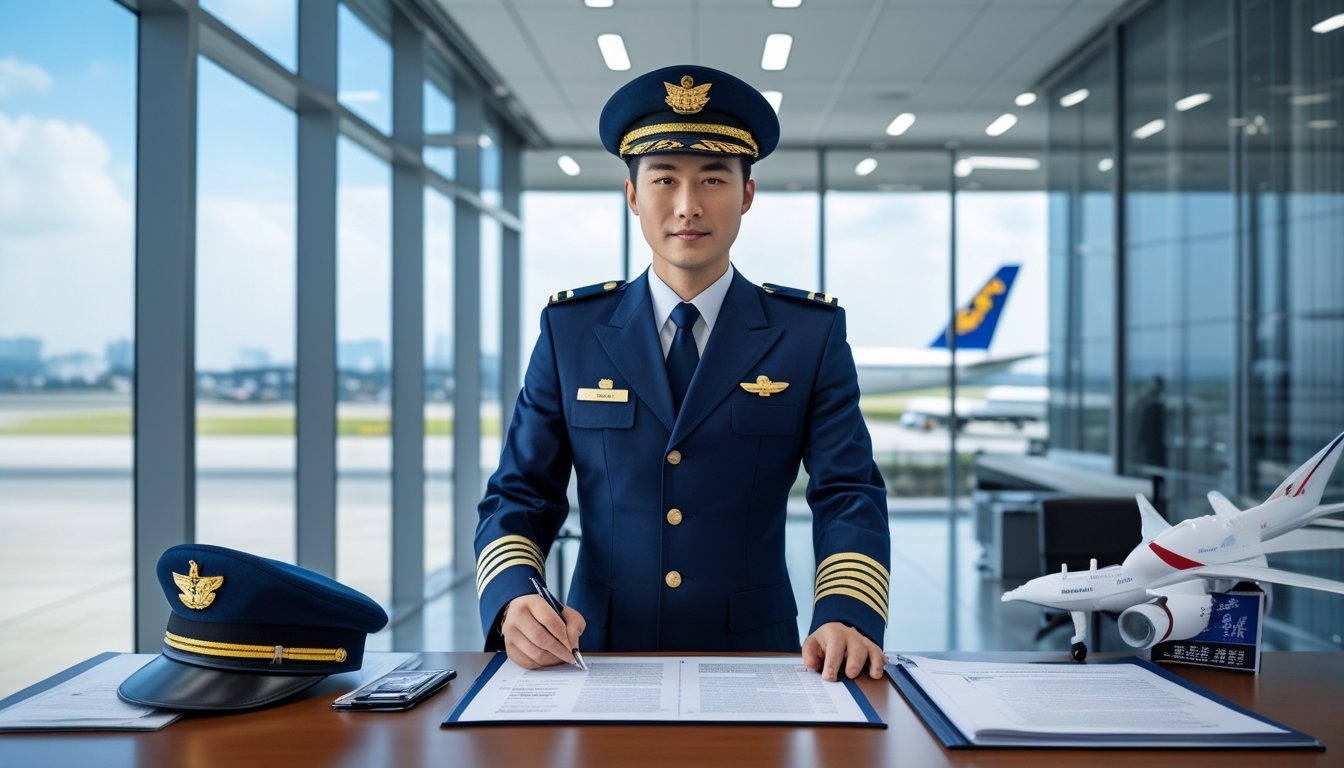
Airline captain contracts in China must include specific mandatory clauses covering employment terms, compensation structures, flight safety requirements, and legal protections.
These written contracts follow strict Chinese labor law requirements while addressing unique aviation industry needs.
Contract Term, Renewal, And Termination Conditions
The contract term must be clearly defined as either fixed-term or non-fixed-term employment.
Most airline captain contracts are fixed-term agreements lasting 3-5 years.
Contract Requirements:
- Written contract must be signed within 30 days of employment start
- Both parties must keep original copies
- Contract becomes effective after both signatures or company seal
Termination conditions must specify valid reasons for contract ending.
Airlines can terminate for serious misconduct, medical unfitness, or license suspension.
Termination Scenarios:
The contract must outline renewal procedures.
Airlines typically review performance, medical certification, and flight hours before renewal decisions.
Early termination by the pilot requires 30 days written notice.
Training bond clauses may require repayment of training costs if the pilot leaves early.
Salary, Allowances, And Tax Obligations Under Chinese Law
Labor remuneration must include detailed salary structure and payment terms.
Airline captain compensation typically consists of base salary plus flight allowances.
Salary Components:
- Base monthly salary (fixed amount)
- Flight hour allowances (per hour rates)
- Route allowances (domestic vs international)
- Performance bonuses (based on safety record)
The contract must specify payment dates and currency.
Most airlines pay monthly after the end of each calendar month.
Social insurance contributions are mandatory for both employer and employee.
Airlines must contribute to pension, medical, unemployment, work injury, and maternity insurance.
Tax Obligations:
- Individual income tax calculated on total compensation
- Airlines handle tax withholding and reporting
- Foreign pilots may qualify for certain tax exemptions
Allowances for housing, transportation, and meals must be clearly defined.
International route pilots often receive additional per diem payments.
Flight Hours, Rest Periods, And Safety Compliance Requirements
The job description must specify flight hour limits and rest requirements.
Chinese aviation regulations strictly control pilot working hours.
Flight Time Limits:
- Maximum 100 hours per month
- Maximum 1,000 hours per year
- Maximum 8 hours per day (domestic flights)
- Maximum 10 hours per day (international flights)
Rest period requirements must be included in labor protection clauses.
Pilots need minimum 12 hours rest between duty periods.
The contract must address medical certification requirements.
Pilots must maintain valid Class 1 medical certificates and undergo regular health checks.
Safety Compliance Requirements:
- Annual recurrent training completion
- Flight simulator checks every 6 months
- English proficiency testing for international routes
- Accident and incident reporting obligations
Airlines must provide proper working conditions including modern aircraft, updated navigation systems, and safety equipment.
Labor protection measures include insurance coverage for work-related injuries.
Confidentiality, Non-Compete, And Training Bond Clauses
Confidentiality clauses protect airline operational information and passenger data.
Pilots cannot share flight schedules, route information, or company procedures with competitors.
Protected Information:
- Flight operation procedures
- Aircraft technical specifications
- Passenger manifest data
- Route planning systems
Non-compete restrictions typically prevent pilots from joining competitor airlines for 6-24 months after contract termination.
Airlines must pay monthly compensation during non-compete periods.
Training bond clauses require pilots to repay training costs if they leave within specified periods.
Bond amounts often range from 500,000 to 2 million RMB.
Training Bond Structure:
- Full repayment required if leaving within 2 years
- Partial repayment on sliding scale for 2-5 years
- No repayment required after 5 years of service
These clauses must be reasonable and cannot unfairly restrict pilot mobility.
Chinese courts review enforceability based on training costs and service periods.
Dispute Resolution, Jurisdiction, And Governing Law Provisions
The contract must specify dispute resolution procedures under Chinese labor law.
Most airline contracts require initial mediation through company HR departments.
Dispute Resolution Process:
- Internal company mediation
- Local labor arbitration committee
- People's Court litigation (if needed)
Jurisdiction clauses typically designate the airline's headquarters location for legal proceedings.
This determines which local courts and arbitration committees have authority.
Chinese labor law governs all employment relationships within China.
The contract must comply with the Labor Contract Law and Civil Aviation Administration regulations.
Key Legal Provisions:
- Chinese version of contract takes precedence
- Local labor arbitration is mandatory first step
- One-year time limit for filing labor disputes
- Collective bargaining rights for pilot unions
Foreign pilots cannot waive Chinese labor law protections through contract terms.
International arbitration clauses are generally unenforceable for employment disputes.
Legal Support For Foreign Airline Captains In China
Foreign airline captains working in China face complex regulatory requirements that require specialized legal expertise.
Professional legal support ensures proper contract review, regulatory compliance, and protection of pilot rights under Chinese labor law.
Why Professional Legal Review Prevents Contract Disputes
Professional legal review identifies problematic contract clauses before signing.
Aviation contracts in China often contain complex termination provisions and non-compete agreements that can trap pilots in unfavorable situations.
Legal experts examine compensation structures to ensure they comply with Chinese labor standards.
They verify that overtime pay, flight hour limits, and rest period requirements meet both aviation safety regulations and employment law.
Key contract areas requiring review:
- Termination clauses and severance calculations
- Training bond obligations and penalties
- Medical certificate requirements and fitness standards
- Currency conversion terms for international payments
Lawyers also assess liability provisions for flight incidents.
Chinese aviation law places specific responsibilities on captains that may differ from international standards.
Proper legal review prevents disputes over insurance coverage and personal liability limits.
Contract modifications during employment require careful legal analysis.
Airlines may attempt to change terms through internal policies rather than formal amendments, which can create enforcement issues under Chinese labor contract law.
Navigating Work Permits, Residency, And Aviation Authority Approvals
Foreign airline captains need multiple approvals to work legally in China.
The process involves coordinating between immigration authorities, aviation regulators, and employment agencies.
Work permit applications require:
- Valid pilot licenses from home country
- Medical certificates meeting Chinese standards
- Criminal background checks with official translations
- Educational credentials verification
Aviation authority approvals include license validation and type rating transfers.
The Civil Aviation Administration of China reviews foreign pilot qualifications and may require additional training or testing.
Residency permits must align with employment contracts.
Legal experts ensure the permit duration matches contract terms and includes proper endorsements for aviation work.
They also handle renewal processes and address any complications with permit extensions.
Foreign-invested enterprises employing pilots face additional compliance requirements.
These companies must demonstrate proper corporate structure and meet capitalization requirements to employ foreign aviation professionals.
Legal support includes monitoring regulation changes that affect permit validity.
Chinese aviation and immigration rules evolve frequently, and lawyers track updates that could impact pilot employment status.
How China-Based Legal Experts Protect Pilot Rights And Ensure Compliance
China-based legal experts understand local labor law nuances that affect foreign pilots.
They provide ongoing support for workplace disputes and ensure employers meet their legal obligations under Chinese employment regulations.
Pilot rights protection includes:
- Fair compensation according to labor contract law
- Safe working conditions meeting aviation standards
- Protection against discriminatory treatment
- Access to social insurance and employment benefits
Legal experts monitor compliance with working hour restrictions.
Chinese labor law limits flight time and requires specific rest periods that airlines must respect regardless of operational pressures.
They handle disputes over training costs and employment bonds.
Airlines often require pilots to sign agreements for expensive type rating training, but Chinese law limits the enforceability of these bonds.
Legal compliance support covers tax obligations and social insurance contributions.
Foreign pilots must navigate Chinese tax law while potentially maintaining obligations in their home countries.
Lawyers also assist with contract termination procedures.
They ensure pilots receive proper economic compensation as required by Chinese labor contract law and help negotiate favorable separation terms when employment ends.
Overstayed your visa or nearing expiration? Learn what to do next and how to avoid penalties in our guide on China Visa Overstay.
Conclusion: China Airline Captain Labor Contract
Understanding your China airline captain labor contract is essential to protecting your rights, income, and career stability. Every clause—from salary and tax terms to flight hours and termination conditions—must comply with Chinese labor law and aviation regulations.
Foreign pilots face additional legal requirements, including work permits and residency compliance, that can complicate employment agreements. Having your contract reviewed by experienced China-based legal experts ensures it’s fair, enforceable, and aligned with your professional goals.
To learn more about the work permit process for foreign pilots, read our detailed guide on the Alien Employment License in China.
Frequently Asked Questions: China Airline Captain Labor Contract
These questions cover the specific salary ranges and compensation details for airline captains in China, including monthly earnings and the highest-paying aviation positions.
How much does a captain make in China?
Airline captains in China earn about 800,000 to 1.5 million RMB per year, depending on the airline and experience. Major carriers like Air China and China Eastern pay at the higher end. Senior captains with 15+ years of experience can reach 2 million RMB annually.
How much do Chinese airline pilots make?
First officers start around 300,000 to 500,000 RMB a year, rising to 800,000 RMB with experience. Regional pilots usually earn less than those at major carriers. Foreign-based airlines often pay 20–30% more plus housing and travel benefits.
What is the salary of an airline captain per month?
Captains earn roughly 65,000 to 125,000 RMB per month before taxes. Pay includes base salary, flight hours, and bonuses for overtime or international routes. Night flights and holidays bring extra compensation.
What is the highest paying captain job?
Wide-body aircraft captains on international routes earn the most—up to 2 million RMB yearly. Boeing 777 and Airbus A350 captains command top pay due to advanced training. Training and check captains earn extra for certification and teaching duties.
Subscribe to receive updates
Subscribe to receive the latest blog posts to your inbox every week.



.jpg)
.jpg)