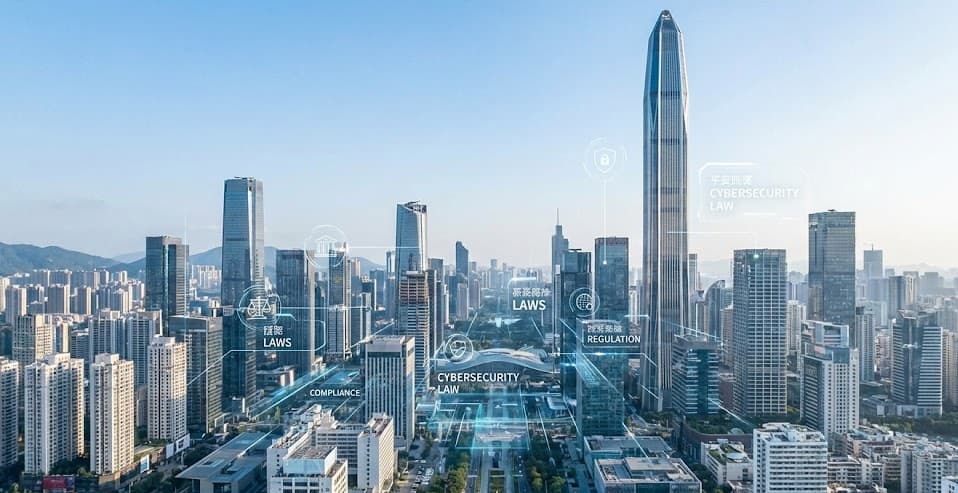
Understanding Shenzhen laws is the first step to succeeding in China’s "Silicon Valley."
As a Special Economic Zone (SEZ), Shenzhen operates under a unique legislative framework that is often more flexible and pro-business than the rest of mainland China.
In 2026, the city implemented groundbreaking reforms, including permitting foreign arbitration institutions to establish offices and expanding the "Hong Kong Law" option for businesses in Qianhai.
Whether you are setting up a tech startup or navigating a trade dispute, knowing these local regulations can save you time, money, and legal headaches.
Foreign Investment: The "National Treatment" Standard

Shenzhen has aggressively lowered barriers for international business. Under the Regulations of Shenzhen Special Economic Zone on Foreign Investment, the city applies a "Pre-Establishment National Treatment" system.
What This Means for You:
Unless your industry is on the "Negative List" (e.g., certain media or mining sectors), you face the exact same entry requirements as a Chinese company. You no longer need special government pre-approval for most projects—just simple registration.
Incentives:
The local government is legally required to offer equal access to:
- Government procurement contracts.
- Land use rights.
- Local technology grants and subsidies.
- Standard-setting bodies (meaning you can help write the industry rules).
Shenzhen’s Dispute Resolution Law

For years, foreign companies feared that local courts might be biased. The amended Arbitration Law, effective March 2026, changes the game significantly.
Ad Hoc Arbitration:
Shenzhen now legally recognizes "ad hoc" arbitration (arbitration without a permanent institution) for foreign-related commercial disputes. This offers huge flexibility for multinational contracts.
Foreign Institutions Welcome:
Top-tier international bodies like the International Chamber of Commerce (ICC) can now establish operational offices in Shenzhen's free trade zones to administer cases.
This means you can resolve a dispute in China using international rules you trust, without needing to fly to Singapore or Geneva.
The "Qianhai" Advantage: Hong Kong Law in Mainland China
The Qianhai Shenzhen-Hong Kong Modern Service Industry Cooperation Zone is a "special zone within a special zone." It offers a unique legal benefit found nowhere else on the mainland.
Choosing Your Law:
If you register a wholly Hong Kong-Owned Enterprise (HKWOE) in Qianhai, you can agree in your contracts that Hong Kong law will govern your business relationships.
This is a massive safety net for investors who are more comfortable with Hong Kong's common law system than mainland China's civil law system.
Cross-Border Finance:
Qianhai laws also allow easier cross-border capital flow. Eligible companies can borrow RMB funds from overseas banks at lower interest rates (up to RMB 5 million for small enterprises), bypassing some of the strict national capital controls.
👉 Read Related Article: What You Should Know About China Cross-border Enforcement
Intellectual Property: Fighting Fakes in 2026
Shenzhen is no longer the "factory of the world" for knockoffs; it is an innovation hub that aggressively protects IP.
The 2025 Intellectual Property Nation Building Promotion Plan has tightened the net around infringers.
New Enforcement Powers:
- Punitive Damages: Courts can award damages significantly higher than actual losses to punish "malicious" infringement.
- AI & Tech Focus: Specific new guidelines protect algorithms, AI-generated content, and integrated circuit layouts, which are critical for Shenzhen's tech sector.
- Rapid Takedowns: E-commerce platforms based in Shenzhen must implement faster "notice-and-takedown" procedures for infringing listings.
Setting Up: The "One-Stop" System
Bureaucracy has been streamlined. The Shenzhen Administration for Market Regulation (AMR) now operates a fully digital "One-Stop" service.
The Process:
- Name Approval: Instant online check.
- Unified License: You receive one business license that covers tax registration, social security, and company seal engraving.
- Electronic Everything: Electronic business licenses and digital seals have full legal effect, allowing you to sign contracts remotely.
Timeline:
For a standard WFOE (Wholly Foreign-Owned Enterprise), the entire registration process can now be completed in 3-5 business days, provided all documents are correct.
FAQs About Shenzhen Law
Are Shenzhen laws different from the rest of China?
Yes, in specific areas. While national laws (like the Criminal Law or Civil Code) apply, Shenzhen has the authority to pass Special Economic Zone Regulations. these often provide more flexible rules for technology, finance, and cross-border trade.
What is the Shenzhen Data Regulation?
Shenzhen was the first city in China to implement comprehensive local data regulations. It clarifies how businesses can collect and process data, with specific emphasis on the "Right to be Forgotten" and strict penalties for illegal data profiling.
How does Shenzhen protect foreign investors?
Foreign investors are protected under the National Foreign Investment Law, but Shenzhen adds local layers of protection through "Fair Competition" reviews and specialized commercial mediation centers designed to resolve disputes without going to public court.
Can I set up a business in Shenzhen without a local partner?
Yes, under the current WFOE structures, most industries allow for 100% foreign ownership. However, certain "Negative List" industries still require a joint venture, and Shenzhen's local registration office (AMR) has specific digital filing requirements.
What are the tax incentives under Shenzhen laws?
Companies in sectors like "Modern Logistics," "Information Services," and "Technology Services" in areas like Qianhai may qualify for a reduced Corporate Income Tax (CIT) rate of 15%, compared to the standard 25% national rate.
Conclusion
Shenzhen's legal environment in 2026 is faster, fairer, and more international than ever before.
From the flexibility of Qianhai's "Hong Kong Law" adoption to the new Arbitration Law's openness to foreign institutions, the city is actively removing legal friction for global business.
However, "streamlined" doesn't mean "simple." The rapid pace of legislative change means that yesterday's compliance strategy might be today's violation.
Success requires staying updated and having local experts on your side.
Related Articles
- Corporate Restructuring Legal Issues China – Essential reading if you are changing your Shenzhen entity structure.
- Dispute Resolution in China – A deep dive into arbitration vs. litigation strategies.
- Shareholders' Rights China – Protect your equity in a Shenzhen joint venture.
Subscribe to receive updates
Subscribe to receive the latest blog posts to your inbox every week.