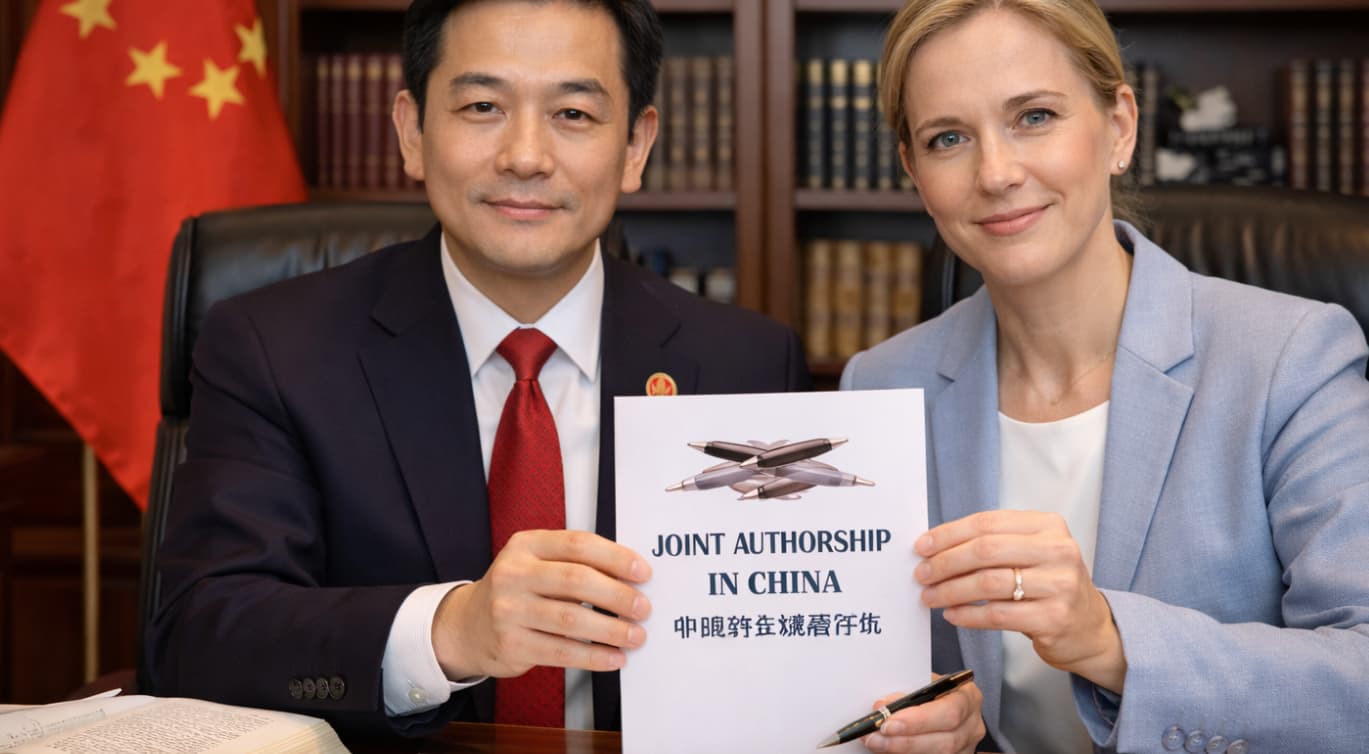
Imagine you built a hit app with a partner in Beijing. You are ready to sell it, but your partner refuses to sign the deal. Can you sell it anyway? This is the messy reality of joint authorship in China.
Many people assume they have equal rights, but the law is complicated. Under the 2026 rules, simply paying for the project does not make you an author.
This article breaks down exactly who owns the intellectual property and how to stop a stubborn partner from holding your hard work hostage.
The Quick Takeaways:
If you are collaborating with a Chinese partner on software, a book, or a design, here is the reality of ownership in 2026:
- The "Consensus" Rule: To sell or license a joint work, you generally need agreement from all authors. You cannot just run off with the IP alone.
- Separable vs. Inseparable: If you can split the work (like chapters in a book), you own your part. If you cannot split it (like a movie or software code), it is inseparable, and specific rules apply to stop one person from blocking the other.
- Money Is Not Authorship: Providing funding, office space, or "administrative support" does not make you a joint author. You must make a creative contribution.
- Profit Sharing: If one partner exploits an inseparable work because the other refused to agree, they usually have to share the profits with the stubborn partner.
- The Contract is King: Chinese law fills in the gaps, but a written contract overrides almost everything. Without one, you rely on the confusing default rules.
What is "Joint Authorship" in Chinese Law?
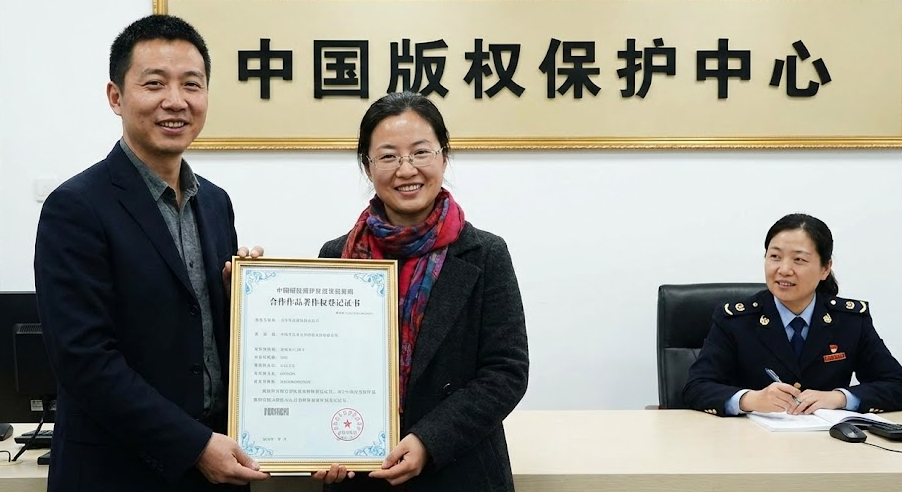
Before we talk about lawsuits, we need to define what a "joint author" actually is. It is not as simple as putting two names on a cover page.
According to Article 14 of the PRC Copyright Law, a work created by two or more people is a "Joint Work" if there was a shared intent to create it. This definition has two critical components that you must understand.
Component 1: Shared Intent
You don't need a formal contract that says "We are Co-Authors." If you sat down together, brainstormed, and agreed to create a single product, the law assumes joint authorship.
However, the intent must be to create one work. If you wrote a poem, and three years later a musician found it and wrote music for it without asking you, that is not a joint work. That is a derivative work or an adaptation. Joint authorship requires collaboration at the time of creation.
Component 2: Creative Contribution
This is where 50% of disputes happen. To be an author, you must contribute original creative expression.
In China, we often see the "Manager Trap." This happens when a boss, an investor, or a government official claims to be a "Joint Author" because they:
- Provided the funding (The "Angel Investor").
- Supervised the team (The "Project Manager").
- Provided the office space and computers.
- Gave "administrative support" or general ideas like "Make it look cool."
The Law says NO. The Copyright Law regulations explicitly state that people who only provide organizational work, money, or facilities are not authors. If you didn't write the code, paint the canvas, or compose the music, you are not an author, no matter how much you paid. You might be a copyright owner (if there was a work-for-hire contract), but you are not an author.
The "Separable" vs. "Inseparable" Trap
Once you establish that you are both authors, the law divides your work into two categories. This distinction determines if you are free or handcuffed to your partner forever.
Type A: Separable Works (The Easy One)
These are works where the parts can be used independently without destroying the value of the other parts.
- Example: A textbook where you wrote the "Grammar" chapter and your partner wrote the "Vocabulary" chapter.
- Example: A song where you wrote the lyrics and your partner wrote the sheet music.
- The Rule: You own the copyright to your specific part alone. You can publish your lyrics in a book of poetry. You can sell your Grammar chapter to a magazine. You do not need to ask your partner. You just cannot infringe on the copyright of the whole combined work.
Type B: Inseparable Works (The Hard One)
These are works that form a single, unified whole. You cannot tell where one person's work ends and the other's begins.
- Example: A novel written by two people where you took turns writing sentences.
- Example: Complex software code where the backend database and frontend UI are useless without each other.
- Example: An oil painting where one person sketched and the other painted the colors.
- The Rule: The copyright belongs to all authors jointly. You cannot carve out your piece. This is where the deadlock happens.
Can One Author Stop the Other?
This is the most common question we get at our firm. "My partner is refusing to sign the deal. Can I do it anyway?"
For Inseparable Works, Chinese law (Article 14 of the Implementing Regulations) provides a specific tie-breaker mechanism. It tries to balance "usage" with "fairness."
Rule 1: Consensus First
The law says you must try to agree. You have a duty to consult each other. You cannot just sign a deal behind your partner's back without telling them.
Rule 2: The "Justifiable Reason" Standard
If you cannot agree, the law says one party cannot prevent the other from exercising the copyright without a "justifiable reason."
What is a justifiable reason?
- "The deal pays too little money" is usually NOT a justifiable reason to block a standard license.
- "This usage will damage my reputation" IS a justifiable reason.
- "This usage violates my political or religious beliefs" IS a justifiable reason.
Rule 3: You Can License, But You Cannot Sell
There is a massive difference between licensing (renting) and assigning (selling).
- Licensing: If your partner is blocking you unreasonably, you can usually proceed with a non-exclusive license to a third party. This ensures the work doesn't sit on a shelf and die.
- Transferring (Selling): You cannot transfer the ownership rights or pledge the copyright (use it as collateral for a loan) without unanimous consent. Transferring is permanent. The law protects the stubborn partner here. If one says no, the sale is dead.
Rule 4: You Must Share the Money
This is the catch. If you go ahead and license the software because your partner was being unreasonable, you can sign the deal. But you must share the profits with them. You cannot keep the money for yourself. If you keep 100% of the revenue, your partner can sue you for "Unjust Enrichment."
Moral Rights: The Hidden Danger
In the US or UK, copyright is mostly about money. In China, copyright is also about "spirit" and "personality." These are called Moral Rights.
Even if you own 99% of the economic rights, your co-author retains their Moral Rights forever. They cannot be sold.
The Right of Authorship (Attribution)
Your partner has the right to have their name on the work. If you release the app and leave their name off the credits, they can sue you. This happens frequently in academic disputes where a professor removes a student's name from a joint paper.
The Right of Integrity
Your partner has the right to protect the work from "distortion and mutilation." If you license the software to a company that changes the code in a way that makes it buggy or offensive, your partner can sue you and the company for violating their integrity rights. This is a powerful weapon that a disgruntled partner can use to sabotage a deal they don't like.
The "Work for Hire" Alternative
Because joint authorship is so messy, most smart companies avoid it entirely. They use the "Work for Hire" (Service Work) structure.
Under Article 18 of the Copyright Law, if a work is created by an employee to fulfill their job duties, the copyright can belong to the company, not the individual.
However, this is not automatic for all types of work. For general employees, the copyright belongs to the employee, but the company has a priority right to use it for two years. To make sure the company owns it 100%, you must have a specific clause in the employment contract stating: "All intellectual property created during the course of employment belongs to the Company."
If you are collaborating with an external freelancer or a partner company, you need a "Commissioned Work" agreement. Without a written agreement saying "The Company owns the copyright," the law defaults to the creator owning the copyright. This is the opposite of the US "Work made for hire" default rule. Be very careful here.
Protecting Yourself: The "Prenup" Checklist
If you are wondering is it safe to do business in China regarding creative works, the answer is "Yes, if you have a contract." The Copyright Law is just a backup for people who forgot to write a contract.
If you are entering a collaboration, do not rely on the default rules. Write your own Collaboration Agreement (a "Prenup" for your IP). It should cover these five points:
- Ownership Split: Don't assume it is 50/50. If you did 90% of the work, write down that you own 90% of the revenue.
- Decision Making Power: Clause: "In the event of a deadlock regarding licensing, Party A has the final tie-breaking vote." This prevents the "hostage" situation.
- Revenue Distribution: How will money be paid? Will it go to a joint bank account? Or will the licensee pay each author separately?
- Moral Rights Waiver: While you cannot fully waive moral rights, you can agree on how they are exercised. For example: "Parties agree that the credit screen will list names in alphabetical order."
- Exit Strategy: What happens if one partner quits? Can the remaining partner buy them out? At what valuation?
If things go wrong and you suspect your partner is stealing your work entirely to start a competing business, you might be facing patent infringement or trade secret theft litigation in China. Joint authorship disputes often escalate into trade secret cases.
Case Study: The "Software Divorce"
Let's look at a hypothetical case to illustrate how this plays out in court.
The Situation: Alice (US) and Bob (China) create a video game. Alice writes the story; Bob writes the code. They never signed a contract. The game is inseparable.
The Conflict: Alice wants to sell the game to Tencent for $500,000. Bob hates Tencent and refuses to sign.
The Lawsuit: Alice signs the deal anyway. Bob sues Alice.
The Likely Verdict:
- The court will likely rule that Bob's personal dislike of Tencent is not a "justifiable reason" to block the deal. Therefore, the contract with Tencent is valid.
- However, the court will order Alice to pay Bob 50% of the $500,000.
- If Alice had sold the copyright ownership instead of just licensing it, the court would have voided the sale entirely, because transfers require unanimous consent.
Conclusion
Joint authorship in China acts like a marriage. It is great when things are going well, but legally messy when you want a divorce. The default rules in the Copyright Law try to be fair—allowing usage to continue while forcing profit sharing—but they often lead to ambiguity and resentment.
The smartest move is to avoid "Joint Authorship" whenever possible. Use a "Commissioned Work" structure where a single corporate entity owns the rights. Or, if you must be joint authors, sign a detailed collaboration agreement before the first line of code is written.
Final Thought: Creativity requires freedom, but ownership requires boundaries. Draw the lines early, or a judge will draw them for you later.
FAQs: Joint Authorship in China
Does my Chinese business partner automatically own half my IP?
No. Just being a business partner or a shareholder does not make them a "Joint Author." They must have physically created part of the work (wrote code, drew designs). If they just provided money, they are an investor, not an author. However, if you formed a Joint Venture company, the company might own the IP, which means they effectively own a share of it through their equity.
Can I license our joint software without my partner's permission?
Yes, but with conditions. If the software is "inseparable" (a single unit), and you cannot reach an agreement after consulting them, you can usually license it to a third party. However, you cannot transfer (sell) the ownership entirely, and you must share the profits with your partner. You cannot hide the money.
What if my co-author dies?
Their rights pass to their heirs. You will now be joint authors with their spouse or children. This can be a nightmare for business decisions, as the heirs may not understand the industry. It is best to have a contract clause that allows the surviving author to buy out the deceased author's share for a set price.
Is a "Joint Venture" the same as "Joint Authorship"?
No. A Joint Venture (JV) is a company structure (a legal entity). Joint Authorship is an IP status attached to individuals. A JV company can own a copyright as a single "Legal Person." This is usually cleaner than having two individuals own it as joint authors because the company's board of directors can make decisions by majority vote, avoiding the "unanimous consent" trap.
Can I use a US contract for my Chinese collaboration?
You can, but it is risky. US law has different default rules (like "Work Made for Hire"). If you try to enforce a US contract in a Chinese court regarding Chinese copyright, the judge may struggle with the concepts. It is always better to have a bilingual contract governed by Chinese law if the creation and exploitation are happening in China.
About the Author: The IP protection team at Choi & Huang specializes in structuring creative collaborations, drafting NNN agreements, and resolving copyright disputes for foreign businesses in China.
Subscribe to receive updates
Subscribe to receive the latest blog posts to your inbox every week.