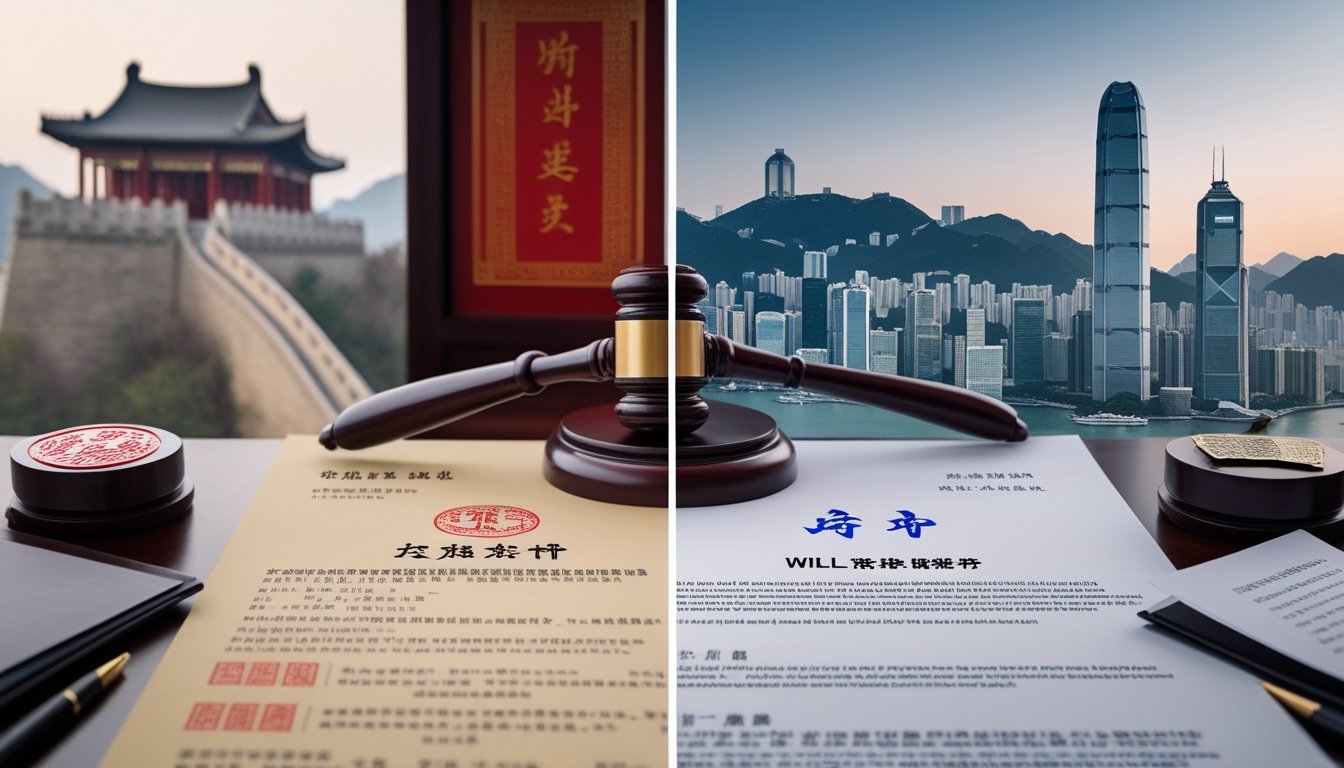
China vs Hong Kong wills operate under completely different legal systems, creating distinct requirements for valid wills in each jurisdiction. Despite Hong Kong being part of China, it maintains a separate common law system while mainland China follows civil law principles.
Many people with assets in both regions assume one will covers everything, but this leads to probate complications and rejected wills. Each jurisdiction has unique formal requirements, witness rules, and inheritance laws that don't translate across the border.
This guide explains the key differences between China vs Hong Kong wills and why cross-border estate planning requires jurisdiction-specific documents.
Concerned about disputes affecting your cross-border estate? Learn how to prevent and resolve will disputes in China to protect your assets in both jurisdictions.
Understanding China vs Hong Kong Wills
China and Hong Kong run on totally separate legal systems, and that changes how you make wills and pass on assets. Their legal traditions split long ago, so if you’ve got assets in both places, you’ll need to plan for both.
Why China and Hong Kong Have Different Will Systems
Hong Kong’s common law system, a legacy from the British, leans on court decisions and precedents. You get a lot of leeway to decide who gets what in your will.
China’s civil law system, built on written codes, includes forced heirship rules. So, your spouse, kids, and parents automatically get a share of your estate, no matter what your will says.
Here’s a quick breakdown of the legal systems:
Do You Need Separate Wills for China and Hong Kong?
If you have assets in both places, you’ll need separate estate planning documents. A grant of probate from Hong Kong won’t cover you in China, and vice versa.
Two wills—one for each place—will save you a lot of trouble. Your Hong Kong will should handle assets like local bank accounts, property, and company shares. Your Chinese notarized will should focus on mainland assets such as real estate or business interests.
Some folks try to use one global will for everything, but that usually backfires. Chinese authorities might toss out anything that breaks forced heirship rules. Meanwhile, Hong Kong courts can get bogged down by Chinese language documents that aren’t properly translated.
How Cross-Border Assets Complicate Estate Planning
Your business structure really decides which laws apply for succession. If you own a Hong Kong company that operates in China, the shares follow Hong Kong law, but any mainland property is subject to Chinese rules.
This split brings tax quirks. Hong Kong scrapped estate duty in 2006, so there’s no inheritance tax there. China, though, might hit you with transaction-based taxes when assets change hands after death.
Fiduciary duties aren’t the same either. Hong Kong executors follow common law principles. Chinese executors operate under the Civil Code, which puts family members first as beneficiaries.
When you’re planning cross-border, you’ve got to pin down where each asset lives. Bank accounts, real estate, and business interests all have their own legal “homes” that decide which inheritance laws apply.
Key Legal Differences Between China and Hong Kong Wills
China and Hong Kong have totally different legal systems, which means their requirements for wills don’t line up. China’s civil law system brings strict formalities and forced heirship, while Hong Kong’s common law system gives you more freedom and recognizes a wider variety of will formats.
Formal Requirements: China vs Hong Kong
China spells out five types of wills in the Civil Code: notarized wills, self-written wills, wills written by others, oral wills, and recorded wills. Notarized wills carry the most weight and require you to visit a notary office. If you go the self-written route, you have to handwrite, date, and sign the whole thing yourself.
Hong Kong’s Wills Ordinance is more flexible. Your will just needs to be in writing, signed by you at the end, and witnessed by at least two people who are there at the same time. Witnesses can’t be beneficiaries or their spouses. Both handwritten and typed wills are fine if they tick those basic boxes.
Witness and Notarization Rules Compared
China’s witness rules depend on the will type. Notarized wills don’t need witnesses since the notary verifies everything. If someone else writes your will for you, you need at least two adult witnesses with full capacity, and they can’t be heirs or anyone with a direct interest.
Hong Kong always requires two witnesses for wills. They must be present when you sign, and they need to sign in your presence too. If a witness or their spouse stands to benefit from the will, that gift is void—but the rest of the will still stands.
Notarization differences: In China, notarized wills outrank others if there’s a conflict. Hong Kong doesn’t require notarization, though some people choose to have a solicitor witness the will for peace of mind.
Inheritance Laws and Forced Heirship Differences
China’s Civil Code enforces forced heirship. Your spouse, kids, and parents are statutory heirs and have a right to part of your estate, no matter what your will says. You must provide for necessary heirs who can’t work or earn a living. If you don’t, courts can override your will to protect them.
Hong Kong leans toward testamentary freedom. You can leave your Hong Kong assets to anyone—family, business partners, employees, or even charities. The Inheritance (Provision for Family and Dependants) Ordinance lets certain dependants ask the court for reasonable financial support, but that’s up to the court, not a sure thing.
Probate and Will Recognition Across the Border
The Probate and Administration Ordinance runs the show in Hong Kong. You’ll need a grant of probate from Hong Kong courts for assets there. But that grant means nothing in mainland China—you have to apply separately for recognition.
Chinese courts won’t just rubber-stamp foreign wills. You’ll probably need notarized translations, authentication from Chinese consulates, and maybe even extra inheritance rights procedures. Because of this, a single will often won’t cut it for both places.
Most lawyers suggest you make two wills—one under Hong Kong law for assets there, and another under Chinese law for assets in China. Each will should clearly say it only covers assets in its own jurisdiction, so you don’t accidentally revoke the other.
Need expert assistance navigating China and Hong Kong estate planning? Our experienced family lawyers in China can help structure wills that work across both legal systems.
Navigate Cross-Border Estate Planning With Expert Help
Using separate wills for China and Hong Kong assets takes careful coordination. Legal pros can help you structure everything right, avoid pitfalls, and meet all the local requirements.
Risks of Using Only One Will for Both Jurisdictions
Trying to use a single will for assets in both China and Hong Kong can turn into a real mess. Each place has its own rules for what makes a will valid, and they don’t always match up.
Your will might be fine in one place but fall short in the other. China has strict witness and signing rules in its Civil Code. Hong Kong’s common law sets different standards.
Main risks:
- Conflicting interpretations between the two legal systems
- Parts of your will might not be enforceable
- Asset distribution could drag on while courts sort things out
- One will could accidentally revoke the other
Estate administrators face a tough job if one will tries to cover both places. They have to juggle two legal systems at once, which means higher costs and longer probate times.
How Legal Experts Structure Cross-Border Wills
Estate planning lawyers almost always recommend separate wills for China and Hong Kong. Each will covers only the assets in its own jurisdiction, which helps avoid conflicts and keeps you in line with local laws.
Your China will should clearly list mainland assets—property, bank accounts, business interests—and follow all Civil Code rules, including the right witnesses if it’s not notarized. Pick an executor who knows how Chinese estate administration works.
Your Hong Kong will should stick to assets in Hong Kong and include a clause saying it doesn’t revoke your China will. Legal experts draft clear coordination provisions to keep both wills working together.
What professionals do:
- List assets clearly for each place
- Add non-revocation clauses to protect both wills
- Appoint separate, local executors
- Meet all the formal requirements for each jurisdiction
Get Professional Assistance for China-Hong Kong Estate Planning
Cross-border estate planning isn’t a DIY job. You need lawyers who know both Chinese and Hong Kong law, plus the ins and outs of asset protection and succession planning.
Good legal advisors will help you sort out tricky stuff like residency, taxes, and forced heirship. They’ll make sure your wills meet all the requirements in both places. They’ll also coordinate with notaries and handle authentication if you need it.
Your team should include folks who’ve handled cross-border estates before. They’ll spot potential conflicts early and set up your plan to keep things smooth for your heirs.
Find professionals who focus on China-Hong Kong estate planning. They can guide you on drafting wills, setting up trusts, and transferring assets in ways that actually work across the border.
Understanding mainland succession rules is crucial for comprehensive planning—read our detailed guide on China inheritance law to protect your family's future across borders.
Conclusion: China vs Hong Kong Wills
China vs Hong Kong wills require separate legal documents tailored to each jurisdiction's distinct requirements and inheritance laws. A will valid in one region doesn't automatically work in the other, and attempting to use a single document for both can result in probate rejection, increased costs, and unintended distribution of your assets.
Cross-border estate planning demands careful coordination between jurisdictions, understanding of forced heirship rules in China versus testamentary freedom in Hong Kong, and proper structuring to avoid conflicts. Professional legal guidance ensures your wills comply with both systems and work together to protect your entire estate.
Planning cross-border? If you have connections to mainland China, understanding the differences is essential—read our guide on wills in China to ensure comprehensive protection for your family.
Frequently Asked Questions: China vs Hong Kong Wills
Knowing the will requirements in both places helps you make better choices about cross-border estate planning. Here are some common questions about validity, legal requirements, and how the two systems differ.
Are foreign wills valid in Hong Kong?
Hong Kong courts recognize foreign wills if they're valid under the laws where the will was made or where you lived at the time. The Probate Registry checks compliance with Hong Kong's Wills Ordinance and requires legalized copies of the will and death certificate. Foreign wills covering Hong Kong property must go through local probate after the court confirms their authenticity and legal validity.
How do wills work in China?
China's Law of Succession recognizes five will types: notarized, self-written, witnessed, oral, and recorded wills, with notarized wills holding the most legal weight. Self-written wills must be entirely handwritten, signed, and dated by the testator. Mainland law divides heirs into two orders—first-order heirs (spouse, children, parents) share equally, while second-order heirs (siblings, grandparents) inherit only if no first-order heirs exist.
What is a valid will in Hong Kong?
A valid Hong Kong will requires the testator to be at least 18 with mental capacity, and the will must be in writing and signed at the end. Two witnesses who aren't beneficiaries or their spouses must watch you sign and then sign themselves, both present at the same time. Missing these formal requirements can invalidate the will, causing your estate to be distributed under the Intestates' Estates Ordinance instead.
Can I write my own will in Hong Kong?
Yes, you can write your own will in Hong Kong under the Wills Ordinance as long as you follow all legal requirements. Sign at the end with two independent witnesses (who aren't beneficiaries) present, and clearly describe your assets and beneficiaries. However, DIY wills often contain mistakes that cause probate complications, so complex estates with multiple properties or business interests benefit from professional legal drafting.
Subscribe to receive updates
Subscribe to receive the latest blog posts to your inbox every week.